
Damp & Condensation · Dehumidifiers
What Does a Dehumidifier Do? How They Work and How to Use One
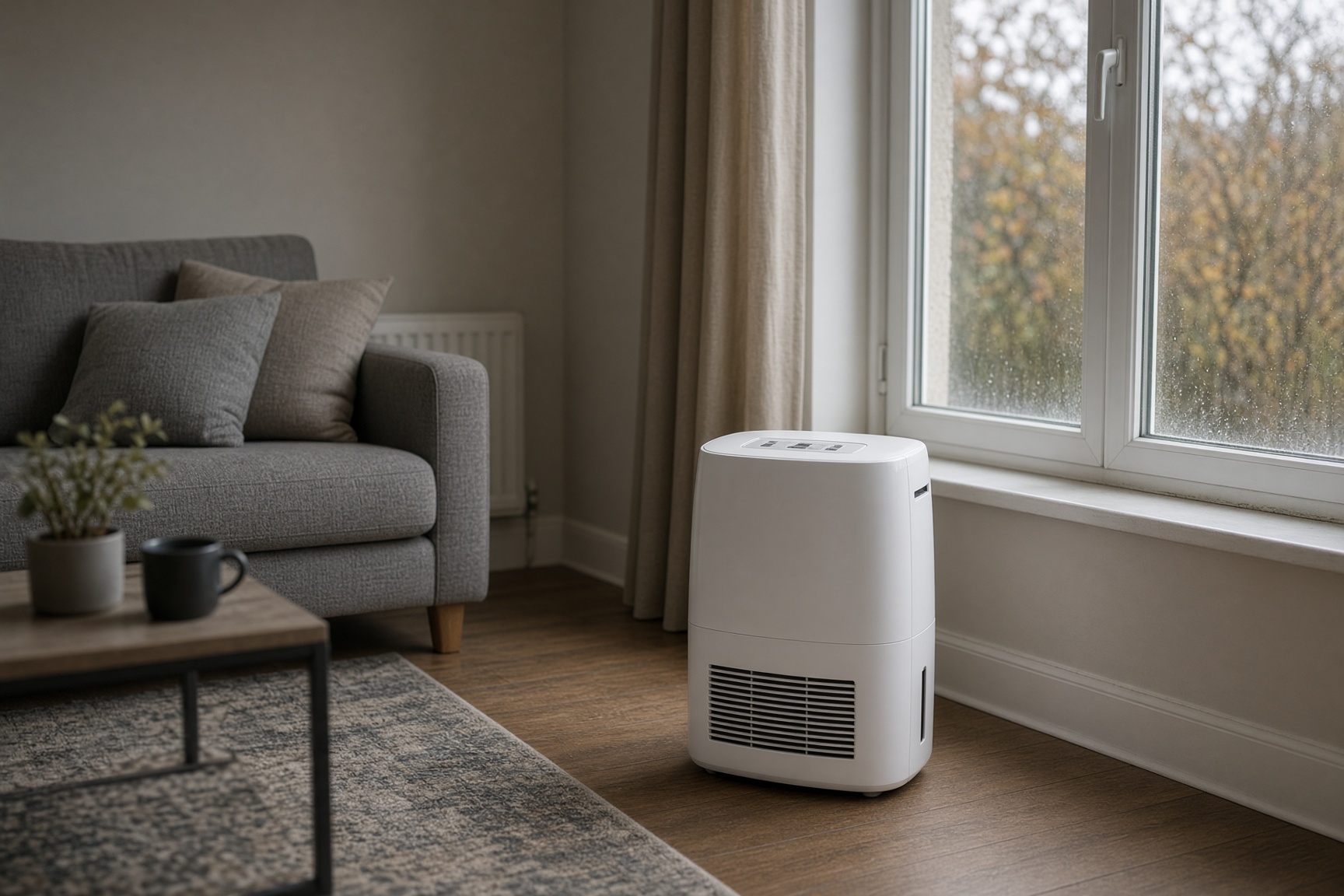
A dehumidifier takes water out of the air so it can't settle on cold windows and walls. Here is how one works, where to put it, how long it takes, and whether you can leave it on overnight.
Last updated: 6 October 2026
Affiliate disclosure: some links on this page are affiliate links. If you buy through them we earn a small commission at no extra cost to you. It doesn't affect what we recommend.
Most damp in UK homes is condensation: water in the air that turns to liquid when it meets a cold surface. A dehumidifier deals with it at the source by removing the water from the air. This guide answers the questions people ask before and after buying one, with figures from manufacturers and safety bodies.
Quick answer: a dehumidifier draws in damp air, removes the moisture and collects it in a tank, then blows drier, slightly warmer air back out. Set it to 50–55% humidity, keep the windows closed and leave the humidistat to switch it on and off. You should notice a difference within a few hours. A very damp room can take days, and a new machine often runs almost non-stop for the first two to four weeks. It costs about 4p to 9p an hour. It will not fix rising damp or leaks.
On this page:
What does a dehumidifier do?
It lowers the amount of water vapour in the air. Cooking, showers, drying washing and breathing all add moisture to a home. One load of washing alone releases about two litres. In winter, with the windows shut, that moisture stays indoors until it finds a cold surface and condenses.
By keeping indoor humidity between 40% and 60%, a dehumidifier:
What it won't do. A dehumidifier treats moisture in the air. It will not cure rising damp, a leaking gutter or water coming through a wall, and it will not remove mould that is already there. If you have tide marks low on a wall or patches that appear after rain, see our guide to damp patches on walls first.
How does a dehumidifier work?
There are two kinds, and they remove water in different ways.
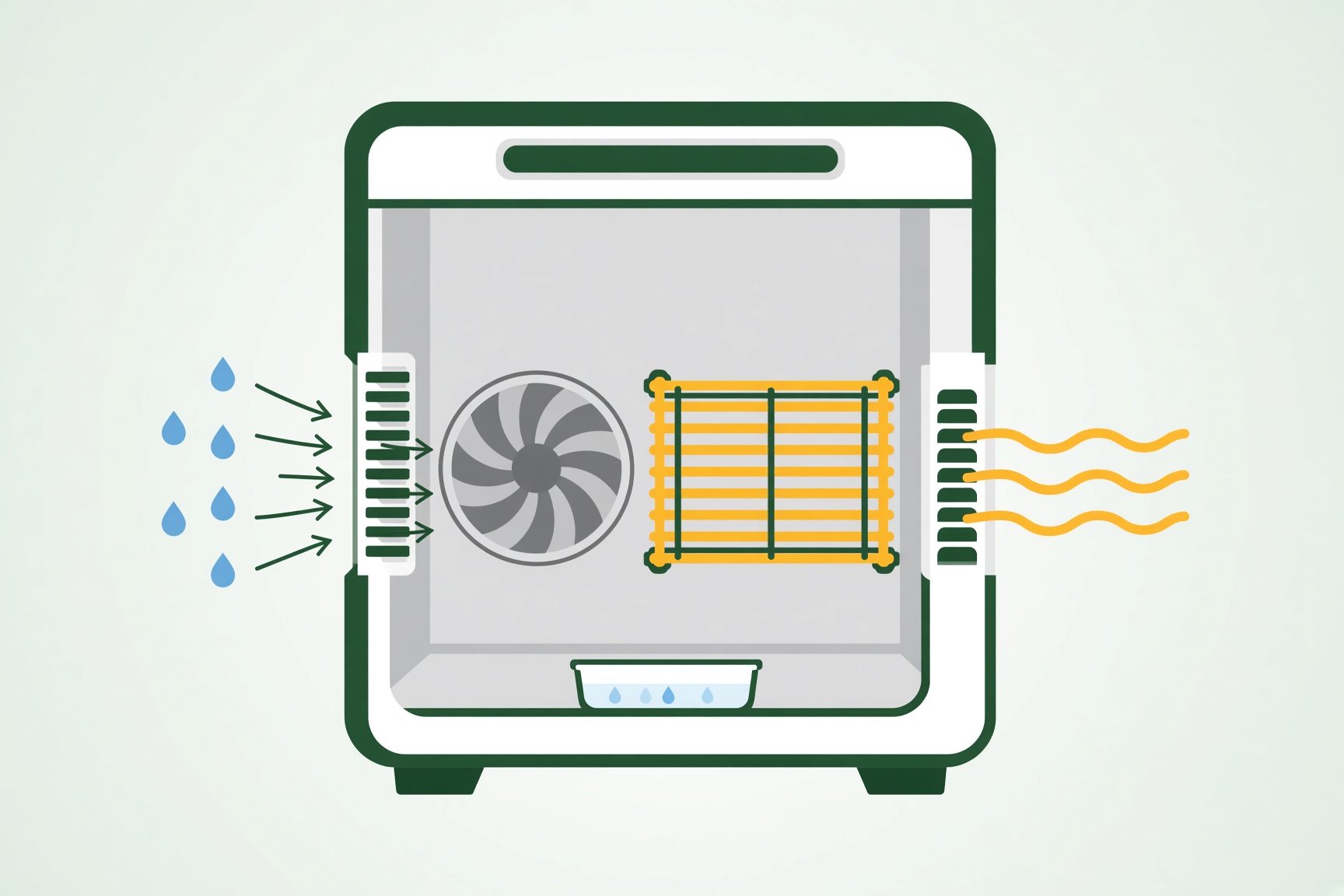
A compressor dehumidifier works like a small fridge. Most home units are this type.
A desiccant dehumidifier uses an absorbent material instead. Air passes through a slowly turning wheel that soaks up moisture. A heater then dries the wheel and the water is collected. There is no compressor, so it keeps working in the cold, but the heater uses more electricity. Our desiccant dehumidifier guide explains when one is worth it.
| Compressor | Desiccant | |
|---|---|---|
| Best for | Heated homes, 15°C and above | Cold rooms below about 15°C |
| Typical power | 130–360W | 300–650W |
| Running cost | About 3–9p an hour | About 8–17p an hour |
| Air it blows out | About 2°C warmer | About 10–12°C warmer |
| In the cold | Poor below 10°C | Keeps working |
For a normally heated house, a compressor model is the one to buy. Our best dehumidifier guide compares five of them.
Do you need a dehumidifier?
You probably do if two or more of these are true through the winter:
It is worth trying the free fixes first: lids on pans, extractor fans running, trickle vents open, and washing dried in one closed room. If the windows still stream, a dehumidifier is the most direct fix you can buy. One machine is usually enough for a house. You do not need one in every room.
How to use a dehumidifier
Where to put a dehumidifier
It depends on what you want it to do. There are two right answers.
| Your aim | Where to put it | Doors |
|---|---|---|
| Control damp across the whole house | On the landing or in the hallway. Meaco says moisture from the rest of the house moves towards it | Internal doors open |
| Dry one damp or mouldy room | In that room, away from the walls | Door closed |
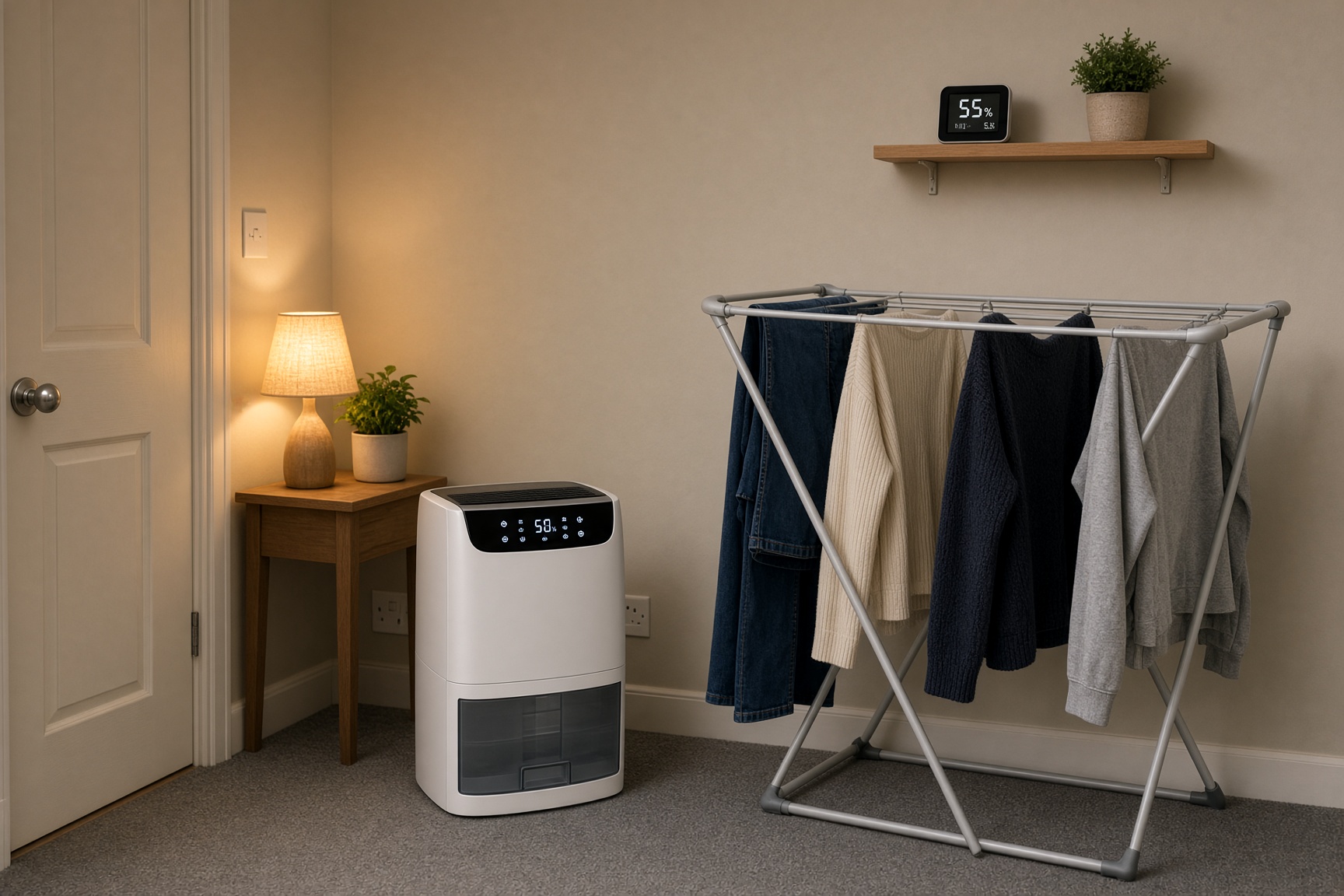
| Dry washing | Beside the airer, in the smallest room you can use | Door closed |
| Bedroom condensation | In the bedroom by day, or on the landing outside at night if the noise bothers you | Bedroom door open at night |
| Bathroom steam | Not in the bathroom. Use the extractor fan, and stand the dehumidifier just outside with the door open after a shower | Open |
| Garage, conservatory or unheated room | In the room, and use a desiccant model if it stays below about 15°C | Closed |
Wherever it goes, keep the windows shut, keep it upright on a level floor, and leave it in one place if you can, which is what Meaco advises.
How long does a dehumidifier take to work?
You should notice drier air and clearer windows within a few hours, if the machine is big enough for the space. Getting a damp home fully under control takes longer.
| Situation | How long to expect |
|---|---|
| A normal room that feels a bit damp | A few hours |
| A load of washing in a small closed room | 4 to 6 hours. Up to 8 or more in a cold room |
| First use in a damp room | Several days |
| A new machine in a damp house | It may run almost constantly for the first two to four weeks, then settle into switching on and off |
| Rising damp, a leak or wet plaster | Weeks or months, and it will not solve the cause |
The first weeks are slow because the machine is not only drying the air. Walls, carpets, furniture and clothes have all soaked up moisture, and they give it back gradually. If the tank keeps filling, it is still doing its job, so leave it running.
How much water should it collect?
Far less than the number on the box. The litres-a-day figure is measured at 30°C and 80% humidity, which no UK home reaches in winter. Meaco publishes figures for realistic rooms, and they work out like this:
| Room conditions | 10 litre model | 20 litre model |
|---|---|---|
| 30°C, 80% humidity (the lab test) | About 0.43 litres an hour | About 0.83 litres an hour |
| 20°C, 60% humidity (a heated living room) | About 0.18 litres an hour | About 0.35 litres an hour |
| 10°C, 60% humidity (a cold spare room) | About 0.06 litres an hour | About 0.14 litres an hour |
So in a heated home, a small glass of water an hour is normal for a 10 litre machine. If yours collects much less, check that the windows are shut, the filter is clean and the room is warm enough. If it collects almost nothing and the humidity reading is already under 50%, the air is dry and it has done its job.
How long should you run it each day?
Leave it switched on and let the humidistat decide. A machine set to 50–55% will run a lot in a damp week and very little in a dry one. That costs less than running it flat out for a fixed number of hours, and it keeps the humidity steadier.
As a guide to cost, a compressor dehumidifier uses 4p to 9p of electricity an hour at the October 2026 price cap. Running for eight hours a day comes to about £10 to £22 a month, depending on the model. The running cost table in our buying guide has the figure for each one.
Most homes need one mainly in the colder months. In summer, opening windows does the same job for nothing, unless you have a basement or a room that stays damp all year.
Does a dehumidifier warm or cool a room?
It warms it slightly. It does not cool it. Meaco, a UK dehumidifier maker, is clear that a dehumidifier cannot cool a room.
A room can feel fresher with one running, because dry air feels less clammy, and that is sometimes mistaken for cooling. If you want a room colder, you need an air conditioner. In winter the extra warmth is a small bonus, which we explain in dehumidifier vs tumble dryer.
Can you leave a dehumidifier on overnight, or when you are out?
The advice is split, and you should know both sides.
What the makers say
Meaco and Russell Hobbs both say their dehumidifiers are designed to run for long periods, including overnight. Meaco points out that switching one off for eight hours a night stops it working for a third of the time.
What Electrical Safety First says
The safety charity advises against running a dehumidifier overnight or while you are away from home, unless the manufacturer confirms that model is safe to run unattended.
The sensible reading is to check your manual. A current model from a known brand, with a humidistat and automatic shut-off, is built for continuous use, and its instructions will say so. An old, second-hand or unbranded machine is the one not to leave running.
Can you sleep with one on? Yes, if the noise does not bother you. The quietest models run at about 35dB on their low setting. If you are a light sleeper, Meaco's advice is to put it on the landing outside the bedroom with the door open. Our pick for bedrooms is the MeacoDry Arete One 10L.
What does a dehumidifier do for your health?
It removes one of the conditions that mould needs, and dust mites prefer humid air too. Government guidance on damp and mould says they mainly affect the airways and lungs, and can also affect the eyes and skin, with children, older people and those with asthma or allergies most at risk. Keeping humidity under 60% makes a home less welcoming to both.
A dehumidifier is not a medical device, and it will not clean mould that is already growing. Deal with that first, using our guide to black mould in the bedroom. It is also possible to overdo it: air below about 40% humidity can leave your skin, eyes and throat feeling dry, so there is no benefit in setting it lower.
Which dehumidifier should you buy?
Three questions settle it: how big the home is, how cold the room is, and whether noise matters.
| If you want | Look at |
|---|---|
| The quietest and cheapest to run, for a flat or bedroom | MeacoDry Arete One 10L |
| The best all-rounder with a laundry mode | Pro Breeze 20L |
| A larger or damper house | MeacoDry Arete One 20L |
| Drying washing most days | Best dehumidifier for drying clothes |
| A garage, conservatory or cold room | Best desiccant dehumidifiers |
| Condensation in the loft | Usually not a dehumidifier job: what fixes loft condensation |
Frequently asked questions
Ready to pick one?
We compare five dehumidifiers on real extraction, noise and running cost, with a best pick for every room.
See the Best Dehumidifiers →Related Guides
Published 6 October 2026. Humidity settings, exhaust air temperatures, placement advice and realistic extraction figures are from Meaco. Safety advice is from Electrical Safety First. Drying times and the two to four week settling period are from manufacturers quoted by Ideal Home. Health effects are from the UK government's guidance on damp and mould. Running costs use the October 2026 Ofgem price cap of 26.32p per kWh. Water per hour is our own sum: Meaco's litres-a-day figures divided by 24. This guide is general information, not a damp survey of your home.
The point about a new machine running nearly non-stop for the first two to four weeks matches what I have seen, so it is worth planning for the noise and power early on. One practical tweak: before trusting the built-in humidistat, check it against a cheap separate hygrometer placed a metre away, because sensors near the intake often read the air going in rather than the room. If the readings differ by more than about five percent, adjust the target setting or move the unit.