
How to Dry Clothes Indoors Without Causing Damp or Mould (UK 2026)
A single wash load can put around two litres of water into your air. Here's where it goes, how to stop it turning into condensation and black mould, and what each drying method actually costs at October 2026 prices.
Quick answer: You can dry clothes indoors without causing damp, as long as the water leaving your washing is removed from the room rather than left to settle on cold windows and walls. Spin at the highest speed your fabrics allow, dry in one room with the door shut, and either run a dehumidifier or an extractor fan or crack a window. Keep humidity between 40% and 60%. Don't dry on radiators, and remember a heated airer speeds up drying but doesn't remove any moisture on its own.
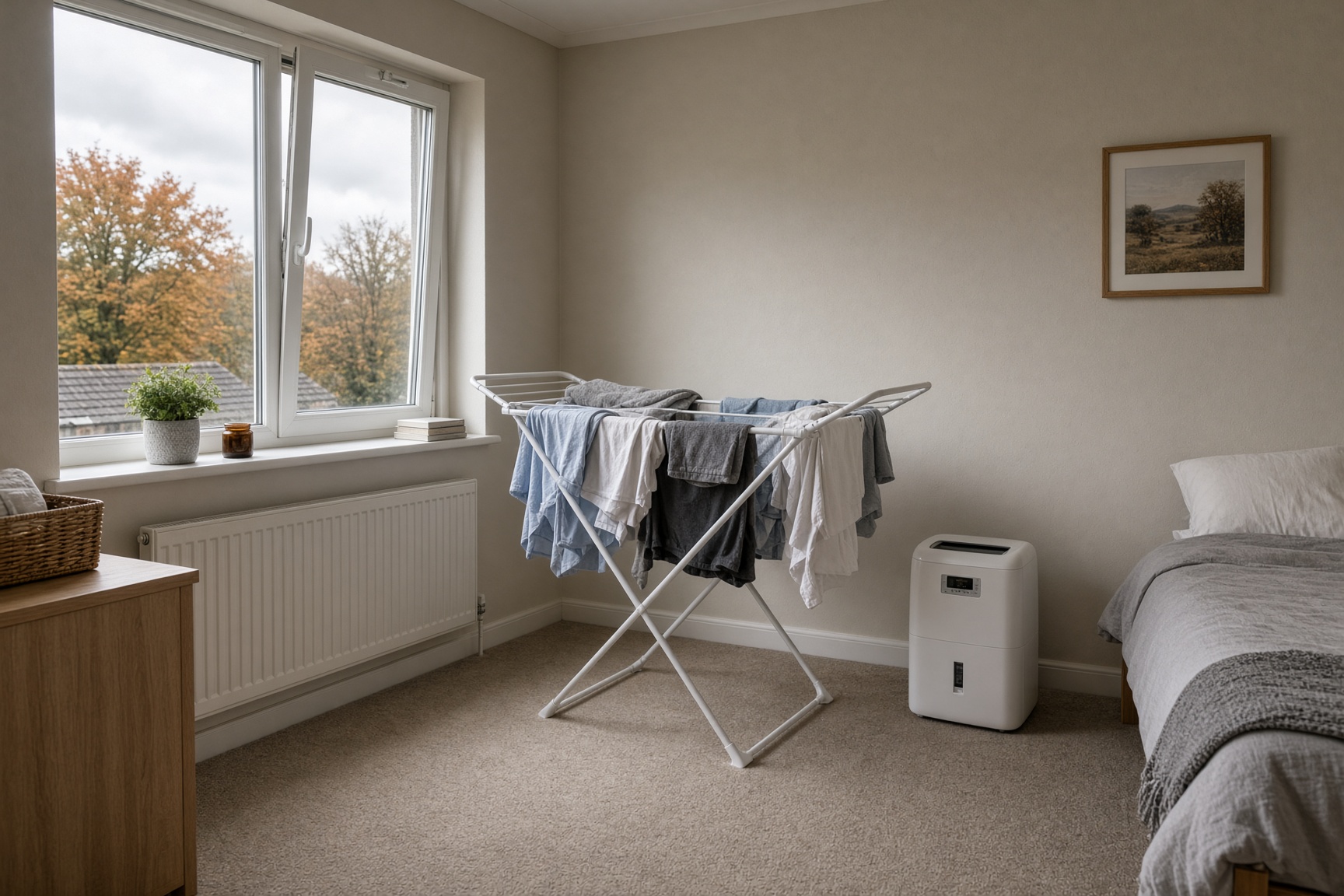
Why Drying Clothes Indoors Causes Damp
Every drop of water in a wet wash has to go somewhere. Indoors, it goes into the air. A 2025 full-scale study of indoor laundry drying (Thevenet et al.) measured around 2kg of water, roughly two litres, evaporating from a single cotton load, with most of it released in the first few hours. Within three hours, the room's relative humidity had climbed to around 80%.
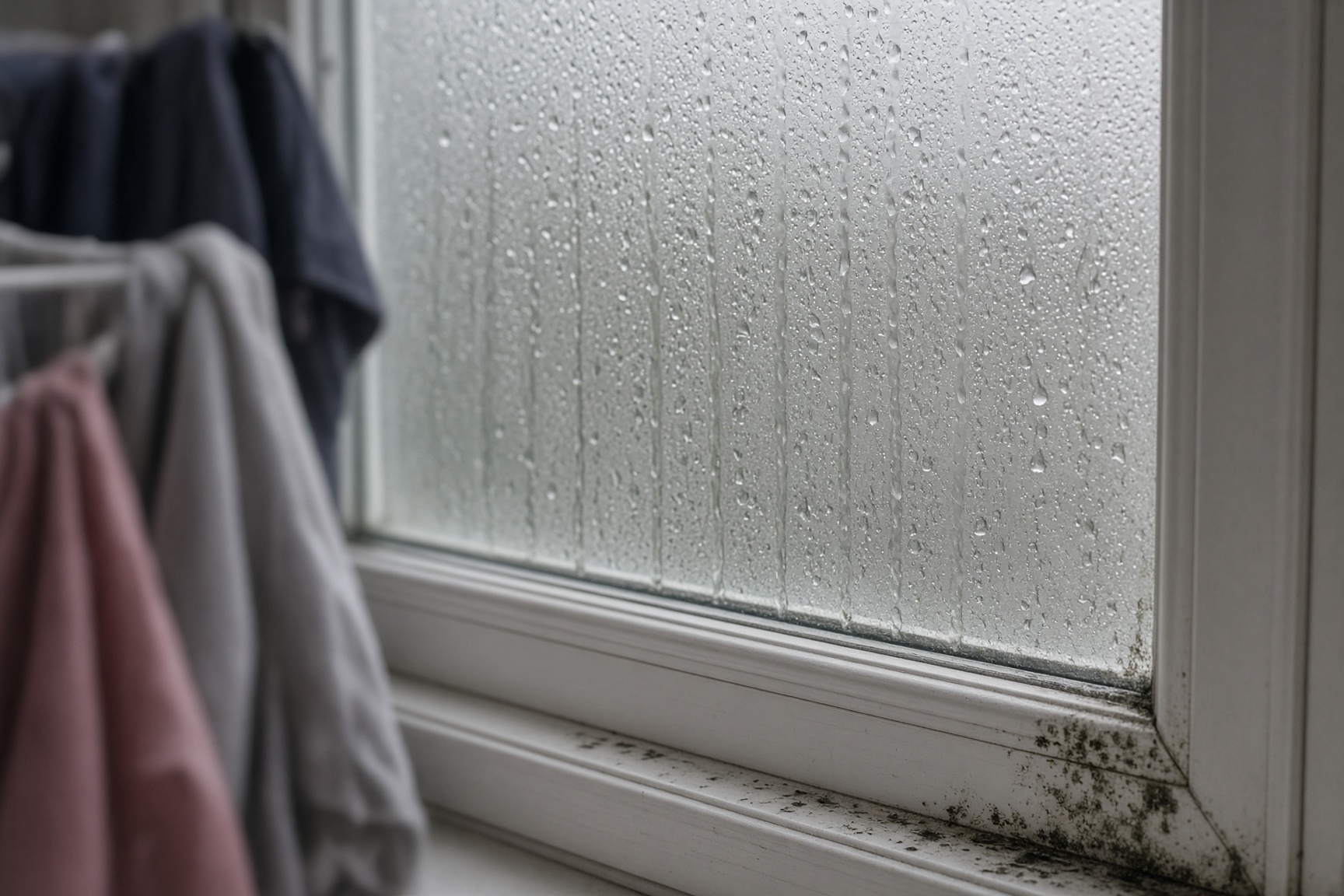
Warm air holds that moisture happily, until it touches something cold. Then it condenses: on single-glazed windows, north-facing walls, the back of wardrobes and the corners behind furniture. That's exactly where condensation shows up first, and where black mould follows if it happens day after day.
Why it matters for health: The UK Health Security Agency estimates damp and mould in English homes were linked to around 5,000 new cases of asthma and 8,500 lower respiratory infections in 2019. Government guidance flags children, older people, pregnant women and anyone with asthma, COPD or a weakened immune system as most at risk. It also recommends drying laundry outdoors where possible.
Two or three loads a week, all winter, adds up to a lot of water in a sealed-up house. The good news: it's one of the easiest moisture sources to control, because you decide where and how it happens.
The Best Way to Dry Clothes Indoors: 8 Rules That Prevent Damp
How to Dry Clothes Fast Indoors (Even in Winter)
Clothes dry when the water in them evaporates, and that happens fastest in air that's warm, dry and moving. Indoors in winter you usually have only one of the three, so the trick is to add the others:
- Run a dehumidifier next to the airer in a small room with the door shut, on laundry mode if it has one. It's the fastest way to dry clothes without a tumble dryer, usually 4–6 hours for a full load, and it deals with the damp at the same time.
- Keep the air moving. A fan pointed at the airer speeds drying noticeably and costs only a few pence an hour. Moving air carries moisture away from the fabric so more can evaporate.
- Give every item space. Hang shirts and dresses on hangers, leave a gap between items and don't double-layer. Turn thick items like jeans and hoodies inside out and flip them halfway through.
- Split heavy and light items. Towels and jeans take far longer than t-shirts. Put them on the airer first, in the best spot for airflow, and take the quick-drying items off as soon as they're done.
- Keep the room steadily warm, around 18–20°C. Cold rooms dry slowly, and warm, damp air hitting cold walls is what causes condensation.
- Start outside on dry days, even in winter. Cold, breezy weather still dries clothes well. A few hours on the line followed by finishing indoors cuts both drying time and the moisture you bring inside.
A heated airer plus a dehumidifier is the fastest combination of all: the airer drives the water out quickly and the dehumidifier removes it from the air before it can condense.
Buying a heated airer?
The best heated clothes airers, compared on cost per load
Six airers from about £50 to £200, what a load really costs on each, and when a dehumidifier or tumble dryer works out cheaper.
How to Dry Bedding and Towels Without an Airer
Sheets, duvet covers and towels are the hardest things to dry indoors because they're big and hold a lot of water. If you don't have an airer, or it's already full:
- Use the bathroom. Hang sheets and duvet covers over the shower rail or a rail across the bath, with the extractor fan running and the door shut. The moisture goes straight out, and drips land in the bath.
- Two chairs back to back. Drape a sheet across the backs of two chairs set apart, so air reaches both sides, and move it every couple of hours so the folds dry.
- Over a door, not a radiator. An internal door in the room with the dehumidifier works well for a folded sheet. Keep bedding off radiators for the same reasons as clothes.
- Towels on hangers. A towel hung from a hanger dries much faster than one folded over a rail. A heated towel rail is fine in a bathroom with the fan running.
- Duvets are the exception. A whole duvet can take days to dry indoors and stays damp in the middle, which risks mould and smells. Dry it outside on a dry, breezy day or use a large dryer at a launderette.
How to Stop Clothes Smelling Damp When Drying Indoors
That musty smell comes from bacteria and mildew growing on fabric that stays damp for too long. The fix is mostly about speed and cleanliness:
- Dry it faster. The longer clothes stay wet, the more likely they are to smell. A dehumidifier and some airflow make the biggest difference.
- Hang it straight away. Wet washing left in the drum for hours starts to smell before it's even out of the machine.
- Clean the washing machine. Run an empty hot maintenance wash monthly, and clean the detergent drawer and door seal, where smelly residue builds up.
- Don't overload or overdose. An overfull drum doesn't rinse properly, and too much detergent or fabric softener leaves a residue that traps smells.
- Don't dry in a damp room. If the room already sits above 65–70% humidity, clothes can't dry properly and will pick up that musty smell.
What Each Drying Method Costs Per Load
Costs below use the October 2026 price cap electricity rate of 26.32p/kWh. Your own cost depends on your appliance, your tariff and how wet the load is.
| Method | Energy per load | Cost per load | Removes moisture? |
|---|---|---|---|
| Airer + open window or extractor | None (fan uses very little) | ~0p | Partly, but lets heat out |
| Compressor dehumidifier (130–350W, 4–6 hrs) | 0.6–2.1 kWh | ~16–55p | Yes, collects it in the tank |
| Heated airer (220–300W, ~8 hrs) | 1.8–2.4 kWh | ~46–63p | No, it adds moisture faster |
| Heat pump tumble dryer | ~1–1.5 kWh | ~26–39p | Yes, into its water tank or drain |
| Vented or condenser tumble dryer | ~2.5 kWh | ~66p | Yes, if vented outside or condensed |
The dehumidifier comes out well on both counts: it's among the cheapest options, and it deals with the moisture problem directly. See our best dehumidifier for drying clothes, from about 4p an hour. Most of the electricity it uses also ends up as gentle warmth in the room. For the full comparison, see our dehumidifier vs tumble dryer running cost guide.
Cut the cost further: On a time-of-use or Economy 7 tariff, running a dehumidifier or tumble dryer overnight can cost noticeably less than at the standard rate. See how the off-peak tariffs compare. If you have plug-in or rooftop solar, the middle of a bright day is the cheapest time of all.
Radiators and Heated Airers: Two Common Mistakes
Drying on radiators
Clothes draped over a radiator block the warm air that would normally circulate round the room, so the thermostat calls for heat for longer. The water is driven off quickly and all at once, sending humidity up fast. With gas up around 8.7% from 1 October, that's paying extra to make your damp problem worse.
Assuming a heated airer solves damp
Heated airers are popular because they're cheap to buy and dry clothes faster than an unheated rack. But speed is the only thing they change. The same two litres of water still goes into your room, just over fewer hours. A heated airer on its own in a closed room can actually push humidity higher, faster. If you use one, pair it with a dehumidifier or good ventilation. Our guide to the best heated clothes airers compares what each one costs to run.
When the Problem Isn't Just the Laundry
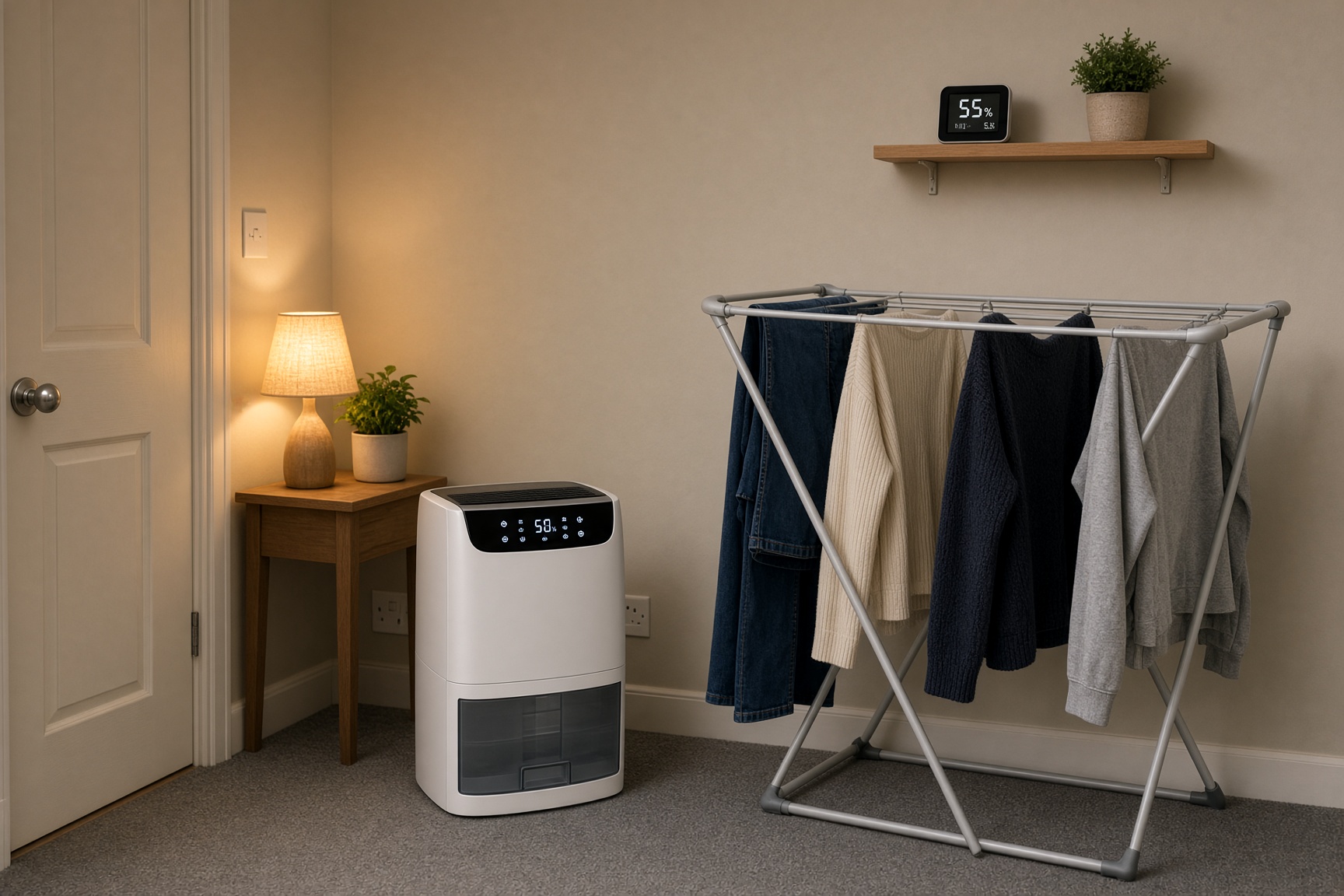
If you've done all of the above and you still see mould, the laundry may just be the most visible of several moisture sources. Cooking, showers and breathing all add to it, and cold walls make everything worse. Damp that stays in one patch whatever the weather, or tide marks low on a wall, points to something else. Our guide to damp patches on walls explains how to tell condensation from rising or penetrating damp.
Longer term, warmer walls mean less condensation. Better insulation raises the temperature of the surfaces moisture condenses on, which is why well-insulated homes tend to have far fewer mould problems.
Drying Clothes Indoors: Frequently Asked Questions
Related Guides
- → Best Heated Clothes Airers UK: running costs compared
- → Condensation on Windows and Walls: why it happens and how to stop it
- → Black Mould in the Bedroom: causes and fixes
- → Best Dehumidifiers UK: including the best for drying clothes
- → What Does a Dehumidifier Do? How they work and how to use one
- → Dehumidifier vs Tumble Dryer: the real running cost
- → Condensation on Windows: why it happens and how to stop it
- → Damp Patches on Walls: condensation, rising or penetrating?
- → Home Insulation UK: warmer walls, less condensation
Sources: Thevenet et al. (2025), Indoor laundry drying: full-scale determination of water emission rate and impact on thermal comfort; GOV.UK, Understanding and addressing the health risks of damp and mould in the home. Running costs are estimates at 26.32p/kWh (Ofgem cap, 1 October 2026) using typical appliance wattages; your costs will vary with your appliance, tariff and load.
Fix the Cause, Not Just the Condensation
Warmer walls mean less condensation. See what insulating your home could save you, free, no sign-up.