
Winter · Power Cuts · Backup Power
Best Portable Power Station UK 2026: Our Picks for Power Cuts and Home Backup
Eight portable power stations compared for UK homes: what each will actually run in a power cut, for how long, and a calculator for your own appliances.
Published 16 October 2026 · prices checked 16 October 2026
Affiliate disclosure: some links on this page are affiliate links. If you buy through them we earn a small commission at no extra cost to you. It doesn't affect what we recommend.
The short answer
On this page:
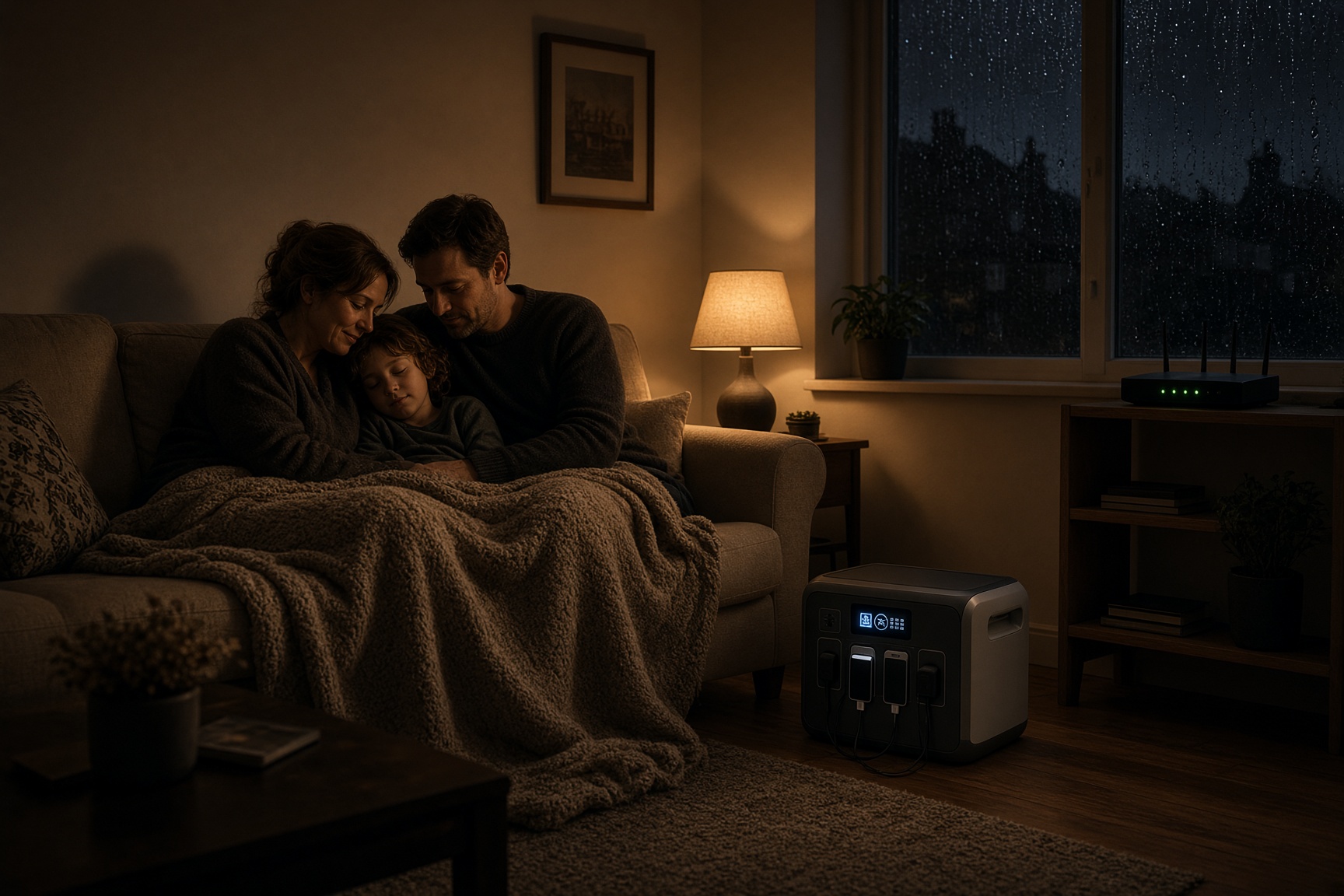
The best portable power stations in the UK
We compared the power stations EcoFlow, Jackery and Anker SOLIX sell in the UK on what matters in a power cut: usable capacity, output, how fast they switch over, battery type and price per kWh. All eight use LFP (lithium iron phosphate) batteries, which last for thousands of charge cycles and are the safest lithium chemistry for use indoors. Prices are from each brand's own UK store on 16 October 2026 and change often, especially around sales.
| Model | Capacity | Output | Switchover | Price | £ per kWh |
|---|---|---|---|---|---|
| Jackery Explorer 1000 v2 | 1,070Wh | 1,500W | ≤20ms | £419 | £392 |
| EcoFlow DELTA 3 Classic | 1,024Wh | 1,800W | 10ms | £499 | £487 |
| Anker SOLIX C1000 Gen 2 | 1,024Wh | 2,000W | <10ms | £599 | £585 |
| EcoFlow RIVER 3 (UPS) | 245Wh | 300W | <20ms | £199 | £812 |
| Anker SOLIX S2000 | 2,010Wh | 1,500W | <10ms | £649 | £323 |
| Jackery Explorer 2000 v2 | 2,042Wh | 2,200W | Not listed | £807 | £395 |
| Jackery Explorer 2000 Plus v2 | 2,048Wh | 2,400W | 10ms | £949 | £463 |
| EcoFlow DELTA Pro 3 | 4,096Wh | 4,000W | 10ms | £2,799 | £683 |
Jackery Explorer 1000 v2
1,070Wh · 1,500W output · UPS switchover in 20ms or less · LFP battery
The cheapest way we found to get a full kilowatt-hour of backup. It runs a Wi-Fi router, lights, phone charging and a fridge-freezer through a typical evening cut, and a router alone for days. Its 1,500W output covers most things except kettles, heaters and other heating appliances. The UPS function switches over in 20 milliseconds or less, so a router or desktop computer plugged through it stays on when the power goes.
Not expandable: if you might want more capacity later, look at the 2000 Plus v2.
EcoFlow DELTA 3 Classic
1,024Wh · 1,800W output (2,400W with X-Boost) · 10ms emergency switching · LFP cells
Similar capacity to the Jackery for £80 more, with more output and faster switching. The 1,800W output (and X-Boost for some higher-wattage devices) gives more headroom for a microwave or a hair dryer in a long cut, and the 10ms switchover suits desktop computers and networking kit. EcoFlow's app shows exactly what you are drawing and how long is left.
X-Boost lowers the voltage to run high-wattage devices, so heating appliances run at reduced power.
Anker SOLIX C1000 Gen 2
1,024Wh · 2,000W output (3,000W peak) · under 10ms UPS · full recharge in 49 minutes
The most powerful 1kWh unit here, and the quickest to refill: Anker's HyperFlash charging takes it from empty to full in 49 minutes at the wall. That matters when cuts come and go during a storm, because you can top it up in the gaps. The 2,000W output runs a microwave or kettle for short bursts, and the under-10ms UPS keeps a router, PC or CPAP machine running. Its time-of-use mode can also charge it on cheap overnight electricity.
£100 more than the DELTA 3 Classic for the same capacity, so only worth it if you value the faster charging and extra output.
EcoFlow RIVER 3 (UPS)
245Wh · 300W output · UPS version · under 30dB
If what you need most is to keep working through a cut, this small unit sits between the wall and your router, laptop or monitor and takes over in under 20 milliseconds. A typical router runs for well over a day on it, and it is quiet enough to leave on the desk all the time. It won't run a fridge-freezer for long and isn't meant to.
Only 245Wh: for lights and the fridge as well, choose a 1kWh model.
Anker SOLIX S2000
2,010Wh · 1,500W output · under 10ms UPS · LFP rated for 10,000 cycles · 16.2kg
Anker's new 2kWh unit is the cheapest way to double your backup: £649 when we checked, less than some 1kWh models were a year ago. At 16.2kg it is light for its size, so one person can carry it. It keeps a router, lights, phones and a fridge-freezer going through a full night, and its under-10ms UPS suits home offices and CPAP machines. The trade-off is output: 1,500W covers most essentials, but not a kettle or a 2kW heater.
New model: Anker says it starts shipping on 24 October, so check the delivery date when you order.
Jackery Explorer 2000 v2
2,042Wh · 2,200W output · LFP battery rated for 4,000 cycles
Twice the capacity of the 1kWh models, with more output than the Anker S2000. That is enough to keep a fridge-freezer, router, lights and phones going through a long evening and night, or a router and a few lights for several days. The 2,200W output also copes with a microwave or an induction hob ring for short spells.
Jackery doesn't list a UPS switchover time for this model, so use the 1000 v2 or 2000 Plus v2 for a router or PC.
Jackery Explorer 2000 Plus v2
2,048Wh, expandable to 12kWh · 2,400W output · 10ms UPS
Starts at 2kWh and takes up to five add-on battery packs, to 12kWh. That makes it the one to buy if you live somewhere with regular long cuts, or want to grow it into a bigger backup system later. The 2,400W output and 10ms switchover make it the most capable Jackery here.
Heavier than the 2000 v2, and extra battery packs add up quickly.
EcoFlow DELTA Pro 3
4kWh, expandable to 12kWh · X-Boost to 6,000W · 10ms switchover · transfer switch option
This is the step from portable backup to home backup. With EcoFlow's manual transfer switch fitted by an electrician, it can power chosen circuits in your home, such as the boiler, fridge, lights and sockets, rather than only what you plug into it. It is a big, heavy unit on wheels, and expensive, so it suits homes with frequent long cuts or someone who relies on powered medical equipment.
The transfer switch must be installed by a qualified electrician.
What can a power station run? Runtime calculator
Tick what you would want to keep running and change the wattages if you know yours. A plug-in energy meter, or the label on the appliance, tells you. We assume about 85% of the battery's capacity is usable, after inverter losses.
What you want to keep running
What size do you need: 500Wh, 1000Wh or 2000Wh?
Capacity, in watt-hours (Wh), is how much energy it stores. Output, in watts (W), is how much it can supply at once. For a power cut, capacity matters more, because most of what you want to keep on draws very little.
| If you want to keep running… | Size | Our pick |
|---|---|---|
| Router, laptop and phones for home working | 250–500Wh | EcoFlow RIVER 3 |
| Router, lights, phones and the fridge-freezer through an evening | 1kWh | Jackery 1000 v2 or EcoFlow DELTA 3 Classic |
| All of that overnight, or a CPAP machine for several nights | 2kWh | Anker SOLIX S2000 or Jackery 2000 v2 |
| Regular long cuts, or you want to add capacity later | 2kWh, expandable | Jackery 2000 Plus v2 |
| Chosen home circuits, including the boiler, via a transfer switch | 4kWh and up | EcoFlow DELTA Pro 3 |
Heating is the exception. A 2kW electric heater would drain a 1kWh power station in about 25 minutes. In a winter power cut, keeping yourself warm with layers, a heated throw or an electric blanket (about 60W) works far better than trying to heat a room. Our heater vs central heating guide has the running costs.
Can a power station run my gas boiler?
Your gas central heating stops in a power cut, because the boiler needs electricity for its controls, fan and pump. The boiler itself uses only a modest amount of power, which a 1kWh or 2kWh power station could supply. The problem is the connection.

Using a power station as a UPS
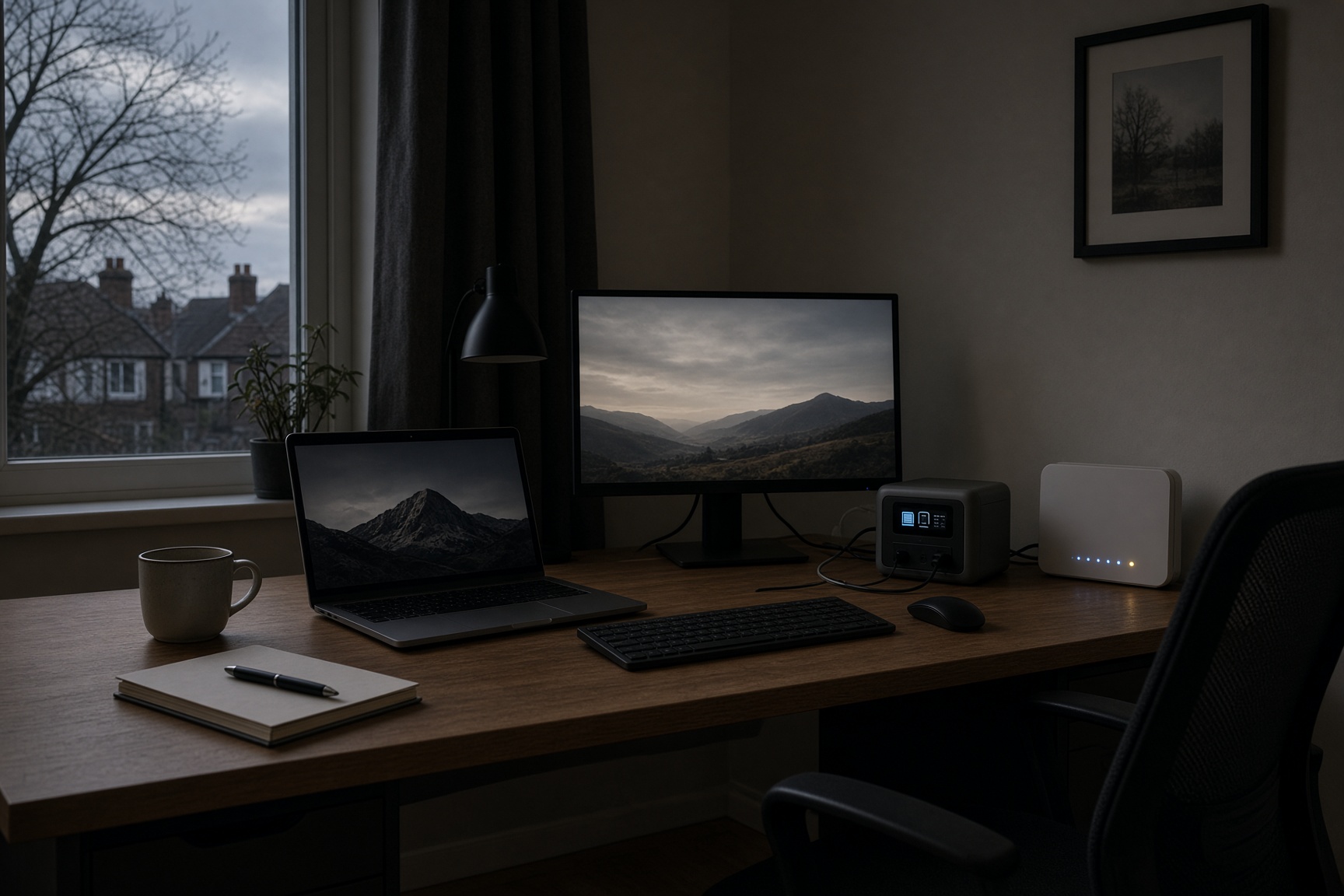
Most of our picks can act as a UPS (uninterruptible power supply). You plug the power station into the wall and your router or computer into the power station. While the mains is on, power passes straight through. When the power cuts, the power station takes over in 10 to 20 milliseconds, quickly enough that most routers and computers keep running without restarting.
That makes a power station useful all year, not just in winter: it protects a home office from short dips and cuts, and keeps the broadband up so you can check your network operator's power cut map on your phone.
Be ready for a power cut this winter
Using a power station safely indoors
Also useful for camping and campervans
The same power station that keeps your fridge going in a winter cut will run lights, a cool box, a laptop and phone charging on a camping trip, and many people buy one for both. For a tent or a weekend away, the EcoFlow RIVER 3 is small enough to carry easily. For a campervan or longer trips, a 1kWh model such as the Jackery Explorer 1000 v2 covers more, and most of our picks can be recharged from a portable solar panel.
Frequently asked questions
Thinking bigger than a power station?
A home battery charges from solar or cheap overnight electricity every day, and some can back up your home in a power cut too.
See the Best Home Batteries →Related Guides
Published 16 October 2026. Capacities, outputs, switchover times and prices are from EcoFlow's, Jackery's and Anker SOLIX's UK online stores, checked on 16 October 2026; prices change often. Runtimes assume about 85% of rated capacity is usable after inverter losses, and appliance wattages in the calculator are typical figures, so measure your own for a better estimate. The 105 power cut number covers England, Scotland and Wales.