
UK Home EV Charging Guide 2026
Home EV Chargers UK 2026
Everything you need to know about installing a home EV charger: costs, the OZEV grant, the best chargers, paying monthly, and when it pays to charge from solar.
Last reviewed: 1 October 2026
Pod Drive: a charger installed for £0 upfront, until 1 November. And the OZEV grant is now £500 for renters, flat owners and landlords, until March 2027.
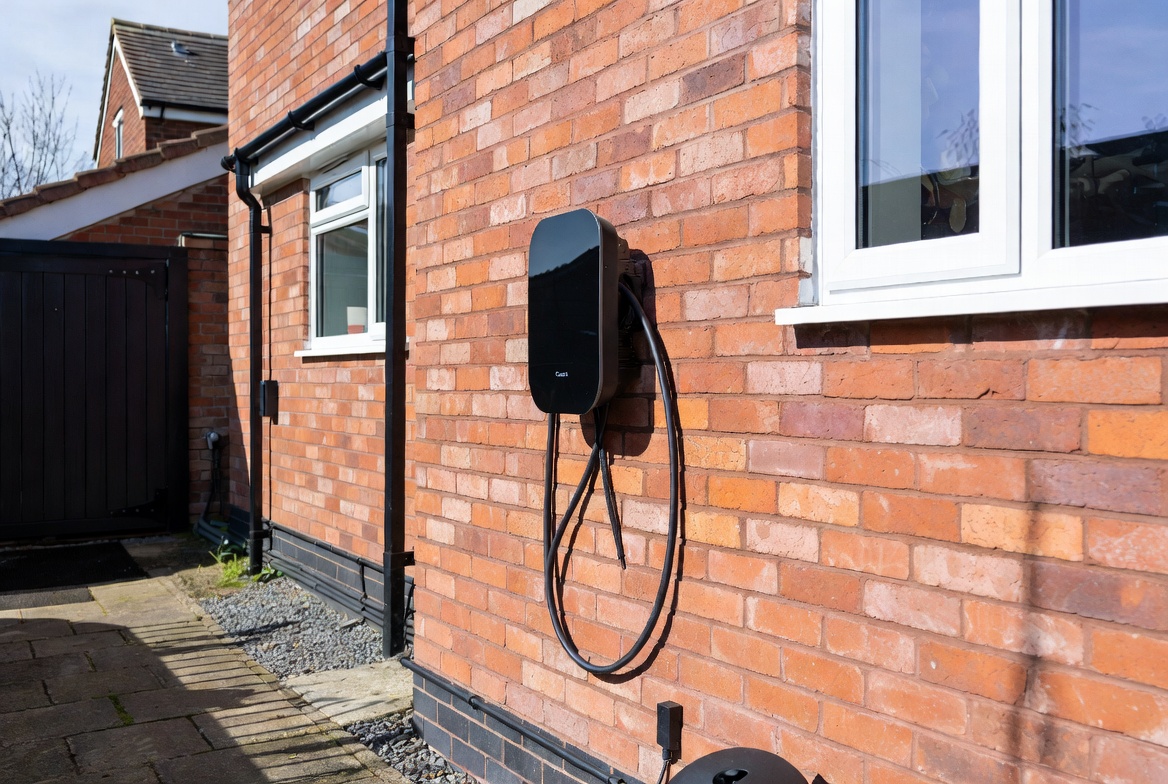
A 7.4kW smart home charger: fitted in a few hours, with running costs as low as 8p per kWh on a smart tariff.
Why Install a Home EV Charger in the UK?
A home EV charger is one of the best financial decisions an EV owner can make. Public rapid chargers cost 55–85p per kWh in 2026. Charging at home on an overnight smart tariff costs as little as 8p. For a driver covering 10,000 miles a year, that's roughly £800–£2,200 saved every year, depending on your tariff and how much you'd otherwise rely on rapid chargers. In most cases the charger pays for itself within the first year.
Beyond cost, home charging means waking up to a full battery every morning: no detours, no queues, no range anxiety. It's the biggest quality-of-life upgrade an EV owner can make.
The key question: 3-pin socket or dedicated charger?
You can charge an EV from a standard 3-pin socket, but it delivers only 2.3kW, so a full charge takes 24 hours or more. A dedicated 7.4kW charger does it in about 8 hours, fits inside a cheap overnight window and is built for the sustained load. For regular use, a dedicated charger is essential.
Home EV Charger Costs UK 2026
A fully installed 7.4kW smart charger typically costs £800–£1,400 in 2026, including the unit, labour, a standard cable run, the DNO notification and the Part P certificate. Most big brands now quote one price with standard installation included.
| Item | Cost | Notes |
|---|---|---|
| Charger unit | £500–£1,000 | Depends on brand and features |
| Standard installation | £400–£600 | Often bundled into the charger price |
| Consumer unit upgrade | £300–£600 | Only if your existing unit is too old |
| OZEV grant (if eligible) | −£500 | Renters, flat owners and landlords only |
| Typical total | £800–£1,400 | £300–£900 after the grant |
| Pay monthly instead | £0 upfront + £34/month | Pod Drive, 36 months; offer ends 1 November |
What pushes costs up
- Long cable run from the consumer unit
- Consumer unit or main fuse upgrade
- Groundworks to reach a detached garage
- Premium brand or finish (Andersen A3)
What brings costs down
- OZEV grant of up to £500 (if eligible)
- Charger close to the consumer unit
- Modern consumer unit already fitted
- Getting three or more quotes
Want to know what your miles will cost once it's in? Try our EV charging cost calculator.
OZEV EV Chargepoint Grant 2026
OZEV EV Chargepoint Grant
Renters · Flat owners · Landlords
The grant rose from £350 to £500 in April 2026 and covers 75% of the cost of buying and installing a socket, up to that cap. Your OZEV-approved installer claims it for you and takes it off your invoice, so you never handle the money yourself.
Who qualifies:
Important: homeowners in houses are not eligible, and haven't been since April 2022. If that's you, a monthly plan like Pod Drive or an installer's 0% finance spreads the cost instead. If you park on the street, see our guide to cross-pavement charging.
Landlord grant: up to £500 per socket
Landlords can claim for chargepoints at their rental properties: up to £500 per socket, and up to 200 sockets a year across a portfolio. It's a useful way to attract EV-owning tenants and future-proof a property.
Best Home EV Chargers UK 2026
The right charger depends on whether you have solar panels, which energy tariff you're on, how you want to pay and how much looks matter.
Myenergi Zappi
The definitive EV charger for solar panel owners
The Zappi is unrivalled for solar. A clip-on CT sensor watches your home's energy flow and adjusts the charging speed to match your spare solar in real time. Three modes: Fast (full speed from any source), Eco (solar topped up from the grid) and Eco+ (solar surplus only). If you have panels or plan to fit them, it's the obvious choice.
Ohme Home Pro
Best for Octopus Energy customers and smart tariff users
The Ohme Home Pro is the best choice on Octopus: it works natively with Intelligent Octopus Go and schedules charging in the cheapest slots with no manual input. It uses a built-in 4G SIM instead of your Wi-Fi, so the connection is reliable. It has a basic Solar Boost mode, but the Zappi is far better for solar.
Pod Solo 3S (formerly Pod Point)
Reliable, installation included, a large installer network
Pod Point rebranded as Pod in May 2025, and the Solo 3S is one of the most widely fitted home chargers in the UK. It does the basics very well: OZEV approved, Which?-endorsed standard installation in the price, a simple app, and Pod Rewards cashback for smart charging off-peak. The warranty is 3 years if you buy outright and 5 years on Pod Drive. Smart features are simpler than the Zappi's or Ohme's, which suits drivers who want something that just works.
Pod Drive: £0 upfront, then £34 a month for 36 months
The same charger and installation, with a 5-year warranty and a 48-hour repair guarantee. You own the charger from day one. It costs £1,224 over three years against £1,049 to buy outright, and the plan rolls on monthly after 36 months unless you cancel. The £0-upfront offer ends 1 November 2026 (normally £99). Full comparison →
We earn a commission if you order from Pod through these links, at no extra cost to you.
Andersen A3
Best looks: designed and made in the UK
The Andersen A3 is unapologetically premium: metal or real-wood fronts in 247 finishes, a cable that hides away inside the unit, and UK manufacturing. It looks like part of the house, not an afterthought. The 7-year warranty is the longest on the market, and solar charging is included as standard. For buyers who want the charger to be a feature, not an eyesore.
Want the full head-to-head?
Our comparison of all four chargers has spec tables, checked prices and the Pod Drive vs buying outright maths.
Read: Best EV Charger UK 2026 →Which Charger Is Right for You?
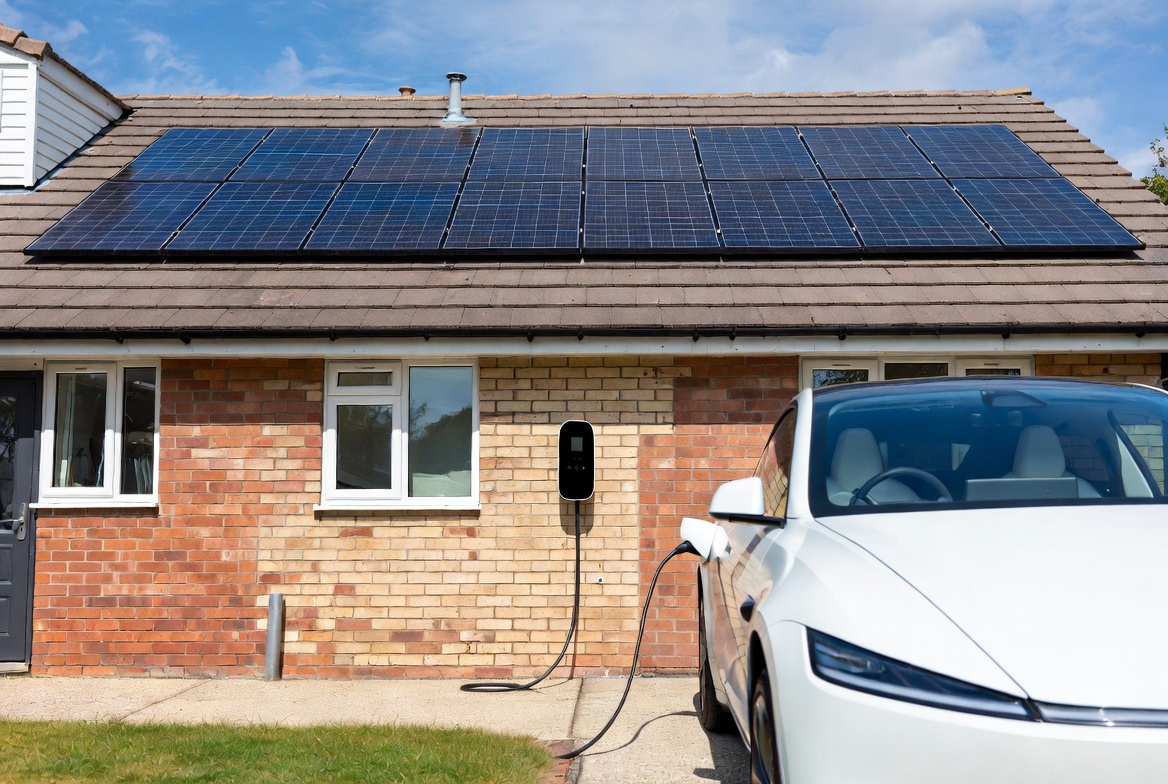
Charging from your own solar panels: the cost is only the export payment you give up.
Solar Panels + EV Charger: When It Pays
Pairing solar panels with a Zappi is one of the most satisfying home energy upgrades: on a sunny day a typical 4kW system makes far more electricity than the house uses, and the Zappi channels the spare straight into your car.
It isn't quite free, though. Every unit you put in the car is a unit you didn't export, so the real cost is your export rate. That gives a simple rule:
Charge from solar if…
your export rate is low (most basic SEG tariffs pay 4–6p), you're not on an EV tariff, or your car is at home during the day. Solar miles then beat anything the grid offers.
Export and charge overnight if…
you're paid 12–15p to export and can charge at 8p overnight. Selling your solar and refilling the car off-peak earns you more. See the best export tariffs.
Add battery storage to get more from both
A home battery stores spare solar in the day and cheap grid power overnight, then runs the house through the expensive hours. Combined with a smart tariff, most of your driving and home use ends up on solar or off-peak electricity. See our battery storage guide, or the whole plan in how to electrify your home.
Frequently Asked Questions
Related Guides
Get Free EV Charger Quotes
Compare quotes from OZEV-approved local installers. Free, no obligation, GDPR compliant.
OZEV grant of up to £500 for eligible renters, flat owners and landlords, until March 2027.
Free · No obligation · OZEV-approved installers only