
Best EV Charging Tariffs UK 2026 — Every Supplier Compared
Not just Octopus. Real off-peak rates, real windows, and the day-rate trap that catches out low-mileage drivers.
Affiliate disclosure: Some links on this page may be affiliate links — if you buy through them we earn a small commission at no extra cost to you. This doesn't affect our recommendations.
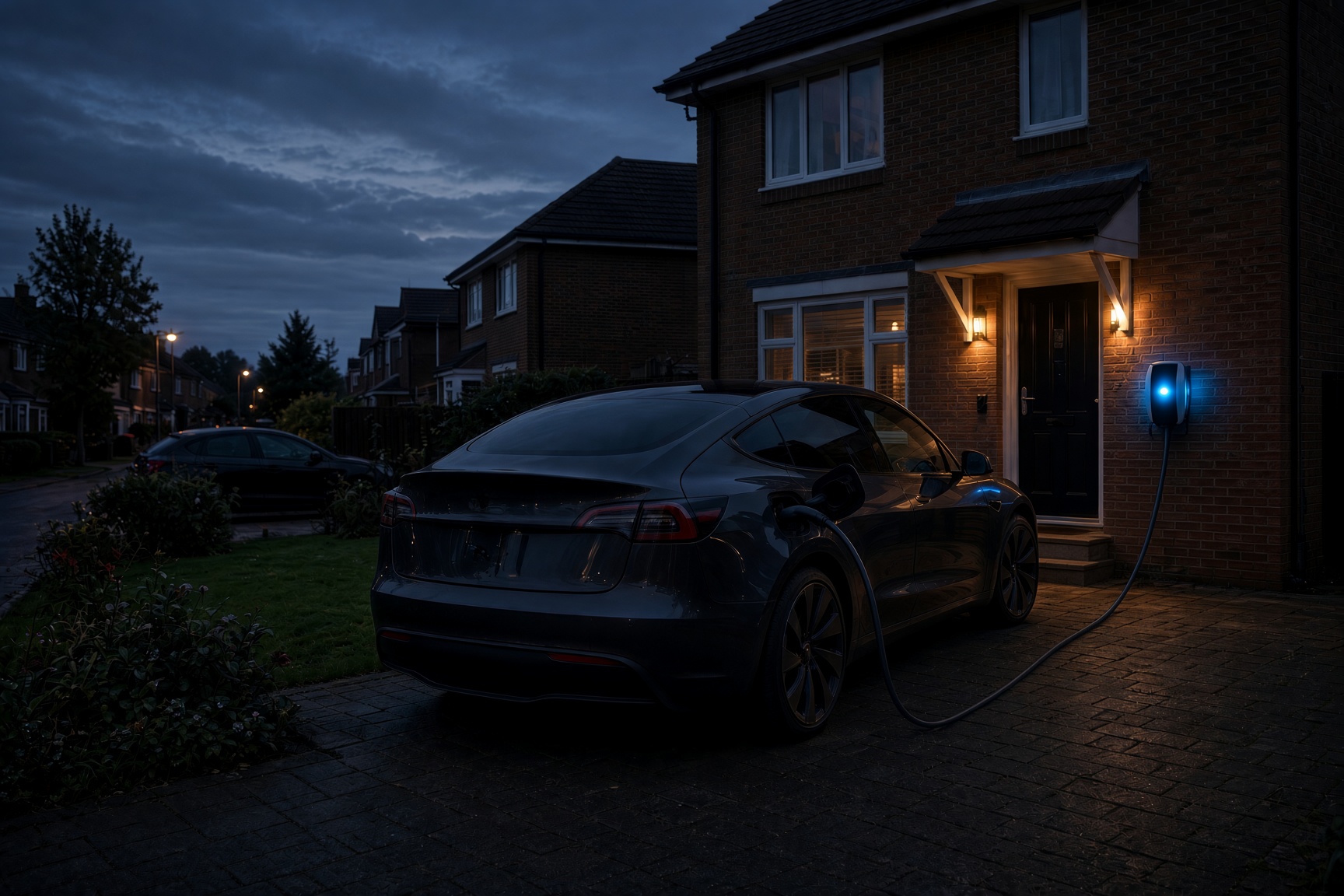
Octopus Intelligent Go gets most of the attention, and it's a genuinely good tariff — but it's not automatically the cheapest or the best fit for everyone. EDF, E.ON, Scottish Power, British Gas, Good Energy and a genuine new challenger all run their own EV tariffs, with real, meaningful differences in rate, window length, and what happens to the rest of your electricity bill.
Quick answer: EDF GoElectric currently offers the cheapest simple overnight rate (around 7p/kWh, no smart charger required) and — genuinely distinctively — bills your whole house at that rate while the car charges. Octopus Intelligent Go (8p/kWh) remains the strongest choice if you want fully automated smart scheduling, though it's now capped at 6 hours of discounted EV charging per day. Scottish Power EV Optimise is worth checking if you're home a lot during the day, since its standard daytime rate is genuinely lower than most competitors'. Whichever you pick, the single biggest mistake is ignoring the daytime rate — it's often meaningfully higher on an EV tariff, and can wipe out the overnight saving for low-mileage or work-from-home households.
Every EV Tariff Compared
Rates are indicative and change regularly — always confirm current pricing directly with the supplier before switching. Daytime rates and standing charges vary significantly between suppliers and are not shown here; see the section below on why they matter more than the headline rate.
What Genuinely Differs Between Them
EDF GoElectric — the honest simple option
No smart charger required — just set a timer. Genuinely distinctive feature: connect a compatible charger or EV and EDF gives your whole home the cheap rate whenever the car is actually drawing power, even outside the fixed window, plus a real £5/month bill discount for the smart bolt-on.
Intelligent Octopus Go — the automated choice, now with a real cap
The most widely used EV tariff in the UK, compatible with 280+ EV models and chargers. Genuinely worth knowing: since 2026, smart EV charging is capped at 6 hours of discounted charging per 24-hour period — a separate limit from the whole-home overnight window, and one that can trigger at any time of day, not just at night.
Scottish Power EV Optimise — worth checking if you're home during the day
Runs as an add-on to a standard tariff rather than a full restructure — genuinely useful distinction, since your standard daytime rate stays the same rather than jumping to a higher EV-tariff daytime rate, while EV charging specifically still gets the discounted rate.
OVO Charge Anytime — genuinely not "unlimited"
Worth being clear about this, since it's a genuinely common misunderstanding: this is a flat monthly fee (roughly £27.50–£79.50) banded by mileage allowance, not truly unlimited charging. Read the specific band terms before assuming it covers your actual usage.
The Day-Rate Trap — Why This Matters More Than the Headline Number
This is genuinely the detail most comparison articles skip, and it's the single biggest reason an EV tariff can end up costing you more, not less. Most EV tariffs fund their cheap overnight rate by charging a higher rate during the day — often 27-32p/kWh, against a standard tariff's roughly 24-26p/kWh.
⚠️ If you work from home, run a heat pump, or have a household that genuinely can't shift most usage into the overnight window, do the maths on your actual daytime consumption before switching. Several real UK EV owners have found the higher day rate outweighs the overnight saving entirely for their household — it's genuinely not a universal win, and depends heavily on your specific mileage and daytime usage pattern.
A genuine home battery changes this calculation significantly — charging the battery cheaply overnight and running the house from it during the day means you rarely touch the higher daytime rate at all. See our battery storage comparison if this sounds like your situation.
Fuse Energy — The Genuine New Challenger
Worth knowing about if you haven't come across it yet. Fuse Energy launched in 2023, founded by former Revolut executives, and has grown genuinely fast — over 50,000 UK homes, 484% three-year sales growth, and a strong 4.5-4.8 Trustpilot score across thousands of reviews. It's Ofgem-licensed and well-capitalised, and offers a real, dedicated EV time-of-use tariff alongside its aggressively-priced standard deals.
Worth being honest about the trade-off: Fuse is app-only with no phone support, and has a genuinely shorter track record than the established suppliers on this page. Its pricing also moves faster than the Big Six's, since it competes primarily on aggressive rates — worth checking its current live rate directly rather than relying on a fixed figure here.
When Switching Genuinely Isn't Worth It
- 🚗 Low annual mileage — under roughly 5,000-6,000 miles a year, the overnight saving may not offset a higher day rate or standing charge
- 🏠 Home most of the day — working from home, retired, or a household using most electricity during daylight hours
- 🔌 No smart meter — required for every tariff on this page; suppliers install one free on request if you don't have one
- 📋 Already on a good fixed deal — worth comparing your actual current rate against the EV tariff's day rate before switching mid-contract, since exit fees can apply
Not sure which tariff suits your usage?
Model your own mileage and daytime usage against each supplier's actual rate structure before switching.
Use the EV Charging Cost Calculator →Frequently Asked Questions
Related Guides
Published September 2026. Rates and tariff terms change frequently — always confirm current pricing directly with each supplier before switching. Cool Power Co is an independent comparison site and is not affiliated with any energy supplier named here.
Compare Your EV Charging Costs
Model your own mileage and tariff options before you switch.
Use the Calculator →