
Battery Storage Guide
Adding Batteries to Existing Solar System UK: Sizes, Costs & Compatibility
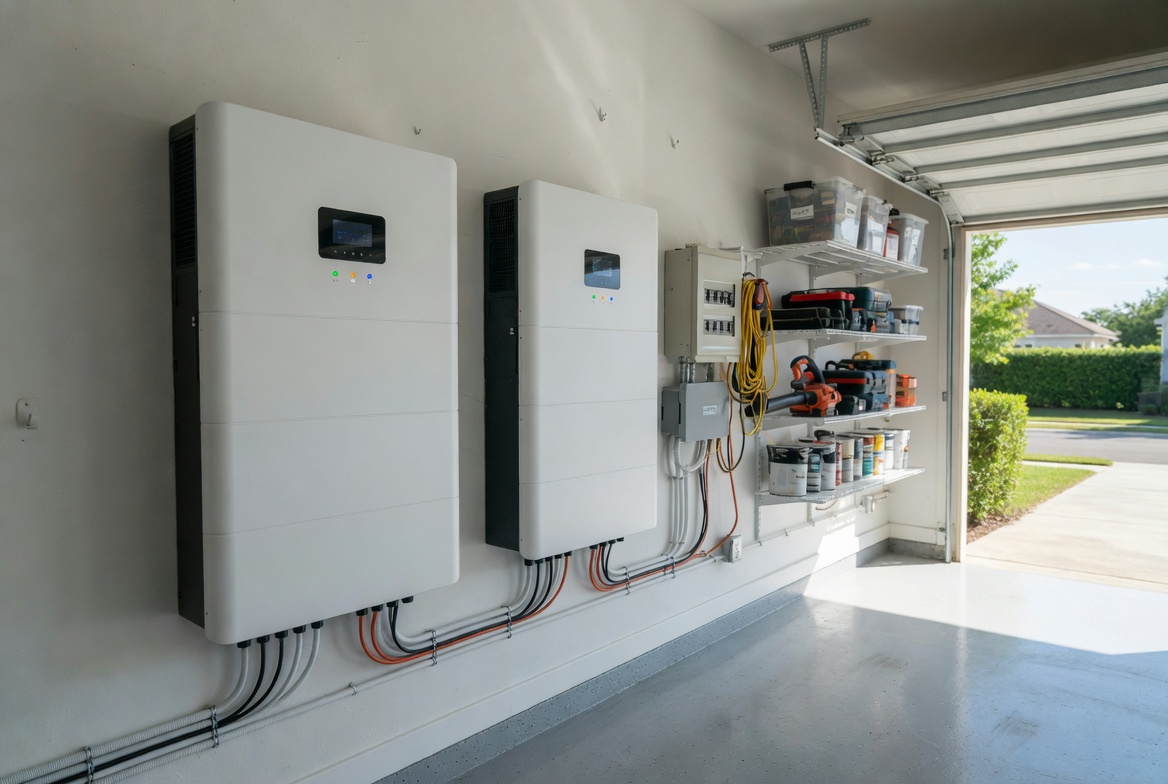
Adding batteries to existing solar system UK setups is one of the most common upgrades homeowners ask about. If you had solar panels fitted without a battery, the good news is it's usually possible. The catch is that what you can add, and what size makes sense, depends entirely on the inverter you already have, not just your roof.
Last reviewed: 10 October 2026
Quick answer: Adding batteries to an existing solar system UK-wide almost always means one of two routes: an AC-coupled battery (its own small inverter, works with any existing solar setup, roughly £4,500–£7,500 fitted for 5–10kWh) or a hybrid inverter swap if your current inverter supports a DC-coupled battery add-on (usually cheaper battery hardware but a bigger job, from about £5,500). Most retrofits use AC-coupling because it doesn't touch your existing, already-certified solar installation. Size the battery to your actual daily export, not the biggest one you can afford, and always confirm compatibility with your original installer or the battery manufacturer before ordering anything.
AC-Coupled vs DC-Coupled: Adding Batteries to Existing Solar System UK
This is the first decision to make, and it's not really a preference, it's dictated by what inverter you already have on the wall.
For most people the AC-coupled route wins on simplicity: your original solar installation, its MCS certificate and any SEG export arrangement stay exactly as they are. Tesla Powerwall 3, Fox ESS and Anker SOLIX X1 all offer AC-coupled options designed for adding onto an existing system. See how they compare on our Best Home Battery UK roundup.
What Size Battery to Add
Because your solar array is already fixed in size, sizing a retrofit battery is really about how much of your daily export you currently lose back to the grid, not a fresh calculation from scratch.
Don't guess: check your real export. This table is a starting point based on typical UK yields, not your actual numbers. If your solar was installed with an app (Solis, SolarEdge, Fox ESS or Tesla monitoring, for example), you can see your real average daily export from the last 12 months. Size to that figure, not the table. For a personalised recommendation that factors in your tariff and occupancy too, run our Battery Storage Calculator →.
Compatibility Checklist Before You Order
The single most common mistake with retrofits is buying a battery before checking it will actually talk to the existing inverter. Work through this before getting quotes:
- Identify your existing inverter make and model: it's usually on a sticker on the unit itself, or in your original installation paperwork
- Check the inverter's age: inverters over 8–10 years old are approaching typical replacement age anyway, which can tip the decision toward a hybrid swap instead of AC-coupling
- Confirm your consumer unit has spare capacity: a battery needs its own circuit, and older consumer units sometimes need an upgrade first
- Check your SEG or export tariff terms: most providers are fine with adding a battery, but some tariffs are written around solar-only systems, so it's worth a two-minute call
- Got a GivEnergy inverter? GivEnergy entered administration on 9 April 2026, and its administrator has said it will not honour hardware warranties. Ask installers about an AC-coupled battery from another brand rather than adding more GivEnergy kit
- Use an MCS-certified installer for the retrofit: this keeps your original installation's certification valid and is required if you want the addition itself to count for any future incentive scheme
What It Actually Costs to Add
Retrofit pricing tends to run a little higher than a battery fitted at the same time as new solar, because the installer is working around an existing system rather than designing from scratch. As a guide for 2026, using the installed prices in our best home battery guide. Batteries have 0% VAT until 31 March 2027.
About 5kWh (for example Myenergi Libbi or Sunsynk): £4,500–£6,800 fitted
About 10kWh (for example Fox ESS EP11): £5,500–£7,500 fitted
13.5kWh (Tesla Powerwall 3): £8,500–£11,500 fitted. A hybrid inverter swap usually starts from about £5,500, depending on the battery
These prices sit above the "solar plus battery from day one" figures you'll see elsewhere because of the extra labour involved in integrating with an existing system. Budget for that rather than being caught out by a retrofit quote that looks higher than expected. Not sure your current system is even earning what it should first? Run the numbers on our Solar Savings Calculator before you add anything.
Frequently Asked Questions
Can any solar inverter have a battery added later?
In practice, yes, even older, non-hybrid inverters can take an AC-coupled battery, because it connects independently at the consumer unit rather than through the inverter itself. The exception is very old or unusual inverter models that an installer may struggle to find monitoring compatibility for; a quick model check with the battery manufacturer avoids surprises.
Will adding a battery affect my existing SEG export payments?
Not usually, most SEG tariffs are based on metered export, and a battery still allows export once it's full. It's worth confirming with your specific SEG provider, as a small number of older tariff terms were written before batteries were common.
Is it cheaper to add a battery now or wait?
Battery prices have been falling gradually year on year, but retrofit labour costs haven't. If your solar system is already exporting a meaningful amount you're losing to the grid for free, the payback clock is running now. Waiting for a slightly cheaper battery rarely outweighs the savings missed in the meantime.
Do I need the same brand of battery as my existing inverter?
No, not for an AC-coupled retrofit, that's the main advantage of this route. Because the battery has its own inverter built in, it doesn't need to match or communicate with your existing solar inverter's brand. A DC-coupled hybrid swap is more brand-dependent, since the new inverter needs to be compatible with your existing panels.
Related Guides
Which kind of quote suits you?
"I'd rather deal with one good installer" Get a quote from Blue Ape Renewables, the installer we work with. MCS-certified and NAPIT-accredited, fitting batteries and solar panels across England, Wales and Scotland. Get a quote →Tell us about your project and local installers will quote
Both are free and there's no obligation. We earn a commission if you go ahead with Blue Ape or with one of the installers you are matched with.