
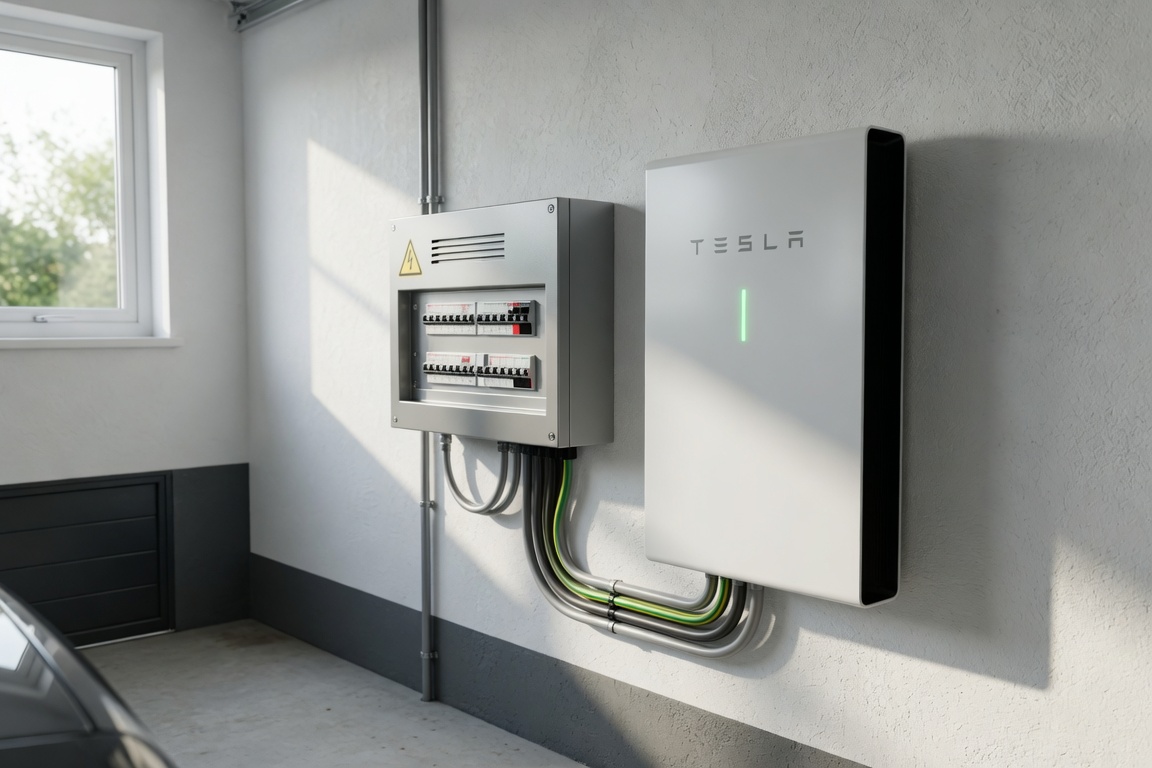
Battery Storage · Deep Dive
Home Battery Storage Without Solar: Does It Pay Off?
It can, by charging overnight at a cheap rate and using that power in the day instead of buying at the full price. Here are the sums at October 2026 prices, the condition that decides whether it works for you, and which tariffs you can get without an electric car.
Last updated: 23 October 2026
Affiliate disclosure: some links on this page are affiliate links. If you buy through them we earn a small commission at no extra cost to you. It doesn't affect what we recommend.
Most people assume a home battery only makes sense once there are solar panels on the roof. It doesn't have to. A battery on its own, paired with the right tariff, can pay for itself by moving electricity from a cheap hour to an expensive one.
The 30-second version
On this page:
How a battery without solar makes money
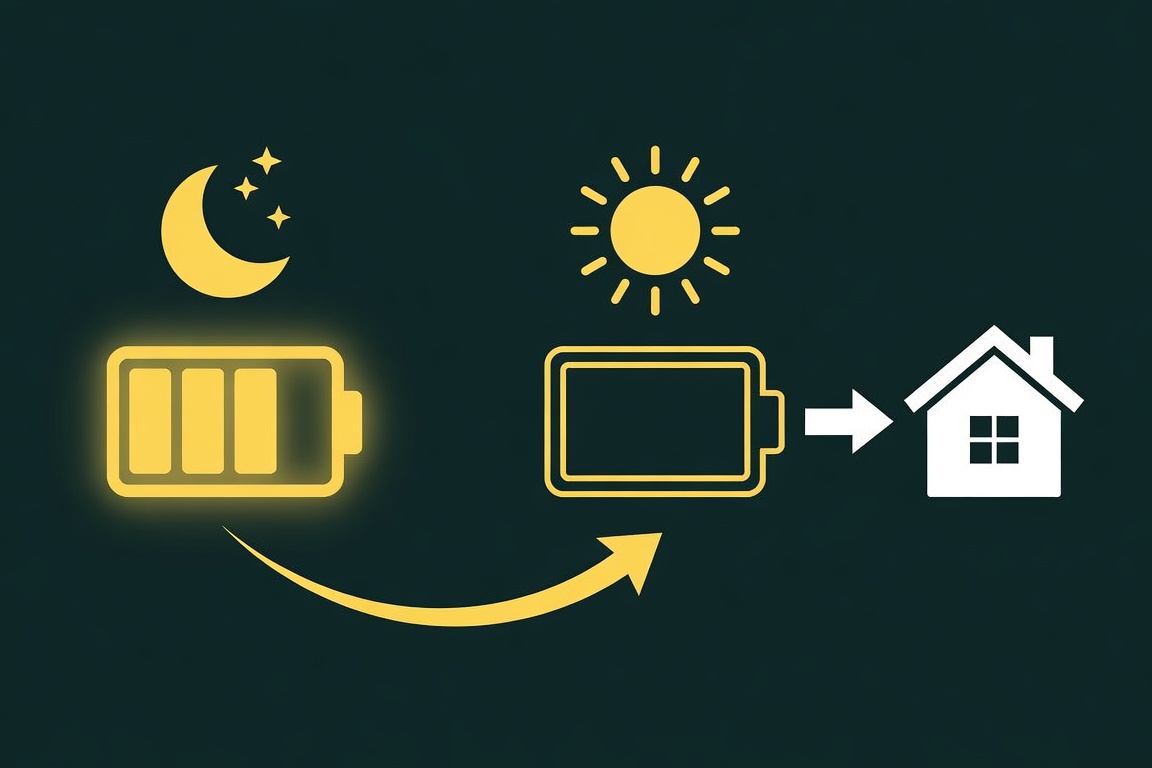
A home battery doesn't know or care where its electricity comes from. Storing solar surplus is the best case, but a battery on its own does something simpler: it moves electricity through time.
UK electricity is not one price. On a time-of-use tariff the same kilowatt-hour can cost 9.4p at 2am and 34p at 6pm. A battery lets you buy the day's electricity at 2am and use it at 6pm. That is the whole trick. It needs a battery, a suitable tariff and software that charges it every night.
The sums, worked through
| Battery size | Saving if cycled fully every day | Saving at 80% use | Installed cost | Payback |
|---|---|---|---|---|
| 5 kWh | £290 a year | £232 a year | £3,950–£6,800 | 14–29 years |
| 10 kWh | £580 a year | £464 a year | £5,500–£7,500 | 10–16 years |
The 80% column is the one to plan on. Nobody uses the whole battery every single day: you go away, the weather is mild, or the house is empty. Installed prices are the typical ranges from our best home battery guide and carry 0% VAT until 31 March 2027. A 5 kWh battery rarely pays back on arbitrage alone, so if this is your only reason for buying, look at 10 kWh.
One more thing to count, and it matters more since October. Octopus Go's daytime rate is now about 33p to 36p, roughly 8p above the 26.32p price cap. Anything the battery doesn't cover costs that much more than before, while anything you already use overnight costs much less. As a rule of thumb, the battery needs to cover at least about a third of your daytime use for Go to beat staying on the standard price cap, before counting any use you already have overnight. Our battery storage calculator works it through for your own usage.
The catch almost nobody mentions
The saving depends on emptying the battery most days
A 5 kWh battery only saves £290 a year if you draw 5 kWh from it every day. If your household uses 2 or 3 kWh between the cheap window ending and bedtime, a 5 kWh battery is oversized and you will see a fraction of the headline figure. This is the most common reason people are disappointed with a battery-only installation. They bought a size from a brochure, not from their own usage.
Before you buy, look at your smart meter data or in-home display and add up what you use between the end of the cheap window and bedtime. That is your target capacity. Slightly too small, with an occasional top-up from the grid, beats too big and half empty every night.
Which tariff makes this work
You need a time-of-use tariff with a real gap between cheap and expensive hours. A smart meter alone isn't enough. This is where a battery-only home has to be careful, because the cheapest overnight rates are designed for electric cars:
| Tariff | Cheap rate | Can you get it without an EV? |
|---|---|---|
| Intelligent Octopus Go | 8p on its 12-month fix, six hours overnight | No. It needs a compatible electric car or charger |
| Octopus Go | 9.4p, 00:30 to 05:30 | No. Octopus requires an electric car you charge at home |
| Octopus Agile | Changes every half hour. Cheapest overnight and on windy days | Yes. Any home with a smart meter. Works best with software that picks the cheapest slots |
| Economy 7 | Varies by supplier and region, for seven hours overnight | Yes. Any home, from most suppliers. The gap is usually smaller than on Go, so the saving is lower |
| Cosy Octopus | About 13.5p to 14.8p in three windows a day, 41p to 45p from 4pm to 7pm | Only for homes with a heat pump, electric radiators or an electric boiler. A battery that covers the 4pm to 7pm peak saves about 27p per kWh |
The tariff decides the payback. At an Economy 7 night rate of, say, 15p, the saving per kWh shifted drops from about 16p to about 10p, which stretches a ten-year payback towards sixteen. On a flat-rate tariff there is no gap at all, so a battery has nothing to work with. Switching tariff is free, and it is the step to take before you spend anything on hardware. Our Octopus tariff comparison covers the options in detail.
The second income: grid flexibility payments
Separately from arbitrage, suppliers sometimes pay households to use less, or export, when the grid is under strain, typically on cold winter evenings. Octopus's Saving Sessions is the best known scheme and a battery lets you take part without changing what you do. Treat it as a bonus worth tens of pounds a year, paid in credit or points. It is irregular, it has become less generous since it launched, and it should not be part of your payback sums.
DIY versus a professionally installed system
If you're comfortable sourcing your own plug-in solar kit, you may be tempted to do the same with a battery. Buying LFP cells and a compatible inverter yourself can undercut a branded, professionally supplied system on hardware cost.
This is not a DIY connection job. A battery wired into your consumer unit falls under Part P of the Building Regulations and the BS 7671 Amendment 4 rules covered in our battery installation rules guide, including the loft ban and 1 metre clearance requirements that took effect on 15 October 2026. You can source and specify the kit yourself. The connection needs a qualified electrician. If you want something you can plug in yourself, look at plug-in solar batteries instead.
What DIY saves is the retail markup, not the cost of doing it safely. Budget for the electrician's time however you source the hardware.
Should you wait for solar instead?
It depends on your roof. Solar and a battery together are the stronger combination, because the battery fills for free on sunny days and from the cheap rate on dull ones. If you own a roof that suits panels, plan the two together so the inverter and battery are sized as one system. Our solar panel calculator shows what the panels add.
If you rent, have an unsuitable roof, or want savings sooner, a battery on its own is a real product and not a consolation prize. It pays back more slowly than solar with a battery, but it needs no roof survey or scaffolding and starts saving from the first night on the new tariff.
If what you mostly want is backup in a power cut rather than a lower bill, you don't need an installed battery at all. A portable power station keeps the Wi-Fi, lights and fridge going, costs from about £199 and moves house with you.
Frequently asked questions
Which kind of quote suits you?
"I'd rather deal with one good installer" Get a fitted price from Blue Ape Renewables, the installer we work with. MCS-certified and NAPIT-accredited, fitting batteries and solar panels across England, Wales and Scotland. Get a fitted price →Tell us about your project and local installers will quote
Both are free and there's no obligation. We earn a commission if you go ahead with Blue Ape or with one of the installers you are matched with.
Related Guides
Published 5 August 2026, updated 23 October 2026. Figures use the October 2026 price cap of 26.32p per kWh and Octopus Go's rates from Octopus Energy's tariff data on 23 October 2026: 9.4p overnight and about 33p to 36p in the day. Cosy rates are the range across all 14 regions on the same date. Round-trip efficiency is modelled at 90%. Tariff rates vary by region and change often, so confirm current rates, eligibility and battery compatibility with the supplier and your installer before you buy.