
Solar · Buyer Warning
Plug-In Solar Batteries Are Excluded From the UK's Plug-In Rules
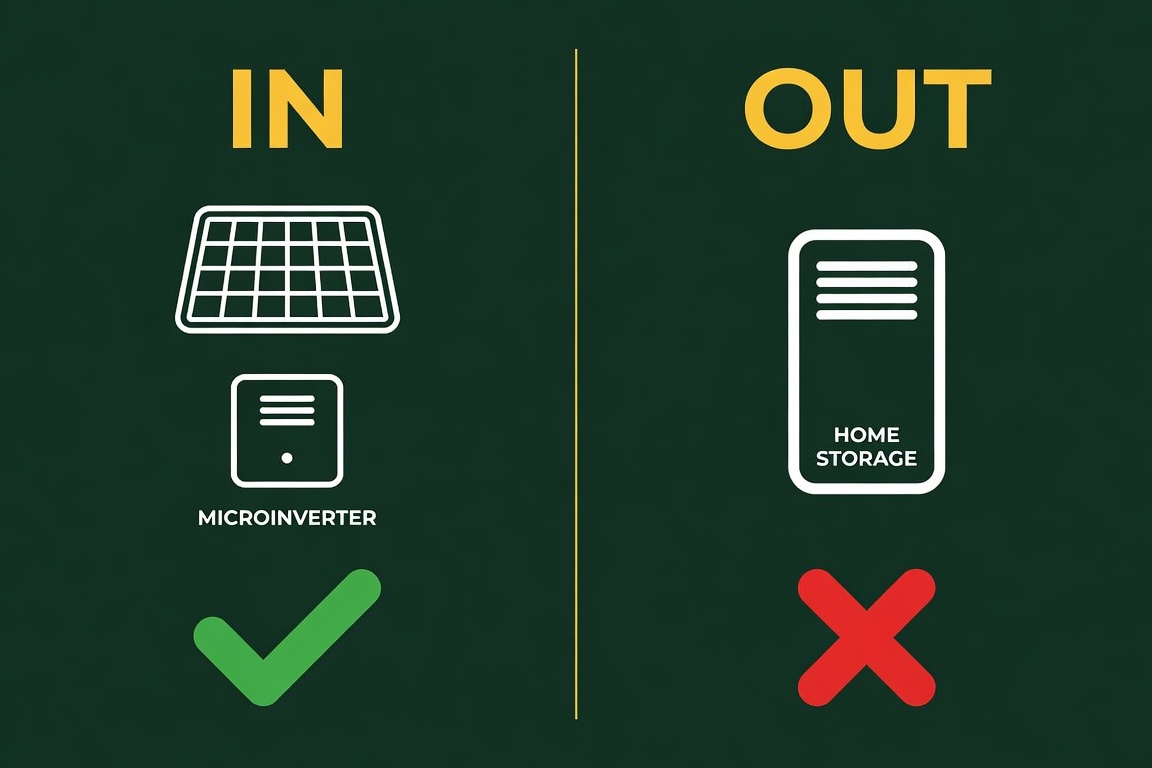
Plug-in solar became legal to fit yourself on 27 August 2026. Batteries were left out. They are still sold as "plug-and-play", but the rules exclude battery storage and every compliant solar kit has to warn you not to connect one.
Last updated: 2 October 2026
Affiliate disclosure: some links on this page are affiliate links. If you buy through them we earn a small commission at no extra cost to you. It doesn't affect what we recommend.
The 30-second version
On this page:
What the rules say
In July 2026 the government published two documents setting out how plug-in solar works in Britain: the Interim Product Specification, which defines a compliant device, and its consultation response. The framework took effect on 27 August 2026. We break both documents down in our guide to the specification.
On batteries the wording is unusually blunt. The specification does two things:
The two exclusions, in plain English
1. Out of scope. The rules do not apply to plug-in battery systems, or to plug-in solar devices with batteries built in.
2. Warning required. The instructions for every compliant kit must carry a prominent warning that the device is not intended to be connected to, operated with, or used alongside a battery energy storage system.
This isn't a gap someone forgot to fill. It is deliberate, it is written into the product rules, and manufacturers have to tell you about it in the box.
What the register shows, five weeks on: the Energy Networks Association's type test register listed 84 compliant plug-in solar kits on 30 September 2026. None includes a battery. Battery products that manufacturers have submitted, including Anker's Solarbank, sit under a separate "Energy Storage Device" category and are marked non-compliant for self-installation.
Why batteries were excluded
The consultation drew 466 responses, and batteries were one of the most common objections. Many respondents argued that leaving storage out weakens the financial case, because without a battery your midday surplus goes to the grid unpaid.
The government's reason is worth reading before assuming bad faith. Battery-integrated products raise technical and regulatory issues that were not assessed in this work. The safety study behind the framework examined panels and microinverters. It did not model a battery discharging into a household circuit through a 13A plug, which behaves differently under fault conditions and carries a different fire risk.
The nuance: the response also says the government will keep developing evidence on battery-integrated products. So this is "not yet, evidence pending" and not a permanent refusal. A later extension is plausible. No date has been given.
They're on sale anyway
Here is the awkward part for buyers. While the rules excluding storage were being finalised, manufacturers carried on launching plug-in batteries, some of them marketed in language that contradicts the UK position.
AEG AS-BBL09 and AS-BBL08
AC-coupled modular batteries: 4.8 kWh per module on the BBL09, 3.0 or 6.0 kWh on the BBL08, both with 10-year warranties. The manufacturer describes "effortless plug-and-play installation". Products of this type are in the category the UK specification excludes.
Add-on batteries from the plug-in brands
EcoFlow's STREAM batteries (roughly £799 to £1,099 when we checked) and equivalents from Anker and Zendure are sold in the UK as add-ons to plug-in solar. See our EcoFlow STREAM and Anker Solarbank 4 Pro reviews for how each one has to be installed.
To be clear: none of these products is illegal to buy, sell or own. What they are not is covered by the plug-and-play framework. Buying one doesn't give you the right to plug it into a socket the way you now can with a compliant solar kit.
If you've already ordered one
Don't panic. Do check three things.
Is a battery still worth buying?
Sometimes. A battery on a plug-in kit earns money in two ways, and it helps to look at them separately:
| Where the saving comes from | Rough yearly value | What it depends on |
|---|---|---|
| Solar you would otherwise give away | About £66 | Plug-in kits get no export payment, so surplus is lost. A battery saves about 250 kWh a year of it on an 800W kit |
| Cheap overnight charging | Up to about £100 | Needs a time-of-use tariff and a battery that can charge from the grid. Based on a 2 kWh battery |
| Both together | About £160 | Against a cost of roughly £950 to £1,800 with the electrician |
What you gain
What it costs
Our advice: buy the solar first. Watch your generation and usage in the app for a couple of months, then decide on storage. The panels pay back sooner, in about 4 to 9 years for a compliant kit at today's prices. They are the part you can fit yourself, and you will size a battery far better from your own data than from a spreadsheet. That is how we built our renter starter bundle.
Two routes that work today
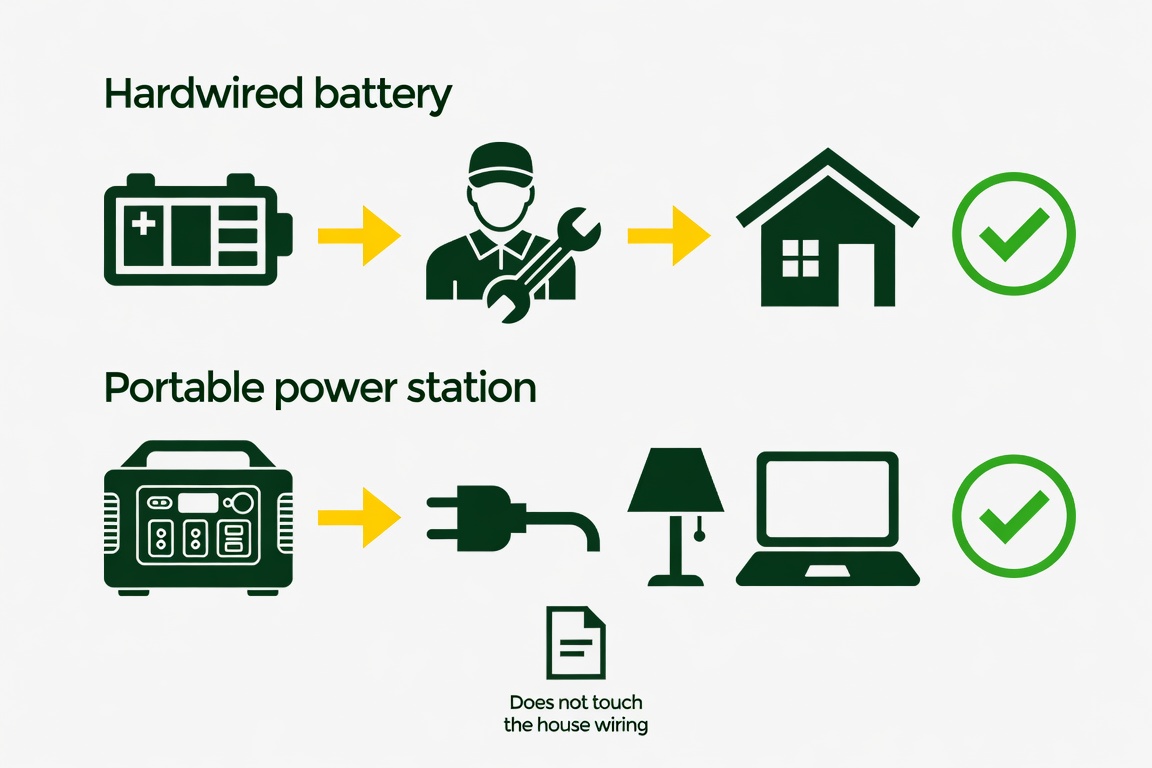
1. A hardwired battery, fitted by an electrician
How home batteries have always been installed, and entirely legal. You get the full benefit and proper certification, and 0% VAT applies when it is supplied and installed together. It isn't the cheap plug-in convenience some marketing implies. The payback on a battery alone →
2. A portable power station
The quiet workaround, and it suits renters. A unit such as the EcoFlow DELTA 3 Classic charges from your panels or from cheap overnight electricity, then runs appliances from its own sockets. It never feeds your home's circuits, so none of these rules apply to it. No electrician, no network notification, and it moves house with you. Best portable power stations → · Current battery deals →
Frequently asked questions
Start with the panels, add storage later
Our plug-in solar guide covers the compliant kits, the payback and what a realistic all-in cost looks like.
Read the Plug-In Solar Guide →Related Guides
Published 20 July 2026, updated 2 October 2026. Based on the DESNZ Plug-in Solar Device Interim Product Specification (Version 2.0, July 2026) and the DESNZ Government Response to the plug-in solar consultation (July 2026), Crown copyright under the Open Government Licence v3.0, and the ENA type test register as checked on 30 September 2026. Product details and marketing language are from manufacturers' own published materials at the time of writing. Prices and availability change often, so check before ordering. Savings use the October 2026 price cap of 26.32p per kWh. General information only, not electrical or financial advice. Consult a qualified electrician about connecting battery storage.