
Winter Heating · Buying Guide
Best Electric Heaters UK 2026: Cheapest to Run, Costs Compared
What every kind of electric heater costs per hour at today's price cap and January's forecast, which type is cheapest to run, and the eight heaters worth buying.
Last updated: 10 October 2026
Affiliate disclosure: some links on this page are affiliate links. If you buy through them we earn a small commission at no extra cost to you. It doesn't affect what we recommend.
Our top pick · Best for most rooms
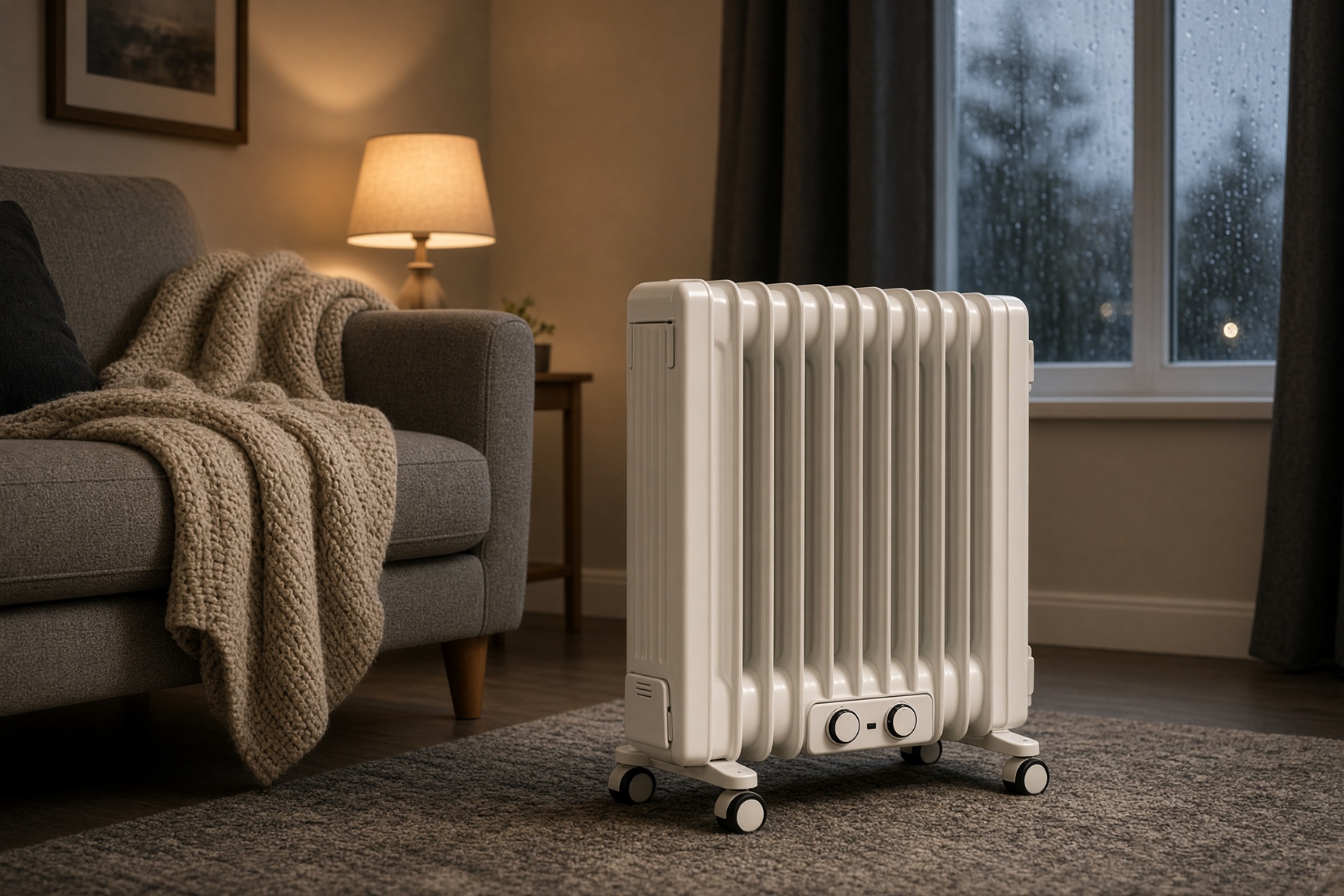
Pro Breeze OmniWarm 2500W Oil-Filled Radiator
3 power levels · digital thermostat with eco mode · 24-hour timer · tip-over and overheat protection · Full review ↓
Every electric heater turns electricity into heat at almost exactly the same rate. A 2kW fan heater and a 2kW oil-filled radiator cost the same per hour on full power. What differs is how they spread the heat, how quickly the thermostat lets them rest, and how much of the room you need to warm. This guide does the maths at today's prices, then picks the heaters that give you the most control over what you spend.
Quick answer: the best electric heater for most rooms is the Pro Breeze OmniWarm 2500W oil-filled radiator (£99.99), which has three power levels, a digital thermostat with an eco mode and a 24-hour timer. For quick heat in a small room, the Pro Breeze ThermaCube 2000W (£64.99) is the best fan heater. The cheapest way to keep one person warm is a heated throw at about 3p an hour. A 2kW heater costs 52.6p an hour on full at the October 2026 price cap, rising to about 61p if January's forecast is right.
On this page:
What an electric heater costs to run
Multiply the heater's wattage in kilowatts by the price of electricity. At the October to December 2026 price cap of 26.32p per kWh, a 2,000W heater on full costs 52.6p an hour. The January forecast from Cornwall Insight is 30.28p, which would make it about 61p.
| Heater | Power | An hour now | An hour in January* | A 4-hour evening now |
|---|---|---|---|---|
| Heated throw or electric blanket | 120W | 3.2p | 3.6p | £0.13 |
| Personal desk heater | 500W | 13.2p | 15.1p | £0.53 |
| Oil radiator on its low setting | 1,000W | 26.3p | 30.3p | £1.05 |
| Small fan heater or low setting | 1,500W | 39.5p | 45.4p | £1.58 |
| Standard fan, ceramic or convector heater | 2,000W | 52.6p | 60.6p | £2.11 |
| Large oil-filled radiator on full | 2,500W | 65.8p | 75.7p | £2.63 |
*At Cornwall Insight's forecast of 30.28p per kWh for January to March 2027. Our January price cap guide explains the forecast.
These are full-power figures. A heater with a thermostat switches itself off when the room reaches the temperature you set, then back on as it cools. In a reasonably insulated room, it may run at full power for only part of each hour once the room is warm. That is why a thermostat matters more than the type of heater: it is what stops you paying for heat you do not need.
Which type of electric heater is cheapest to run?
None of them, on cost per unit of heat. A plug-in heater that uses 1kWh of electricity puts 1kWh of heat into your room, whatever it looks like. The differences are in how fast you feel it, how long it lasts once switched off, and how well each type suits a room.
| Type | How it heats | Best for | Watch out for |
|---|---|---|---|
| Fan or ceramic fan heater | Blows air over a hot element | Quick heat in a small room you use for an hour or two | Noise, and the room cools fast when it stops |
| Oil-filled radiator | Heats oil sealed inside fins, which warm the air slowly | Steady heat for an evening or a bedroom | Slow to warm up and heavy to move |
| Convector heater | Warms air that rises and circulates | A whole room, and it can be wall-mounted | Heat collects near the ceiling in tall rooms |
| Halogen or infrared heater | Radiant heat that warms you, not the air | Warming a person in a draughty room or garage | Glare, and you feel cold as soon as you move away |
| Heated throw or blanket | Warms you directly at about 100W to 150W | The cheapest way to keep one person warm | Only warms you, not the room |
So the cheapest heater to run is the smallest one that keeps you comfortable, with a thermostat, used for the shortest time, in the smallest space. The one exception to the rule above is a heat pump, which moves heat instead of making it. See heater or central heating below.
Is there a 1p-an-hour electric heater?
No heater that warms a room runs at 1p an hour. At 26.32p per kWh, 1p buys 38 watt-hours of electricity, which is about the power of a single old-style light bulb. A heater at 1p an hour would put out about the same heat.
The "1p per hour" and "pennies a day" heaters sold online are usually small plug-in units of 400W to 500W. At today's price cap those cost 10.5p to 13.2p an hour. The Advertising Standards Authority has banned several mini-heater adverts for exaggerating what they can do, and in October 2025 it warned shoppers to be sceptical of claims that one small heater can warm a whole house. A 500W heater will warm you at a desk. It will not heat a living room.
Are oil-filled radiators cheap to run?
An oil-filled radiator costs exactly what its wattage says: a 2,500W model on full costs 65.8p an hour now, and a 1,500W one costs 39.5p. It is not cheaper per hour than a fan heater of the same power. Do oil heaters use a lot of electricity? On full power, yes. A large one draws more than a kettle, continuously.
Where they can save money is in how they behave. The oil keeps releasing heat after the element switches off, so the thermostat cuts in less often and the room temperature stays steadier. Most have power settings of around 1,000W, 1,500W and 2,500W, so you can run them at a lower setting once the room is warm. They also make no fan noise, which is why they suit bedrooms. The trade-off is a slow start: an oil radiator can take some time to warm a cold room, which a fan heater does in minutes.
So, are oil-filled radiators cheap to run? Not by the hour. They are the better choice for long, steady use, and a fan heater is the better choice for short bursts.
What is the most energy-efficient electric heater?
Every plug-in electric heater turns almost all the electricity it uses into heat. An oil-filled radiator, a ceramic fan heater, a convector and a halogen heater all give you about 1kWh of heat for each 1kWh you pay for, so a 2kW heater costs 52.6p an hour on full whatever type it is. An "energy-efficient" heater cannot make more heat from the same electricity. What it can do is use less of it, by switching off when the room is warm enough.
| Heating | Heat from 1kWh of electricity | Cost of 1kWh of heat now |
|---|---|---|
| Fan, ceramic, oil-filled, convector or halogen heater | About 1kWh | 26.3p |
| Heat pump, or an air conditioner on heat mode | About 3kWh on average across a year | About 9p |
The only electric heating that gives you more heat than the electricity it uses is a heat pump, which moves heat in from outside instead of making it. A portable air conditioner with a heating mode works the same way, although how much extra heat it gives depends on the model and how cold it is outside. Our section on electric heaters and central heating below compares the running costs.
For a plug-in heater, the energy saving comes from its controls:
- A digital or electronic thermostat. It holds the room within a degree or so of your setting and turns the heater off in between, so you stop paying for heat you do not need. A dial thermostat is less precise and tends to overshoot.
- An eco mode or lower power setting. Once the room is warm, running at 1,000W instead of 2,500W cuts the cost an hour by more than half.
- A timer. It warms the room before you get up or come home, instead of the heater being left on all day.
- Heating you instead of the room. A heated throw uses about 120W, or 3.2p an hour, which is the cheapest way to keep warm on the sofa.
Six of the eight heaters we compare have a digital or electronic thermostat, and the Dimplex convector adds a 7-day timer. Since 2018, new heaters sold in the UK have had to meet ecodesign rules that push makers towards electronic thermostats and timers, which is why most current models have them. If a cheap heater only has a dial, it is likely to cost more to run in practice.
Eight heaters compared
Prices are from each maker's or a named retailer's site on 10 October 2026. The cost an hour is at full power at 26.32p per kWh.
| Heater | Type | Max power | An hour on full | Thermostat | Timer | Price |
|---|---|---|---|---|---|---|
| Pro Breeze OmniWarm 2500W | Oil-filled | 2,500W | 65.8p | Digital, eco mode | 24 hours | £99.99 |
| VonHaus 2500W 11-fin | Oil-filled | 2,500W | 65.8p | Dial | 24 hours | £67.99 |
| De'Longhi Dragon 4 2kW | Oil-filled | 2,000W | 52.6p | Electronic | 24 hours | £120–£220 |
| Pro Breeze ThermaCube 2000W | Ceramic fan | 2,000W | 52.6p | Digital, eco mode | 12 hours | £64.99 |
| Dreo Atom 316 | Ceramic fan | 1,500W | 39.5p | Digital, eco mode | 12 hours | About £50 |
| Pro Breeze 2000W Mini | Ceramic fan | 2,000W | 52.6p | Digital | None | £39.99 |
| Dimplex ML2TSTie7 | Convector | 2,000W | 52.6p | Electronic | 7-day | £63–£70 |
| Pro Breeze Heated Throw | Heated throw | About 120W | 3.2p | 10 settings | 9 hours | £49.99 |
The best electric heaters
Pro Breeze OmniWarm 2500W Oil-Filled Radiator
Oil-filled · digital display · eco mode · remote · 24-hour timer
The heater we would buy for a living room or a bedroom you use every evening. It has three power levels, so you can heat the room on 2,500W and then drop to 1,000W (26.3p an hour) to hold it. The digital thermostat has an eco mode that switches the heater on and off to keep your set temperature, and the 24-hour timer means it can warm the room before you get home. It comes with a remote, wheels and a handle, plus tip-over and overheat cut-outs. The smart version adds app control for £109.99.
At 10.4kg it rolls well but is heavy to carry upstairs. Like every oil radiator it takes a while to warm a cold room, so use the timer rather than switching it on when you walk in.
VonHaus 2500W 11-Fin Oil-Filled Radiator
Oil-filled · dial thermostat · 24-hour timer · 2-year warranty
The same three power levels and a 24-hour timer for about £30 less. You set the temperature on a dial rather than a display, and there is no remote or eco mode, but it does the job a budget oil radiator should. VonHaus listed it at £67.99 on its own site on 8 October. Pro Breeze's 2500W oil radiator with thermostat and timer is a similar alternative at £79.99.
Check the listing says 24-hour timer before you buy. VonHaus has sold more than one version of this radiator.
De'Longhi Dragon 4 2kW Oil-Filled Radiator
Oil-filled · electronic climate control · 24-hour timer
The best-known oil radiator in the UK, and the one to buy if you want something built to last. T3 gave a Dragon 4 its Platinum Award and called it fast and silent, while noting it is large and has no remote or app. Its price swings a lot: De'Longhi lists the TRDX40820E at £219.99, Costco UK had it at £119.98, and it often drops in Black Friday sales. At 2,000W it costs less per hour on full than the 2,500W models above.
Warranty terms differ between sellers, from 2 years on De'Longhi's site to 10 years quoted by one retailer. Check what applies before you buy.
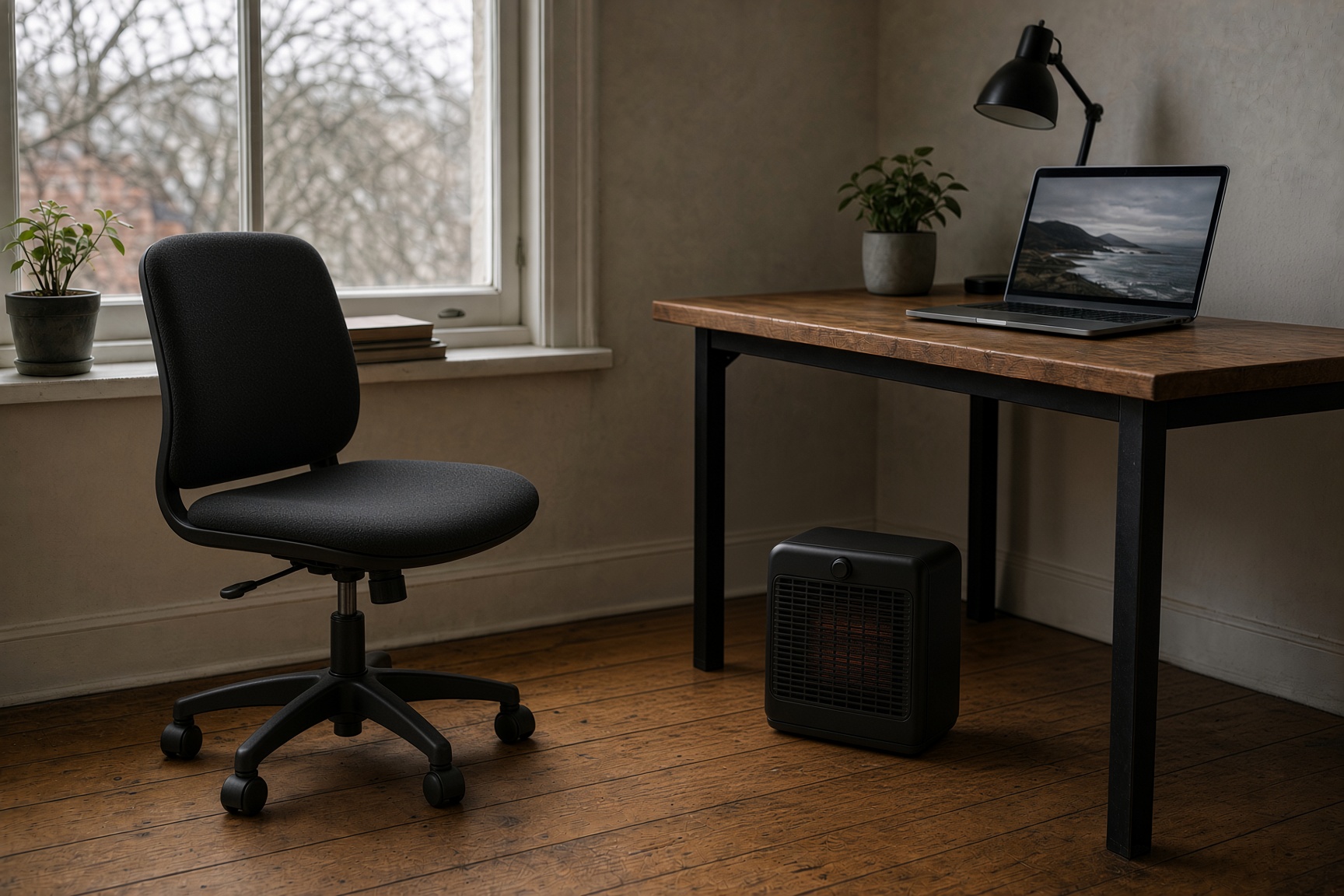
Pro Breeze ThermaCube 2000W Ceramic Fan Heater
Ceramic fan · 55° oscillation · digital thermostat · eco mode · remote · 12-hour timer
For a home office, a spare room or a kitchen-diner where you want heat in minutes rather than half an hour. You set the temperature to the degree from 15°C to 35°C, and the eco mode adjusts the output to hold it. It oscillates through 55° to spread the heat, has a 12-hour timer and a remote, and Pro Breeze lists it at 40.8dB, which is quiet for a fan heater. The ThermaCube Plus (£74.99) is a 2,200W version with wider oscillation for a bigger room.
Dreo Atom 316 Ceramic Heater
Ceramic fan · 1,000 / 1,300 / 1,500W · eco mode · remote · 12-hour timer
A quiet, compact heater for a bedroom or a small room. Its top setting of 1,500W costs 39.5p an hour, less than a 2kW heater, and it has a digital thermostat from 5°C to 35°C, an eco mode and a 12-hour timer. Ideal Home called it portable, powerful and reasonably priced. Dreo's recommended price is £49.99.
It does not oscillate, and reviewers found the controls and remote hard to see in low light.
Pro Breeze 2000W Mini Ceramic Fan Heater
Ceramic fan · three power modes · thermostat · tip-over cut-out
The cheapest heater here with a proper thermostat, which is the feature that saves money. It has three power modes and a fan-only setting, and it is small enough for a desk or a caravan. It is louder than the ThermaCube and has no timer or oscillation. If you want oscillation at this price, the Russell Hobbs RHFH1008 (£41.99 at Currys) swings side to side but uses a dial instead of a digital thermostat. For a desk, Pro Breeze's 500W personal heater (£34.99) costs 13.2p an hour.
Dimplex ML2TSTie7 2kW Convector Heater
Convector · electronic thermostat · 7-day timer · freestanding or wall-mounted
The pick for a room you heat on a schedule, such as a garden office or a conservatory. The 7-day timer takes four on and off periods a day, and adaptive start warms the room up in time for the period you set. The electronic thermostat is accurate to 1°C and has frost protection. It stands on feet or fixes to the wall with the brackets supplied. Screwfix sells what looks like the same heater as product 634KA at £69.99.
*The 3-year warranty needs you to register the heater with Dimplex.
Pro Breeze Fleece Electric Heated Throw
Heated throw · 160 × 130cm · 10 heat settings · 9-hour timer · machine washable
Not a room heater, but the cheapest way to keep one person warm on the sofa. Pro Breeze lists its consumption at 0.11 to 0.12kWh an hour, which is about 3p at today's price cap, against 53p for a 2kW heater. Use it with the heating turned down a degree or two and it can save far more than it costs. The remote detaches so the throw can go in the washing machine, and the timer switches it off if you fall asleep.
Is an electric heater cheaper than central heating?
Per unit of heat, no. Gas costs 7.97p per kWh under the current price cap, and a boiler that turns 85% of it into heat delivers heat at about 9.4p per kWh. An electric heater delivers it at 26.32p, about 2.8 times as much.
A heater saves money only when it lets you heat much less space. Here is the test. A 2kW heater on full for an hour uses 2kWh of electricity and costs 52.6p. That buys about 5.6kWh of gas heat. If your boiler burns less than about 6.6kWh of gas an hour to heat the whole house, the central heating is cheaper. If it burns more, and you only need one room, the heater wins.
The one electric heater that beats the unit price is a heat pump, because it moves heat from outside instead of making it. A portable air conditioner with a heating mode is a small heat pump. The MeacoCool MC 10000 CH gives 8,500 BTU of heat, about 2.5kW, from 999W, by Meaco's figures, so it costs about 26p an hour for roughly the heat of a 2.5kW oil radiator. It needs a window kit and costs £429.99, so it makes sense only if you also want cooling in summer.
One thing neither option covers is a power cut. Gas central heating stops too, because the boiler needs electricity for its pump and controls. Our best portable power station guide explains what will keep running, and whether one can power your boiler.
How to run an electric heater for less
Using an electric heater safely
Frequently asked questions
Keep the house warm for less this winter
The cheap fixes that cut heating bills, in order of what they save.
See the Energy Efficiency Bundle →Related Guides
Published 10 October 2026. Running costs use Ofgem's price cap for 1 October to 31 December 2026 (26.32p per kWh for electricity and 7.97p for gas) and Cornwall Insight's forecast of 30.28p for January to March 2027. Prices and specifications are from Pro Breeze, VonHaus, De'Longhi, Costco UK, Dreo's UK listings, Currys and Screwfix on 8 October 2026, and change often. Reviews cited are from T3 and Ideal Home. Advertising rulings are from the Advertising Standards Authority. We earn a commission if you buy through links on this page, at no extra cost to you.