
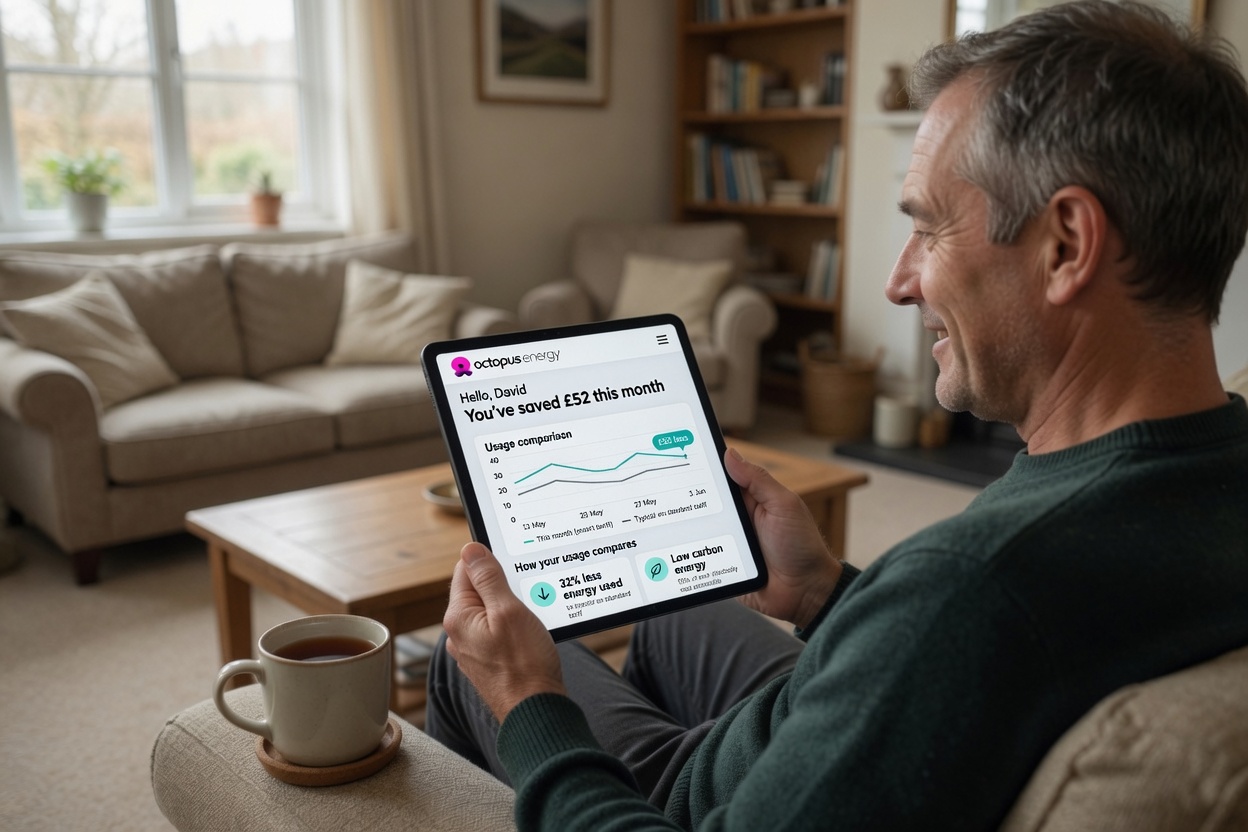
The right Octopus tariff depends on what you have at home: an electric car, solar panels, a battery or a heat pump.
Octopus Energy Tariffs Compared 2026: Go vs Agile vs Cosy vs Intelligent
Octopus has more smart tariffs than any other UK supplier, and most of them now come with conditions: an electric car, a heat pump or solar panels. Here is what each one costs today, who can get it, and which suits your home.
Most people switch to Octopus for a cheap overnight rate and leave it there. But the right tariff for an electric car owner is different from the right one for a heat pump or solar home, and since 2026 several of them are only open to homes with the matching kit.
Below is how every Octopus smart tariff works, what it costs at today's rates, and which one fits what you have at home.
Quick answer:
Electric car with a compatible charger or car: Intelligent Octopus Go, 8p/kWh overnight. Any other EV: Octopus Go, 9.4p/kWh from 00:30 to 05:30.
Heat pump or electric heating: Cosy Octopus, about 14p/kWh for eight hours a day in three windows.
Solar, with or without a battery: Octopus Flux, or Agile with Outgoing Agile if you'll automate it.
A battery but no EV, heat pump or solar: Agile is now the only Octopus time-of-use tariff open to you.
What has changed: Octopus raised its smart tariff rates between 18 and 21 October 2026, by roughly 10% to 17%. Octopus Go's cheap rate went from 8.2p to 9.4p, Cosy and Flux rose by about 10% to 14%, and the new Intelligent Octopus Go fix is 8p overnight, up from 7.6p. The standard price cap is unchanged at 26.32p. Octopus Go now asks you to have an electric car you charge at home, so it is no longer an option for battery-only homes. Intelligent Octopus Go is only sold as a 12-month fix with a £50 exit fee, and new 12-month fixes of Go and Cosy launched on 20 October. Cosy is for homes with a heat pump, electric radiators or an electric boiler. Octopus Flux is open to new customers with solar panels.
Octopus tariffs at a glance
| Tariff | Cheap rate | Cheap hours | Other rates | Who can get it |
|---|---|---|---|---|
| Intelligent Octopus Go | 8p | 23:30 to 05:30 for the home, plus up to 6 hours of smart car charging | Day rate on your quote. 12-month fix only | A compatible EV or charger |
| Octopus Go | 9.4p | 00:30 to 05:30 | 33.0p to 35.8p the rest of the day | An EV you charge at home |
| Cosy Octopus | 13.5p to 14.8p | 04:00 to 07:00, 13:00 to 16:00, 22:00 to 00:00 | 41.2p to 45.3p from 16:00 to 19:00. 27.5p to 30.2p otherwise | A heat pump, electric radiators or an electric boiler |
| Octopus Flux | 15.4p to 16.9p | 02:00 to 05:00 | 35.6p to 39.2p from 16:00 to 19:00. 25.5p to 28.1p otherwise | Solar panels and an export meter |
| Agile Octopus | Changes every half hour | Usually overnight and on windy days | Capped at 100p | Any home with a smart meter |
| Octopus Tracker | Changes daily | None | Capped at 100p a day | Any home with a smart meter |
Variable rates paying by direct debit, including VAT, from Octopus's published tariff data on 23 October 2026. Ranges cover all 14 regions. Intelligent Octopus Go's 8p is the overnight rate on its 12-month fix launched on 20 October (7p on an EV Saver version for Octopus Electric Vehicles customers). Rates change often, so check your postcode on Octopus's site.
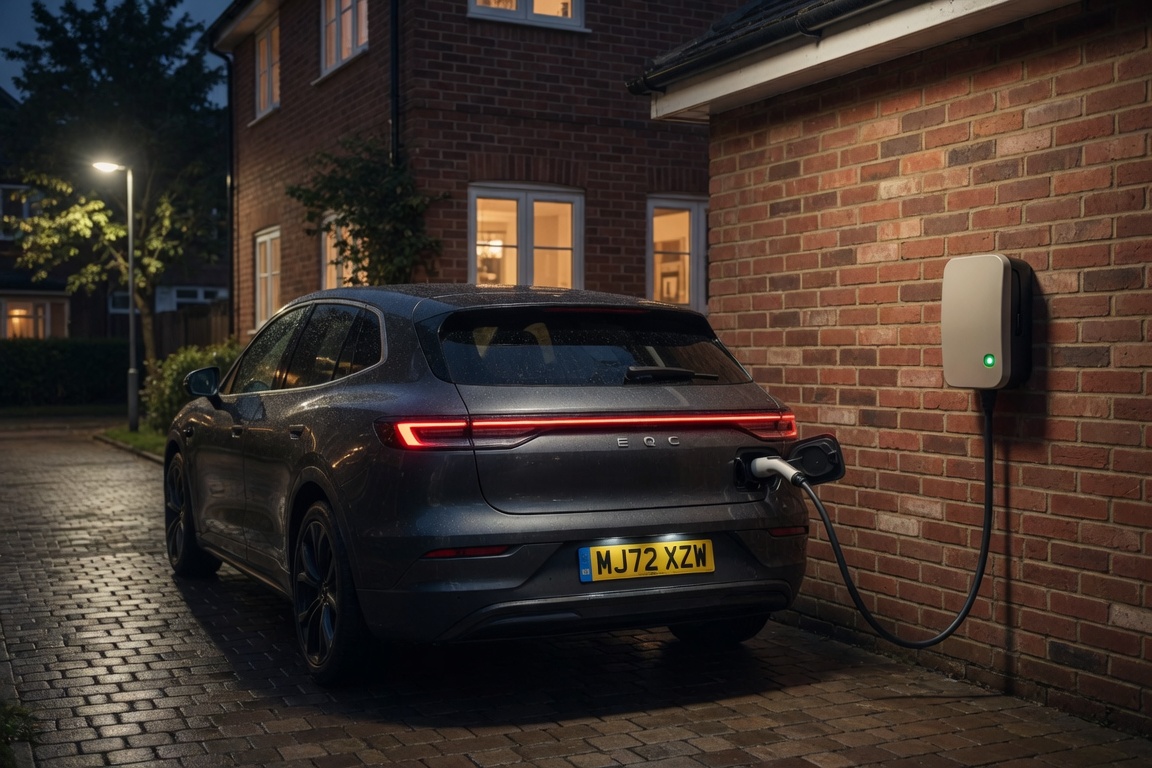
Intelligent Octopus Go's 8p overnight rate is still the cheapest Octopus offers.
1. Intelligent Octopus Go: best for EV owners
Intelligent Octopus Go gives you six cheap hours every night for the whole home, from 23:30 to 05:30, plus smart charging for your car at the same low rate. You tell the Octopus app how much charge you need and by when, and it schedules the charging for when electricity is cheapest. Smart charging is limited to 6 hours at the cheap rate in any 24 hours.
It is only sold as a 12-month fixed tariff at the moment, with a £50 exit fee if you leave early. Octopus says its customers saved £771 on average last year compared with its standard tariff, though that depends heavily on how much you drive.
2. Octopus Go: for any EV
Octopus Go has a fixed five-hour cheap window from 00:30 to 05:30, at 9.4p/kWh, with a day rate of about 33p to 36p depending on your region. That day rate is well above the 26.32p price cap, so Go only pays if a good share of your electricity is used overnight. It works with any electric car and you don't need a smart charger, but Octopus asks that you have an EV you charge at home. A 12-month fixed version is also sold, with a £50 exit fee.
Go used to be the obvious choice for a home battery without a car. That no longer applies. If you have a battery and no EV, look at Cosy (if you have electric heating), Flux (if you have solar) or Agile. Our battery without solar guide works through the sums.
3. Agile Octopus: for homes that can shift their use
Agile prices every half hour from the wholesale market, published the afternoon before. Prices can fall below zero, so you are paid to use electricity, and they can spike towards the 100p cap at busy times, usually between 16:00 and 19:00 on cold evenings. In London over the 30 days to 15 October 2026, prices ranged from -5.04p to 86.73p.
It rewards homes that can move their use, ideally with a battery or EV charger that does it automatically. Fox ESS, Sigenergy and Tesla batteries can all be set to follow Agile prices. Without that, it can cost more than a standard tariff: Octopus itself says a typical household paid around 35p/kWh on average in the winter of 2022 to 2023. Pair it with Outgoing Agile if you export. Our export tariff comparison covers the alternatives.
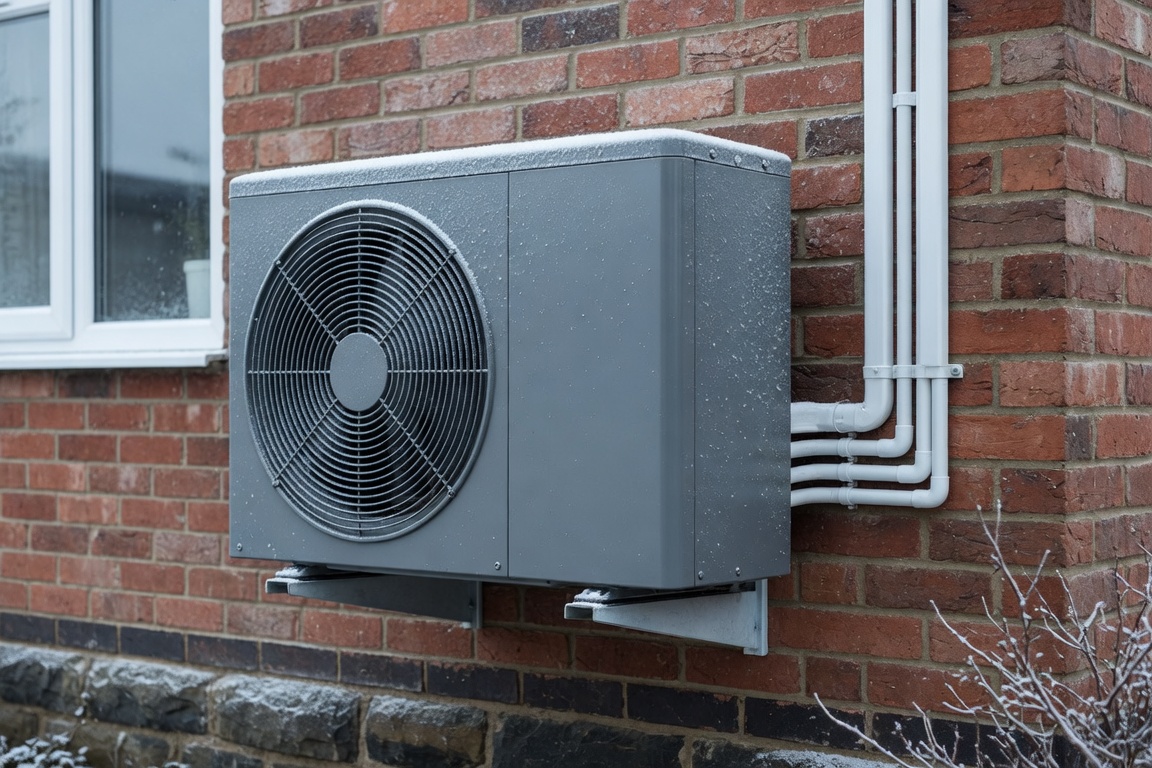
Cosy's three cheap windows are timed around heat pump use, with an afternoon window to warm the house before the evening peak.
4. Cosy Octopus: for heat pumps and electric heating
Cosy gives you eight cheap hours a day in three windows: 04:00 to 07:00, 13:00 to 16:00 and 22:00 to 00:00. Octopus sets the Cosy Hours rate at 51% below the day rate in your region, and the 16:00 to 19:00 peak at 50% above it. You need a heat pump, electric radiators or an electric boiler to join. A 12-month fixed version is also sold, with a £50 exit fee.
The afternoon window is the useful one in winter: it lets the heat pump warm the house and the hot water cheaply before the expensive peak. A smart thermostat that can follow the schedule, such as tado or Hive, makes that automatic. The catch is the peak itself: if your heating has to run hard from 16:00 to 19:00, those hours cost more than a standard tariff.
5. Octopus Flux: for solar and batteries
Flux is an import and export tariff for homes with solar panels. Electricity is cheap from 02:00 to 05:00, when a battery can top up, and expensive from 16:00 to 19:00, when Octopus pays you the most for exports. The idea is to fill the battery overnight and in the sun, then run the house and sell any surplus in the evening peak.
You need solar panels, an export meter number (Octopus can apply for one) and a copy of your MCS certificate. They don't need to have been installed by Octopus. A version called Intelligent Octopus Flux lets Octopus control a compatible battery for you.
6. Octopus Tracker: follows the wholesale price
Tracker sets one price each day from the wholesale market using a published formula, with a cap of 100p/kWh. Octopus says prices tend to be lower in the warmer months and can roughly double in colder ones. There is no cheap overnight window, so it isn't a smart tariff in the usual sense.
Cosy vs Intelligent Octopus Go: which suits a heat pump and an EV?
If you have both a heat pump and an electric car, you can choose either. They suit different homes:
| Intelligent Octopus Go | Cosy Octopus | |
|---|---|---|
| Cheapest rate | 8p | 13.5p to 14.8p |
| Cheap hours a day | 6, overnight | 8, in three windows |
| Car charging | Smart-scheduled, up to 6 hours at the cheap rate | In the 22:00 to 00:00 and 04:00 to 07:00 windows |
| Heating | Runs at the day rate outside 23:30 to 05:30 | Afternoon and late-evening windows, but 16:00 to 19:00 costs more |
| Contract | 12-month fix, £50 exit fee | Variable or 12-month fix |
The rule of thumb: if most of your electricity goes into the car, Intelligent Octopus Go usually wins, because its overnight rate is the cheapest Octopus offers and a car can take all of its charge in those hours. If most of it goes into heating, Cosy usually wins, because a heat pump has to run in the day and Cosy's afternoon window covers that. Homes with a large battery tend towards Intelligent Octopus Go, because the battery can move the heat pump's daytime use into the cheap night hours.
The Octopus app shows your half-hourly use, so after a winter month you can price your own usage on each tariff before deciding.
Agile vs Cosy: which is cheaper for a heat pump?
Agile can beat Cosy when wholesale prices are low and you can move your use into the cheapest half-hours. It can also cost much more: the most expensive half-hours fall on cold winter evenings, which is exactly when a heat pump works hardest.
What you need for each tariff
| Tariff | Smart meter | Electric car | Other |
|---|---|---|---|
| Intelligent Octopus Go | Required | Compatible EV or charger | Fixed only |
| Octopus Go | Required | An EV you charge at home | No charger needed |
| Cosy Octopus | Required | Not needed | Heat pump, electric radiators or electric boiler |
| Octopus Flux | Required | Not needed | Solar panels, export meter, MCS certificate |
| Agile Octopus | Required | Not needed | None |
| Octopus Tracker | Required | Not needed | None |
All smart tariffs need a smart meter that Octopus can read remotely: a second-generation SMETS2 meter, or some first-generation SMETS1 meters. If you don't have one, Octopus will fit one free. Once you have switched, Octopus says it usually takes around 14 days to connect to your meter before you can move to a smart tariff.
How to switch between Octopus tariffs
Switching between Octopus tariffs is done in the app or your online account. Variable tariffs have no exit fees. The 12-month fixed versions of Go, Cosy and Intelligent Octopus Go carry a £50 exit fee.
Not on Octopus yet? If you have an electric car, solar panels, a battery or a heat pump, the right smart tariff is usually the cheapest change you can make, because it needs no new equipment. Check your postcode on the Octopus Energy website for current rates.
Once the tariff is right, the next savings usually come from the heating system you already have: a boiler flow temperature that's set too high, an uninsulated cylinder, draughts. We order those by payback in the energy efficiency bundle, starting with two steps that cost nothing.
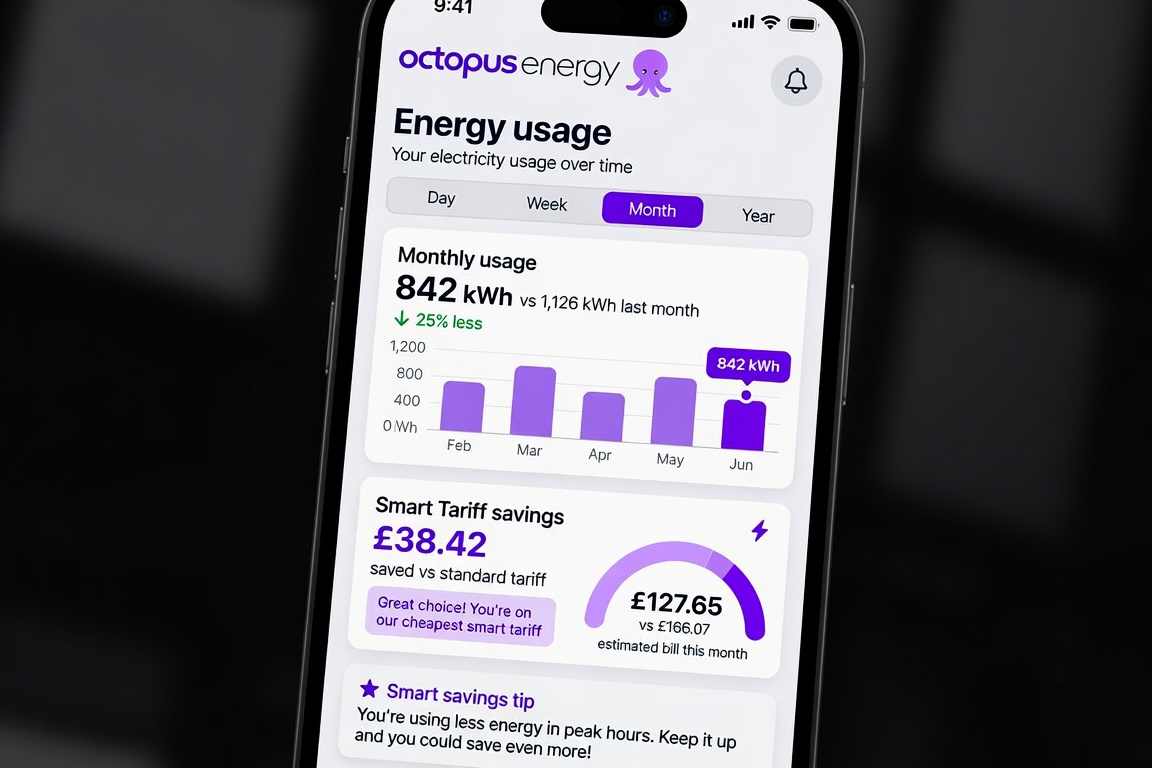
Switching Octopus tariffs takes minutes in the app.
Frequently asked questions
Related Guides
- Best Home EV Charger UK 2026: Ohme and Zappi both work with Intelligent Octopus Go
- Best EV Charging Tariffs Compared: how Octopus stacks up against EDF, E.ON and others
- Best Home Battery Storage UK 2026: which batteries follow Agile prices
- Home Battery Without Solar: the payback on a time-of-use tariff
- Heat Pumps UK Guide: running costs on Cosy
- Best Solar Export Tariffs 2026: Flux, Outgoing Agile and the rest
- Energy Efficiency Bundle: free-first steps after you have picked a tariff
- October 2026 Price Cap: what changed and why
Published June 2026, updated 23 October 2026. Unit rates are variable direct debit rates including VAT from Octopus Energy's published tariff data on 23 October 2026, across all 14 regions. Intelligent Octopus Go's rate, eligibility rules, Octopus's average saving figure and the Agile and Tracker caps are from Octopus Energy's tariff data on the same date. The Agile price range is for London over the 30 days to 15 October 2026. Octopus tariffs change often, so check current rates and eligibility on the Octopus Energy website before switching. Cool Power Co is independent and is not affiliated with Octopus Energy.
Make the Most of Your Smart Tariff
Solar panels, a home battery or a heat pump all save more on the right Octopus tariff. Compare quotes from MCS-certified installers near you.
Compare Installer Quotes →No obligation. We earn a commission if you go ahead.