
Battery Storage
Best Home Battery Storage UK 2026
Store your solar energy, cut your bills and protect against outages. We compare the top home battery systems available through UK installers in 2026, with typical installed prices and our verdict on each.
Affiliate disclosure: Some links on this page may be affiliate links. If you purchase through them we earn a small commission at no extra cost to you. This doesn't affect our recommendations.
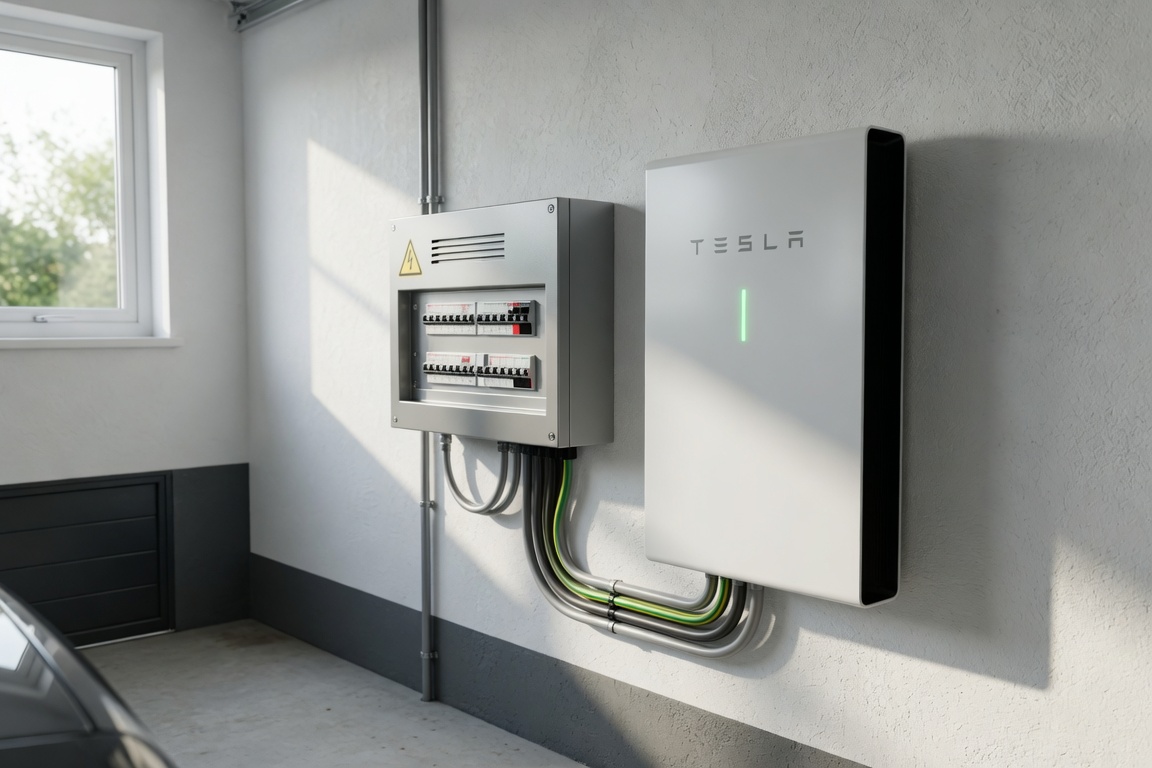
A home battery stores surplus solar energy during the day and releases it in the evening, so you use more of what your panels make instead of exporting it. What that is worth depends mostly on your tariff. With solar on a standard tariff and a 12p export rate, a battery typically saves £100–£250 a year, because each kWh you store rather than export only saves the gap between the 26.32p you pay and the 12p you would have been paid. On a cheap overnight tariff the numbers change. Octopus Go charges 9.4p a unit from 00:30 to 05:30 against about 33p to 36p in the day, and our battery calculator puts a 10 kWh battery filled overnight and emptied every evening at around £590 a year. The catch: Go now needs an electric car charged at home. Without one, Agile is open to anyone, Flux is for homes with solar and Cosy is for homes with a heat pump or electric heating.
Want to see the numbers for your home? Use our free battery storage calculator to model your savings based on your solar system, electricity usage and tariff. New to solar? Start with our Solar Panels UK guide, or compare export rates with our SEG tariff comparison.
New wiring rules from 15 October 2026: BS 7671 Amendment 4 changes where a battery can be installed in a home. Read what the new battery rules mean before you book a survey, and ask your installer to confirm in writing that the design meets them.
Best Home Battery Storage UK 2026: At a Glance
| Battery | Capacity | Installed Cost | £/kWh | Warranty | Best For |
|---|---|---|---|---|---|
| Tesla Powerwall 3 | 13.5 kWh | £7,950–£11,500 | ~£589/kWh | 10 years | Best Overall |
| Fox ESS EP11 | 10.4 kWh | £5,500–£7,500 | ~£529/kWh | 10 years | Best Value |
| Myenergi Libbi | 5–30 kWh | £4,500–£8,000 | ~£900/kWh | 10 years | Best for EV owners |
| Sigenergy SigenStor | 5–100+ kWh | £6,000–£9,000 | ~£1,200/kWh | 10 years | Best Future-Proof |
| Sunsynk | 5.32–11 kWh | £4,500–£6,800 | ~£846/kWh | 10 years | Most Flexible / DIY-Friendly |
£/kWh calculated from the lower end of each installed price range against entry-level capacity, for like-for-like comparison. Your actual cost per kWh will vary by installer and configuration. Sunsynk in particular has one of the widest real-world price ranges we've seen, since installers package it very differently. Smaller systems look expensive per kWh because the inverter and installation cost the same whatever the battery size.
Why GivEnergy is not on this list: GivEnergy entered administration on 9 April 2026, and the administrator has said it will not honour hardware warranties. If you already have a GivEnergy inverter, our guide to adding a battery to existing solar covers what to check.
Which Home Battery Is Best for You?
The best battery depends less on the brand than on what you already have at home. Start with your situation:
| Your situation | Our pick | Why |
|---|---|---|
| Buying solar and a battery together | Tesla Powerwall 3 | Built-in solar inverter, so one box does both jobs, plus the biggest capacity here |
| Adding a battery to solar you already have | Fox ESS EP11 | Its AC-coupled inverter works alongside most existing solar inverters. See adding to solar |
| You have, or want, a Zappi EV charger | Myenergi Libbi | Solar, battery and EV charging run as one system |
| Planning solar, battery, EV charging and a heat pump together | Sigenergy SigenStor | One modular system that can grow with the house |
| You want an installer to design around your home | Sunsynk | Works with a wide range of battery packs, not just its own |
| You want backup in a power cut | Tesla Powerwall 3 with the Backup Gateway | Whole-home backup. Most others back up a few circuits at most. See power cut backup |
| You rent, or only want power-cut backup | A portable power station | No installation at all. See no-install options |
| No solar and no EV | Check your tariff first | Without Octopus Go, the savings depend on Agile or Cosy. Our guide to a battery without solar runs the numbers |
Wherever it goes, a new battery has to meet the placement rules in force since 15 October 2026: no new batteries in lofts or bedrooms, and outdoor batteries kept a metre from windows and doors. Our guide to the new battery rules explains them, and our guide to home battery installation covers what happens next, from the survey to the paperwork.
Octopus Battery Storage: What Octopus Offers
Octopus Energy installs home batteries itself, with or without solar panels. When we checked on 20 October 2026, its battery-only prices started at:
| Battery | Capacity | Octopus price from |
|---|---|---|
| Fox EVO or Enphase IQ Battery 5P | 5 kWh | £3,947 |
| Fox EVO, or two Enphase IQ Battery 5P | 10 kWh | £5,336 |
| Tesla Powerwall 3 | 13.5 kWh | £7,999 |
That puts Octopus near the bottom of the typical installed ranges on this page. A few things to know before you book:
- Octopus takes a £500 deposit when you sign the installation agreement, which it says is non-refundable. You can also pay monthly through a fixed-term loan.
- The survey is usually done remotely, and installation depends on your network operator approving it.
- If you already have solar, Octopus asks for your MCS certificate and inverter details, and possibly 12 months of generation data. If your system isn't one it can work with, it refers you to a partner installer.
- It pairs batteries with its own tariffs: Intelligent Octopus Flux for homes with solar, or Agile for a battery on its own.
Octopus is also working on plug-in batteries, the Nook range, but they are not expected until 2027 and depend on rules for plug-in batteries that have not been set yet. Fox EVO is a different model from the Fox ESS EP11 in our picks, so compare like for like when you get quotes.
Prices from Octopus Energy's battery installation page, checked 20 October 2026. Octopus dates some of its prices to April and July 2026.
Want a fitted price for your home?
The prices above are typical installed ranges. Your quote depends on the battery size, your existing solar and where the battery can go under the new location rules. Get a fitted price from Blue Ape Renewables, the MCS-certified installer we work with, or compare prices from local installers.
No obligation. We earn a commission if you go ahead.
1. Tesla Powerwall 3: Best Overall
The Tesla Powerwall 3 is the most complete home battery system available in the UK in 2026. At 13.5 kWh it stores more than most competitors, the app is the best in class, and it includes a built-in solar inverter, so you don't need a separate hybrid inverter, which simplifies installation and reduces total system cost for new solar buyers.
The whole-home backup gateway means the Powerwall 3 can keep your home running during a grid outage, which most competing batteries can't do as standard. It also has the best Octopus Energy integration in the market, allowing fully automated tariff optimisation.
A note on remote disable capability
In 2025–26, Tesla remotely discharged and disabled a batch of recalled Powerwall 2 units (2020–2022 manufacture) following a battery cell defect, leaving some US and Australian customers without backup power for weeks while awaiting replacement, which is the subject of an ongoing class-action lawsuit. Tesla has confirmed this specific recall does not affect Powerwall 3, the model we recommend above, and we've found no evidence of the same recall affecting UK-installed units.
Worth knowing regardless of model: any cloud-connected battery can technically be remotely adjusted by the manufacturer. If backup power during outages is your main reason for buying, ask your installer directly how the manufacturer has handled past safety recalls, and whether remote access can be restricted on your account.
2. Fox ESS EP11: Best Value
The Fox ESS EP11 is the best value home battery available in the UK in 2026. At 10.4 kWh it covers most households' evening electricity needs, it costs about a third less to install than a Tesla Powerwall 3, and it can be expanded to 41 kWh using up to four units. The slimline wall-mounted design fits neatly in a garage or utility room.
It's particularly well-suited as a retrofit to existing solar installations. Paired with Fox's AC-coupled inverter, it can be added alongside most existing solar inverters without redesigning the whole system. Fox ESS has a strong UK installer network and the app is easy to use.
3. Myenergi Libbi: Best for EV Owners
Myenergi is a British company best known for the Zappi EV charger. The Libbi battery integrates natively with Zappi, so your solar, battery and EV charging all work together intelligently as a single ecosystem. If you have or plan to get a Zappi charger, the Libbi is the natural battery choice: the integration is the tightest you will get from any combination.
The modular design starts at 5 kWh and expands to 30 kWh. It's a British product with UK-based support, which matters when you need warranty work done. Read our EV charger guide for more on the Zappi.
4. Sigenergy SigenStor: Best Future-Proof
Sigenergy is a newer entrant to the UK market but has made a strong impression with its highly modular SigenStor system. Unlike most batteries which require a separate EV charger, the SigenStor can manage EV charging, solar, battery and grid connection from a single integrated system, making it the most complete whole-home energy management solution available.
The capacity range, from 5 kWh to over 100 kWh, future-proofs it against adding heat pumps, EVs or even small commercial loads. It's the right choice if you're planning a major home energy overhaul rather than just adding battery storage.
5. Sunsynk: Most Flexible / DIY-Friendly
Sunsynk has built a strong reputation among UK installers for real flexibility: its hybrid inverters are sometimes described as the "Swiss Army knife" of the battery world, since they pair well with a wide range of third-party battery packs (not just Sunsynk's own), giving installers real freedom to design a system around your specific home rather than a fixed package.
It's a popular choice with installers who like more control over system design, and with homeowners who may want to expand capacity significantly over time: up to 32 batteries can theoretically be stacked on one system. Real-world installed pricing varies more than any other brand on this list, since installers package it very differently depending on inverter size and battery brand paired with it.
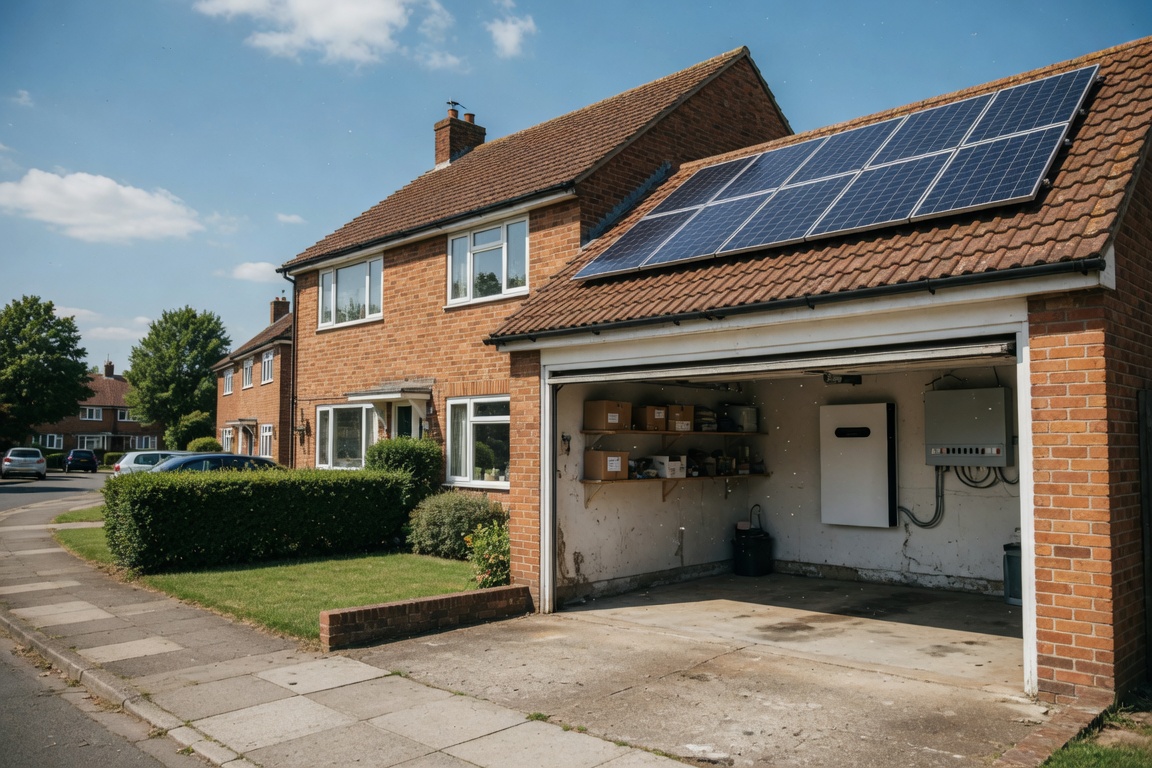
What to Look for When Choosing a Home Battery
-
1
Capacity (kWh)
Check your smart meter data for how much you use between about 4pm and midnight, after solar generation tails off. A 5 kWh battery suits lower-use homes on solar alone. Go for 10 kWh if you use more in the evening or want to charge overnight on a smart tariff, which is where most of the savings come from. If you have an EV, size up. -
2
Chemistry: LFP is standard
All batteries on this list use Lithium Iron Phosphate (LFP), which is safer and longer-lasting than older NMC chemistry. Rated for 6,000+ cycles which is roughly 16 years of daily use. If a quote uses NMC, ask why. -
3
Inverter compatibility
If you're retrofitting a battery to existing solar, check compatibility with your current inverter. Fox ESS and Tesla Powerwall 3 work with most systems. Some brands require their own hybrid inverter which adds cost. -
4
Smart tariff compatibility
The biggest payback improvement comes from a cheap overnight or smart tariff: charge cheaply, then use the stored power at peak rates. Check you qualify first. Octopus Go and Intelligent Octopus Go now need an electric car, Flux needs solar, Cosy needs a heat pump or electric heating, and Agile is open to anyone. Tesla Powerwall 3 and Fox ESS have the best Octopus integration. -
5
Backup power capability
Not all batteries can power your home during a grid outage. Tesla Powerwall 3 and Sunsynk (via a compatible EPS box) support this. If home backup matters to you, check this specifically before buying. It adds to the cost: Tesla's Backup Gateway, for example, starts at about £995 installed at one UK installer. Also confirm what happens to that backup capability if the manufacturer ever issues a remote safety update. -
6
Installer quality
A battery installed by a poor installer will underperform regardless of the brand. Choose an MCS-certified installer. Ask for post-install performance data from at least 3 of their recent customers before committing.
Home Battery Backup: Will It Keep the Lights On in a Power Cut?
Not automatically. A battery connected to the grid switches off in a power cut unless it has a backup feature, so it can't feed power back into lines that engineers may be working on. What you get in a cut depends on how the system is set up:
| Backup type | What keeps working | Typical example |
|---|---|---|
| Whole-home backup | Everything on your consumer unit, within the battery's output limit | Tesla Powerwall 3 with the Backup Gateway |
| Backup circuit (often called EPS) | Only the circuits wired to it, such as lights, the fridge and the router | Many hybrid inverters, including Sunsynk, with a backup output |
| No backup | Nothing. The battery waits for the grid to come back | Many basic AC-coupled installs |
If backup is the main reason you want a battery, ask the installer to show you in writing which circuits stay on, and for how long at your usual evening load. For short cuts, a portable power station costs a fraction of a whole-home system, and our guide on what to do in a power cut covers the rest.
Adding a Battery to Existing Solar: AC-Coupled or Hybrid?
If you already have solar panels, there are two ways to add a battery:
| AC-coupled battery | Hybrid inverter and battery | |
|---|---|---|
| How it connects | Has its own inverter and connects on the mains side, next to your existing solar inverter | Replaces your solar inverter. The panels and battery share one inverter |
| Works with your current inverter? | Yes, with most | No, your solar inverter is swapped out |
| Efficiency | Slightly lower, as power is converted twice on the way into the battery | Higher, as solar power can charge the battery directly |
| Best when | Your solar inverter is fairly new and working well | Your solar inverter is old, faulty or near the end of its warranty |
| Examples | Fox ESS EP11 with its AC-coupled inverter | Sunsynk, Sigenergy, Tesla Powerwall 3 (built-in inverter) |
For most homes adding a battery to working solar, AC-coupled is the simpler, cheaper job. If your solar inverter is due for replacement anyway, a hybrid makes more sense. Our guide to adding a battery to existing solar covers costs and what to check, including if you have a GivEnergy inverter.
Is Home Battery Storage Worth It in 2026?
It can be, but mainly if you use a time-of-use tariff. On a cheap overnight tariff, where our calculator puts a 10 kWh battery at around £590 a year, one costing £5,500–£7,500 pays back in about 9 to 13 years. With solar on a standard tariff, where a battery saves £100–£250 a year, the payback is usually longer than the 10-year warranty. Our battery calculator works it out for your home.
Worth it if you...
- →Have solar panels and will use a smart tariff, so the battery earns its keep all year
- →Can get a cheap overnight or smart tariff (Go needs an EV, Flux needs solar, Agile is open to anyone)
- →Have high evening electricity usage
- →Want protection against power outages
Less compelling if you...
- →Don't have solar panels and pay a flat tariff
- →Use most of your electricity during the day
- →Plan to move house within 5 years
Use our free battery storage calculator to see your personalised payback period based on your solar system size, electricity usage and current tariff.
Think a battery could pay off for you?
An installer can size the battery to your usage and tariff, and check where it can go. Get a fitted price from Blue Ape, or compare local installers.
No obligation. We earn a commission if you go ahead.
Not Ready for a Full System? Portable Power Stations
If you rent, want backup in a power cut without a full installation, or want to try battery storage before committing, a portable power station needs no installation at all: you plug appliances straight into it. Our best portable power station guide compares eight models from £199, with a calculator showing what each will run and for how long.
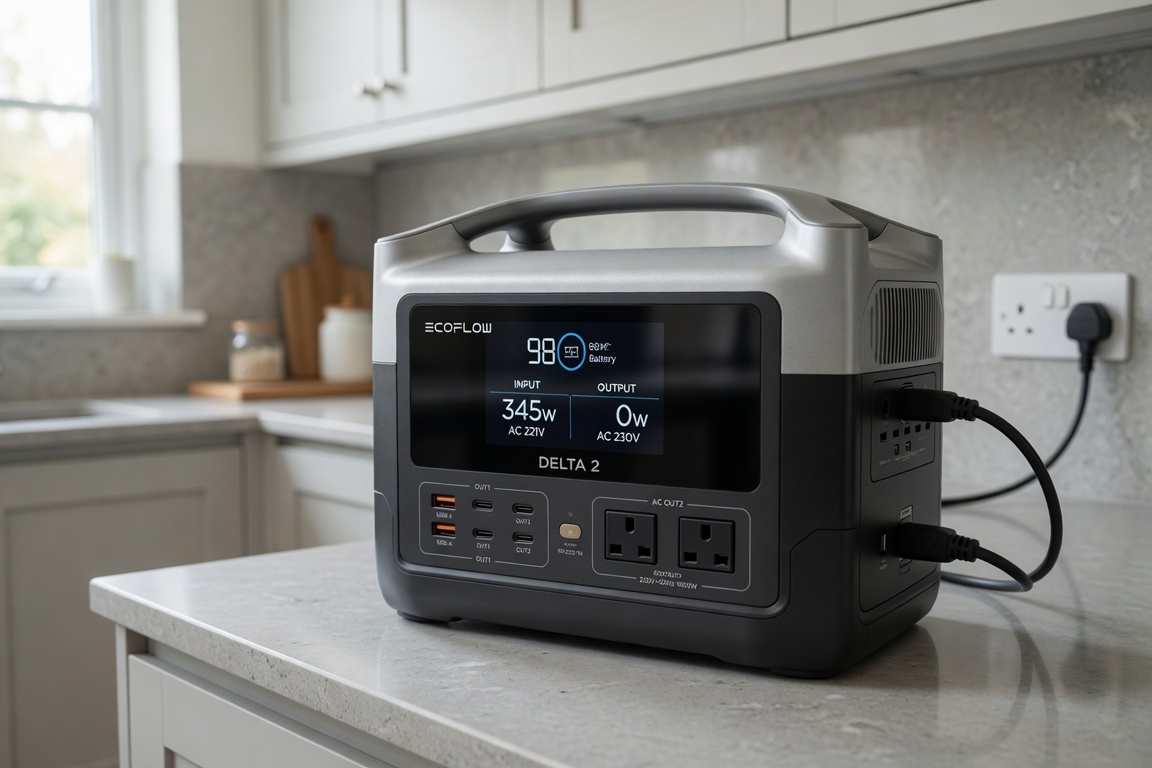
EcoFlow DELTA 3 Classic
1 kWh capacity and 1,800W output. Keeps a router, lights and the fridge going through an evening power cut, and switches over in 10ms so a router or PC stays on. Charges from solar panels or the mains.
Jackery Explorer 2000 v2
2 kWh capacity and 2,200W output. Powers larger appliances and charges from solar panels. Best for longer power cuts.
See all eight power stations compared →
Prices from EcoFlow and Jackery UK, checked 16 October 2026.
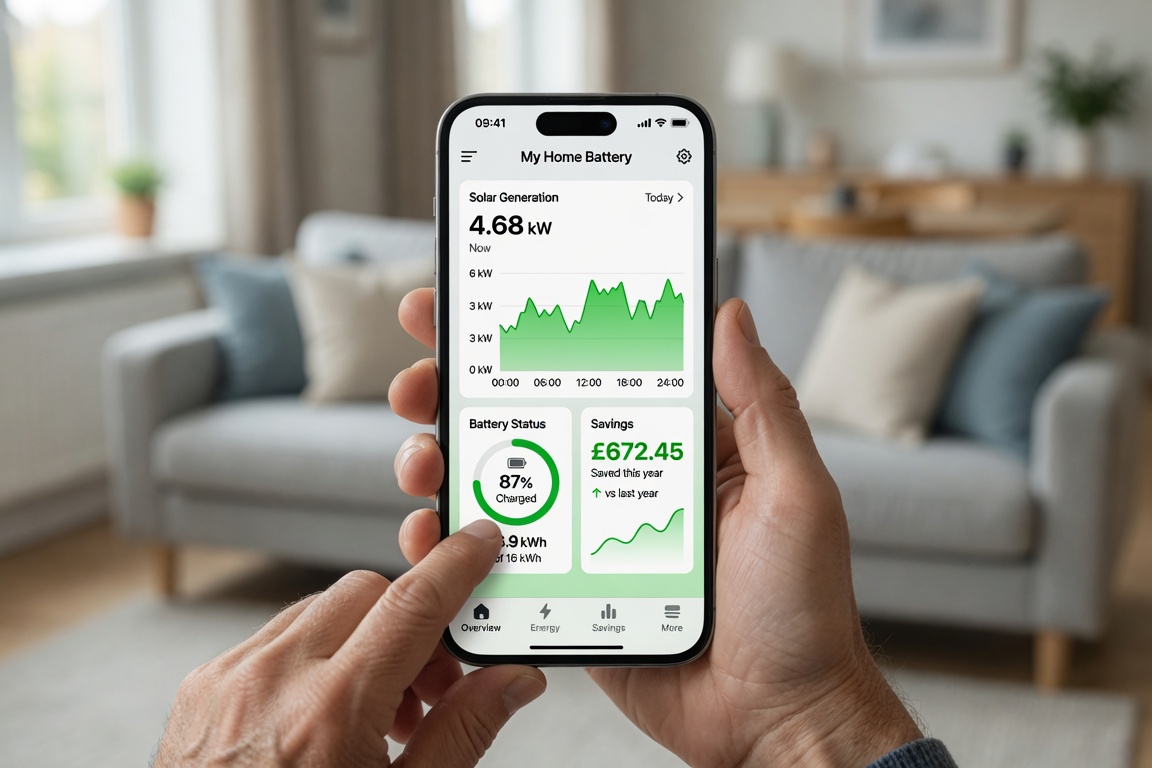
Frequently Asked Questions
Calculate your battery storage savings
See your personalised payback period, annual savings and 25-year return based on your solar system and usage.
Use the Battery Calculator →Related Guides
Which kind of quote suits you?
"I'd rather deal with one good installer" Get a fitted price from Blue Ape Renewables, the installer we work with. MCS-certified and NAPIT-accredited, fitting batteries and solar panels across England, Wales and Scotland. Get a fitted price →Tell us about your project and local installers will quote
Both are free and there's no obligation. We earn a commission if you go ahead with Blue Ape or with one of the installers you are matched with.
Last updated: 20 October 2026. Installed prices based on aggregated UK installer pricing data, 2026, and include 0% VAT. Tesla Backup Gateway price and Powerwall 3 starting price from iHeat, checked 19 October 2026. Octopus prices from Octopus Energy, checked 20 October 2026. Savings estimates use the October 2026 Ofgem electricity rate of 26.32p/kWh, Octopus Go at 9.4p from 00:30 to 05:30 and about 33p to 36p in the day (Octopus, 23 October 2026), and a 12p export rate. Actual savings vary by location, usage pattern and tariff. Always verify current warranty terms with your installer before purchasing. GivEnergy administration status and the Tesla Powerwall 2 recall details are correct at the time of updating, so check the current position before you buy.