
Ember: Electric Homes Are 10x Better Protected From Price Shocks
A new report from energy think tank Ember says homes running on solar, batteries, heat pumps and EVs are far less exposed to oil and gas price spikes. With gas up around 8.7% from 1 October, we look at what the report found, what it doesn't prove, and the cheapest ways to start.
Quick answer: Ember's report The Electro-fortification of Britain (23 September 2026) says homes that swap gas and petrol for solar, batteries, heat pumps and EVs are up to ten times better protected from energy price shocks. The October price cap is a live example: gas is up around 8.7%, while electricity is almost flat. You don't need all four technologies at once. A battery added to existing solar, or plug-in solar if you rent, are the cheapest first steps.
What the Ember Report Found
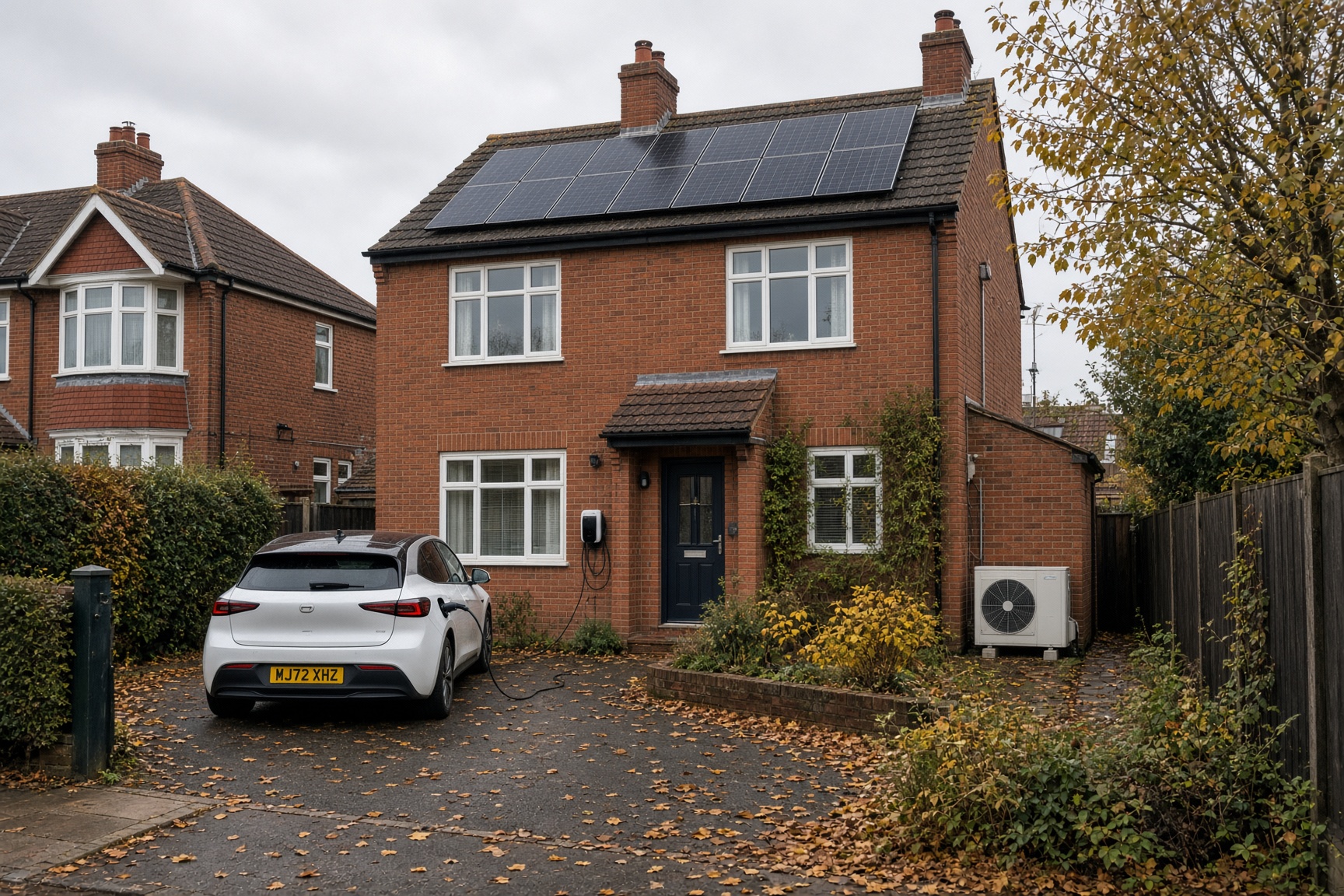
Ember, the independent energy think tank, coined the term "electro-fortification": plugging homes into renewable-powered electric technology to cut their dependence on oil and gas. The report, by senior energy analyst Frankie Mayo and energy analyst Josie Murdoch, argues this is Britain's next big household technology shift. Its headline claim is that modern electric homes are up to ten times better protected from energy price shocks and can have far lower, more stable bills.
Other findings worth knowing:
- Home batteries are the fastest mover. Uptake has doubled every year for more than three years. That matches MCS certification data, which counted 36,000 battery installs in the first half of 2026, almost double the same period in 2025.
- Solar is going mainstream. Around 1.7 million UK homes now have rooftop solar, and more than 60 parliamentary constituencies have passed 10% solar coverage, up from just five in 2022.
- Solar plus an EV is a strong pairing. Ember estimates rooftop solar can cut annual EV charging costs by more than £500.
- Wales is leading. It's ahead on rooftop solar, batteries and heat pumps, with seven of the ten fastest-growing constituencies for rooftop solar. Orkney and Shetland have passed 10% heat pump coverage.
- The biggest opportunities are obvious ones. Ember points to 4.8 million off-gas-grid homes that suit heat pumps, 19 million cars parked on driveways that could go electric, and homes that already have solar and could add an EV or electric heating.
"British households pay for fossil fuel dependence every day at the pump, every summer through heat waves and every year through economy-wide inflation."
Frankie Mayo, Senior Energy Analyst, Ember
The October Price Cap Is Already Proving the Point
The timing of this report is hard to ignore. From 1 October, the Ofgem price cap rises 4% to £1,723 a year. But the rise isn't spread evenly:
| From 1 October 2026 | Change | Who feels it |
|---|---|---|
| Gas (7.97p/kWh) | Up ~8.7% | Gas-heated homes |
| Electricity (26.32p/kWh) | Up less than 1% | Barely anyone |
A household heating with a heat pump and generating some of its own electricity will hardly notice this quarter's rise. A gas-heated home will. That's Ember's argument playing out on real bills this week. The underlying driver, volatile global gas prices linked to the Middle East conflict, is exactly the kind of shock the report says electric homes are insulated from. And it isn't over: gas is forecast to rise faster than electricity again in January, by about 22% against 15%. See our January 2027 price cap forecast.
What the Report Doesn't Prove
Worth keeping in mind before you spend anything:
- "Up to 10 times" is a best case. It describes a fully electrified home. The method sits in a separate technical note rather than the main report, and a home with just one of these technologies gets a fraction of that protection.
- Protection isn't the same as payback. Solar, batteries and heat pumps have large upfront costs. Being shielded from price spikes doesn't guarantee you'll save more than you spend. You still need to run your own numbers.
- Electricity is flat partly because of a temporary VAT cut. The 0% VAT on electricity runs to 31 March 2027. If it isn't extended at the 28 October Autumn Budget, electricity rises about 5% in April.
- Ember is a clean energy think tank. Its data is widely used and cited, but its mission is to speed up the move away from fossil fuels, so read the conclusions with that in mind.
Where to Start, From Cheapest to Biggest
Nobody electrifies a whole home in one go. Here's a realistic order based on cost and what you already have. For costs, grants and the full reasoning, see our guide on how to electrify your home.
Frequently Asked Questions
Related Guides
Sources: Ember, The Electro-fortification of Britain (23 September 2026); Renewable Energy Magazine coverage (24 September 2026); MCS installation data via CIBSE Journal (21 August 2026); Ofgem price cap, 1 October 2026. Plug-in solar savings from the Energy Saving Trust.
Which kind of quote suits you?
"I'd rather deal with one good installer" Get a quote from Blue Ape Renewables, the installer we work with. MCS-certified and NAPIT-accredited, fitting solar panels and batteries across England, Wales and Scotland. Get a quote →Tell us about your project and local installers will quote
Both are free and there's no obligation. We earn a commission if you go ahead with Blue Ape or with one of the installers you are matched with.