
Damp · Lofts · Roofs
Condensation in the Loft: Causes and How to Stop It
Why water drips from the felt and rusts the nails in winter, how to tell it from a roof leak, and the fixes in order of cost, from a £6 hatch seal to new roof vents.
Published 18 October 2026
Affiliate disclosure: some links on this page are affiliate links. If you buy through them we earn a small commission at no extra cost to you. It doesn't affect what we recommend.
The short answer
On this page:
Is it condensation or a roof leak?
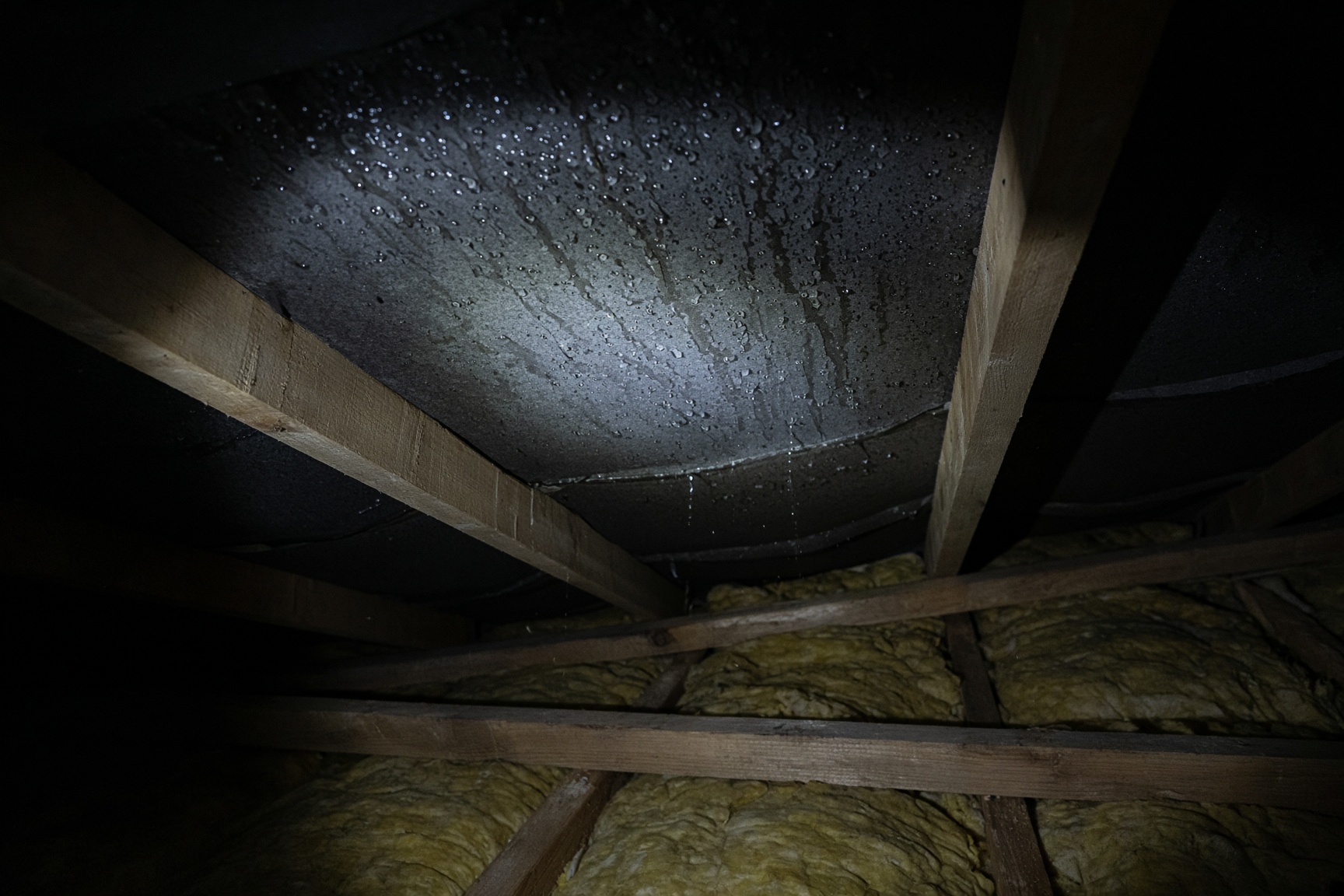
Water in a loft makes most people think the roof is leaking, but in winter condensation is often the real cause. The pattern usually tells you which it is.
| Sign | Condensation | Roof leak |
|---|---|---|
| Where | Spread across the underside of the felt, on nail tips and the cold side of rafters | One spot, often under a ridge, valley, chimney or flashing |
| When | Cold, still nights and mornings, often with no rain | During or after rain, especially wind-driven rain |
| What you see | Droplets or frost on the felt, rusty nails, damp insulation in patches | A drip line or stain that tracks back to one point |
| Smell and mould | Musty smell, black mould spots on rafters and boards | Rot and staining near the leak |
If it only appears in cold weather and you can't trace it to one point, treat it as condensation first. It costs far less to fix, and a roofer will usually check for the same causes before quoting for repairs. Our guide to condensation on windows and walls explains how condensation forms in the rest of the house.
Why lofts get condensation
A cold loft is meant to be cold. In a typical house, the insulation sits on the ceiling, so the loft above is close to the outside temperature. Condensation forms when warm, damp air from the rooms below gets up there and meets the cold underside of the roof. These are the usual reasons it gets in, or can't get out:
How to check your loft
How to stop condensation in the loft, cheapest first
Start by stopping damp air getting into the loft. It is cheaper than adding ventilation, and it works whatever kind of roof you have.
| Fix | What it does | Rough cost |
|---|---|---|
| Seal the loft hatch | Stops warm, damp air rising through the gaps. A self-adhesive rubber seal such as Stormguard EPDM fits round the frame | About £6 |
| Fix extractor ducts | Reconnect or extend the duct so it vents outside through a roof, soffit or wall vent | DIY parts, or an electrician or roofer |
| Seal ceiling gaps | Fill gaps round pipes, cables and the loft hatch frame with sealant or expanding foam (not round recessed downlights, which need clearance) | The cost of a tube of sealant or foam |
| Clear the eaves | Pull insulation back from the eaves and fit rafter trays so air can flow in | Cheap DIY parts |
| Raise boarded areas | Lift boards onto loft legs taller than the insulation so it isn't squashed | About £25 to £60 for a small storage area |
| Fit an airtight loft hatch | Replace an old wooden hatch with an insulated, draught-sealed one such as the Manthorpe GL250 | About £80, plus fitting |
| Add roof ventilation | Eaves, tile or ridge vents fitted by a roofer to meet the gaps in the next section | About £250 to £700 fitted |
Felt lap vents, such as the Manthorpe G630, open the overlaps in old felt to let some air through. Manthorpe says they won't meet the roof ventilation requirement on their own, and that opening felt laps can reduce how well the roof resists wind-driven rain. Treat them as a top-up, not the main fix.
How much ventilation does a loft need?
In England, Approved Document C of the Building Regulations accepts a roof designed to British Standard BS 5250 as meeting the condensation requirement. For a cold pitched roof with a traditional non-breathable felt, the usual figures are:
| Roof | Ventilation | Equivalent to |
|---|---|---|
| Pitch over 15° | A continuous 10mm gap at the eaves, on both sides | 10,000mm² for each metre of eaves |
| Pitch of 15° or less | A continuous 25mm gap at the eaves | 25,000mm² for each metre of eaves |
| Pitch of 35° or more, a span over 10m, or a lean-to or mono-pitch roof | Also a continuous 5mm gap at the ridge or high level | 5,000mm² for each metre of ridge |
Roofs with a breathable membrane can need less ventilation, depending on the product's certification and how airtight the ceiling is, so BS 5250 assesses them case by case. If your roof was re-felted with a breathable membrane, check what the roofer or manufacturer says it needs before adding vents.
Figures from BS 5250 guidance as summarised by the roofing manufacturer Wienerberger and other industry guides. Rooms in the roof and warm roofs, where the insulation follows the rafters, have different requirements. Ask a roofer for those.
What does it cost to fix loft condensation?
Most of the fixes inside the loft are cheap DIY jobs. Roof vents need a roofer, and these are typical UK prices from MyBuilder's guide, updated in August 2026:
| Job | Typical cost, fitted |
|---|---|
| 20 eaves vents on a terraced or semi-detached house, front and back | About £250 |
| 4 tile vents on a standard pitched roof | £280 to £400 |
| 4 ridge vents | About £350 |
| Ridge and eaves vents on a two-storey semi | £600 to £700 |
| Ventilation inspection | £30 to £80 |
Most roofers can fit vents in half a day to a day from a ladder. If scaffolding is needed, add about £75 to £100 a week.
Does a dehumidifier help in a loft?
Usually not, and it is the most common mistake. A cold loft is designed to be ventilated, so a dehumidifier up there ends up drying outside air that keeps flowing in through the eaves. It treats the symptom while damp air keeps rising from the house. Fix the hatch, the ducts and the ventilation instead.
The exception is a loft that is sealed and used as storage, or a room in the roof. If you do use one in a cold space, it needs to be a desiccant model, because compressor dehumidifiers barely work below about 10°C. Our desiccant dehumidifier guide explains why. Running a dehumidifier downstairs, where the damp air comes from, often does more for the loft than one up in it.
Mould in the loft
Black spots on rafters, boards or the felt are mould growing where condensation keeps surfaces damp. Small patches on timber are common in older lofts and are not a structural problem on their own, but they show the loft is staying too damp. Clean small areas with a mould remover, wearing a mask and gloves, and fix the cause so it doesn't come back. If the timber is soft or crumbling, that is rot, and it needs a roofer or surveyor to look at it. For mould in living space, see our guide to black mould in the bedroom.
Damp insulation also works less well. If it is wet through, dry the loft out and replace any that has gone flat. If you are short of insulation, see our insulation guide for costs and grants.
Frequently asked questions
Damp downstairs too?
Condensation in the loft usually starts with damp air in the house. Our guide covers the causes, room by room, and what fixes them.
Read the Condensation Guide →Related Guides
Published 18 October 2026. Ventilation figures are from BS 5250 guidance on cold pitched roofs as summarised by Wienerberger's technical notes and industry guides, and Approved Document C (paragraph 6.10) for England. Roof vent costs are from MyBuilder's roof vent cost guide, updated 21 August 2026. Product prices are from Amazon UK, checked 18 October 2026. The Manthorpe G630 warnings are from Manthorpe's own product description. The 80% humidity figure is the level BS 5250 uses to assess mould risk on surfaces. This guide covers cold lofts with insulation on the ceiling. For rooms in the roof and warm roofs, ask a roofer.