
Damp · Cold Rooms · Buying Guide
Desiccant Dehumidifier UK 2026: Best Picks, and When You Need One
Why a desiccant dehumidifier keeps working in cold rooms, garages and conservatories, what it costs to run against a compressor model, and the three worth buying.
Published 17 October 2026 · prices checked 17 October 2026
Affiliate disclosure: some links on this page are affiliate links. If you buy through them we earn a small commission at no extra cost to you. It doesn't affect what we recommend.
The short answer
On this page:
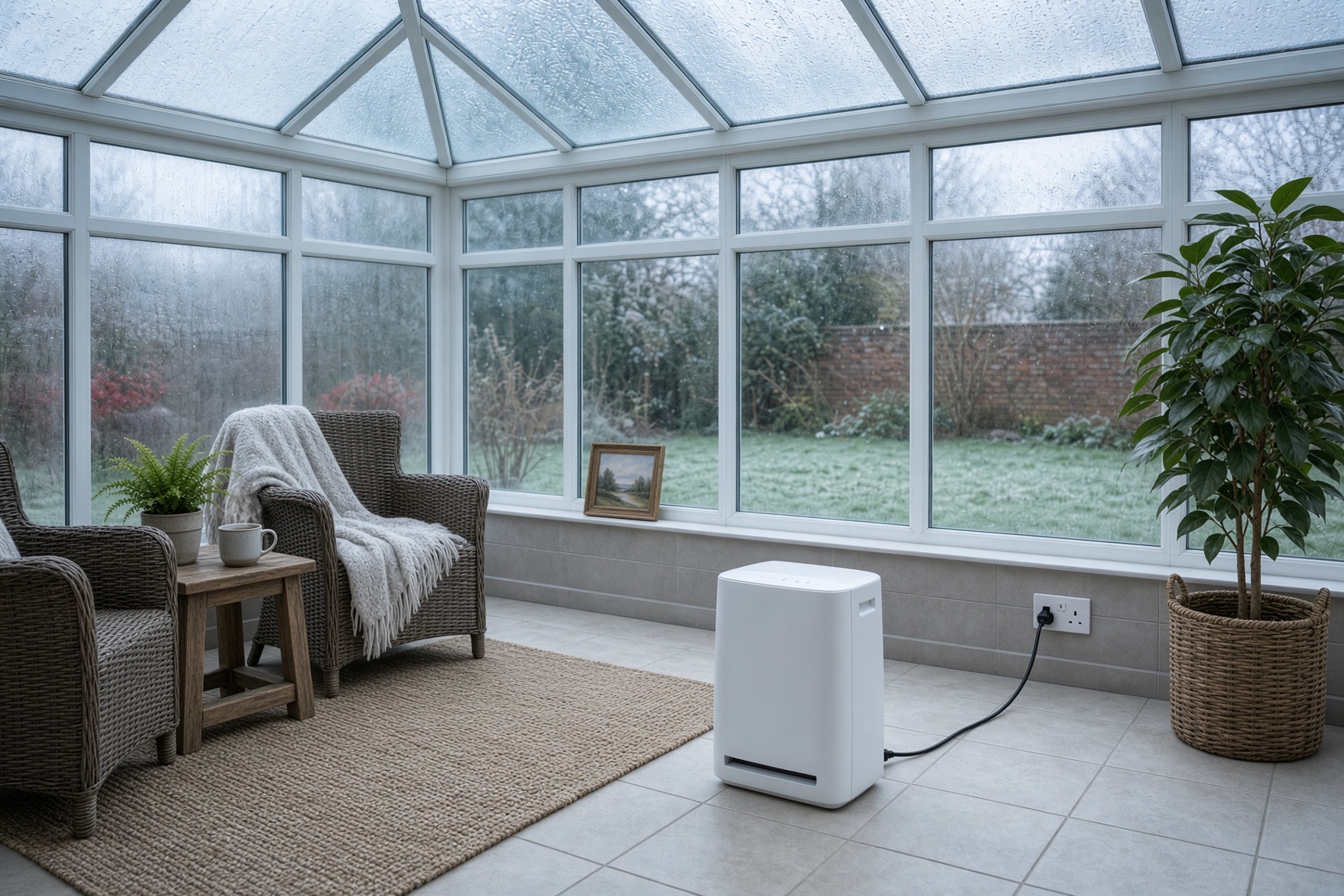
What is a desiccant dehumidifier?
A desiccant dehumidifier dries the air with an absorbent material instead of cold coils. Room air passes through a slowly turning wheel coated in a desiccant, usually zeolite, which soaks up the moisture. A small heater then warms part of the wheel to drive the water back out, where it condenses and drips into the tank.
There is no compressor and no refrigerant gas. That is why desiccant models are lighter, usually quieter on their low setting, and keep working in the cold. A compressor dehumidifier works like a small fridge, condensing water on cold coils, and those coils can't pull much water out of air that is already cold. Our guide to how dehumidifiers work explains both types in more detail.
Desiccant vs compressor: which do you need?
| Desiccant | Compressor | |
|---|---|---|
| Best for | Rooms below about 10 to 15°C | Heated homes, 15°C and above |
| Typical power | 300 to 650W | 130 to 360W |
| Cost an hour, today | 7.9p to 17.1p | 3.4p to 9.5p |
| In the cold | Keeps working down to about 1°C | Extraction drops off as the room cools |
| Air it blows out | Noticeably warmer | Slightly warmer |
| Weight | 6 to 7kg on our picks | Usually heavier, 10kg or more for a 20L model |
| Noise | Quiet on low, louder on high | Compressor hum, varies by model |
Meaco, which makes both types, puts it simply: if the room is below 10°C, a desiccant is the right choice. Its own test figures for the DD8L Pro show why. At the top setting it extracts 7.97 litres a day at 20°C and 6.89 at 10°C, a drop of about 14%. Compressor models lose far more of their output as the room gets that cold, which is why manufacturers rate them at warmer room temperatures.
In a normally heated home, a compressor model removes the same water for less electricity. Don't buy a desiccant for a living room or bedroom that sits at 18 to 21°C unless you specifically want the quieter low setting or the warmer air.
When a desiccant is the right choice
The best desiccant dehumidifiers in the UK
There are fewer desiccant models on sale in the UK than compressor ones, and stock runs short in winter. We compared what is sold here on extraction, the temperatures it is tested at, power, noise, tank size and warranty. De'Longhi's desiccant model, the Tasciugo AriaDry Light, isn't sold in the UK. Prices were checked on 17 October 2026.
| Model | Extraction | Power | Cost an hour | Tank | Price |
|---|---|---|---|---|---|
| Pro Breeze 10L | Up to 10L a day* | 620W | 16.3p | 3L | £199.99 |
| Meaco DD8L Pro | 2.1 to 8.0L a day | 231 to 623W | 6.1p to 16.4p | 2L | £259.99 |
| EcoAir DD1 Classic MK6 | 7.5L a day | 300 to 580W | 7.9p to 15.3p | 2L | £229 to £239 |
*Room conditions not published. Meaco and EcoAir figures are at 20°C and 60% humidity. Costs at the October 2026 price cap of 26.32p per kWh.
Pro Breeze 10L Desiccant Dehumidifier
Up to 10 litres a day · works down to 1°C · 3 litre tank · heating setting · timer
The one we would buy today, because it is the desiccant model you can actually get hold of. It works down to 1°C, has the biggest tank here at 3 litres, a carbon filter, a timer and a hose outlet for continuous drainage, which matters in a garage or conservatory you don't visit every day. A heating setting adds warmth to the air it blows out, useful for drying washing in a cold room.
Pro Breeze doesn't publish the room conditions behind its 10 litres a day, so it isn't directly comparable with Meaco's and EcoAir's figures, which are measured at 20°C and 60% humidity. The 620W figure is from The Range's listing.
Meaco DD8L Pro Desiccant Dehumidifier
Up to 7.97 litres a day · 3 fan speeds · humidistat 40–70% · laundry mode · 3-year warranty
The best-documented desiccant on sale in the UK. Meaco publishes extraction at both 20°C and 10°C, and at 10°C the top setting still pulls 6.89 litres a day, against 7.97 at 20°C. That is the whole case for a desiccant in one number. It has a proper humidistat, a smart energy mode that steps the power up and down to hold your target humidity, a louvre and laundry mode for drying washing, and a 3-year warranty.
Sold out on Meaco's own site when we checked on 17 October 2026. Meaco restocks regularly, so check the link before you buy elsewhere.
EcoAir DD1 Classic MK6
7.5 litres a day · 34dB on low · ioniser · laundry timer · 3-year warranty
A long-running UK favourite for cold rooms, boats and caravans. At 34dB on its low fan it is the quietest here, which makes it the better choice for a spare bedroom or a room you sit in. It works down to 1°C, weighs 6kg and comes with a 3-year warranty, as long as you register it within 30 days.
Prices ranged from £229 to £239 at UK retailers when we checked. Amazon also lists the older MK5, so check the listing says MK6.
Meaco also sells a cheaper standard DD8L at £169.99, which extracts 7.5 litres a day at 650W, or 3.5 litres at 330W. It was sold out at Meaco when we checked too.
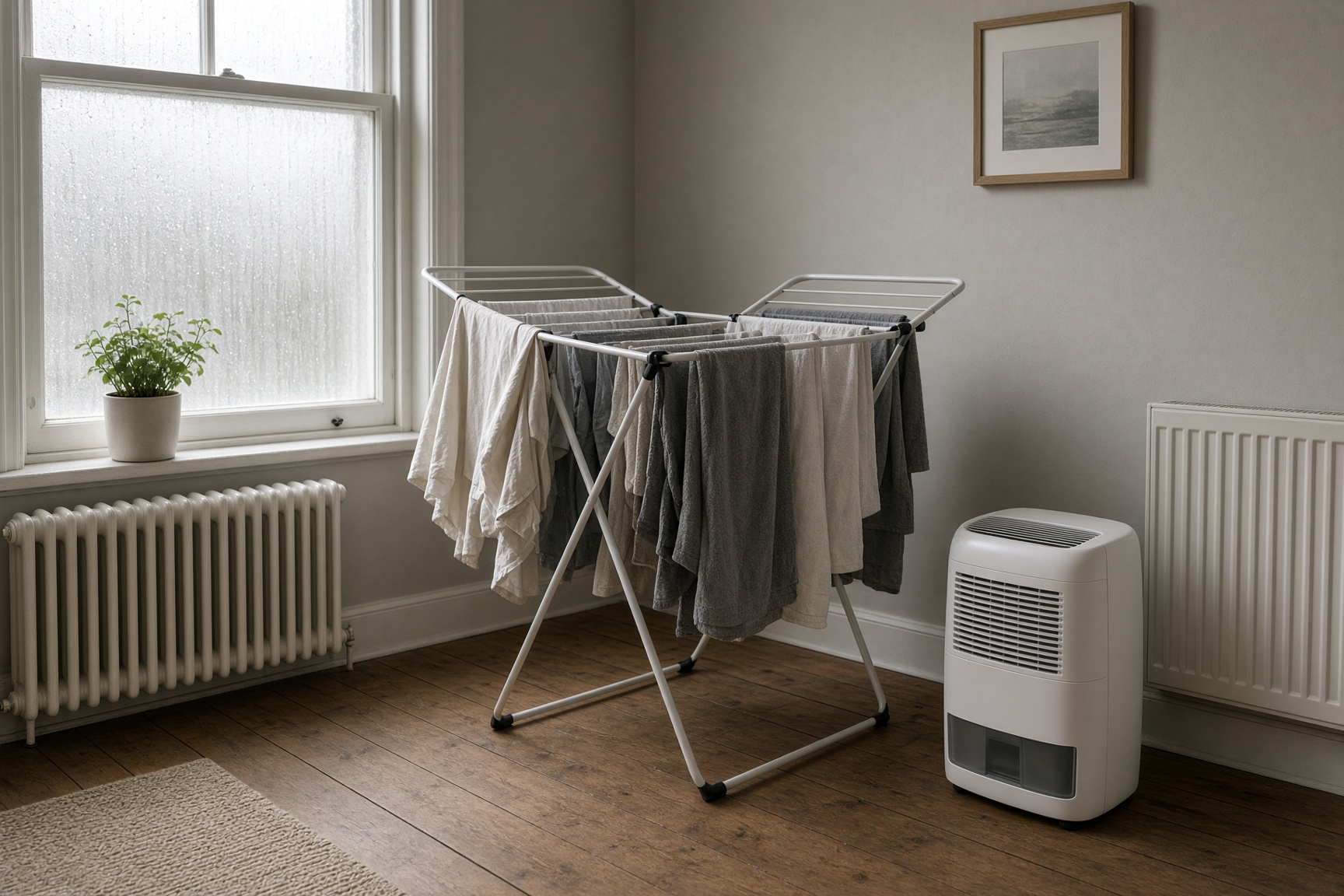
What a desiccant dehumidifier costs to run
A desiccant runs its heater all the time it is extracting, so it uses more power than a compressor model. In practice the humidistat switches it to a lower setting, or off, once the room reaches your target humidity, so it rarely runs flat out all day.
| Power setting | Cost an hour now | Cost an hour from January* | 8 hours a day for a month |
|---|---|---|---|
| 230W (Meaco DD8L Pro, low) | 6.1p | 7.0p | £14.53 |
| 300W (EcoAir, low) | 7.9p | 9.1p | £18.95 |
| 580W (EcoAir, high) | 15.3p | 17.6p | £36.64 |
| 620W (Pro Breeze) | 16.3p | 18.8p | £39.16 |
Now: 26.32p per kWh, the October 2026 price cap. *January: 30.28p, Cornwall Insight's forecast for January to March 2027. The monthly figure is at today's rate.
Almost all of that electricity ends up as heat in the room, which takes the chill off a cold space. It isn't cheaper than central heating, but in a room you wouldn't otherwise heat it is a useful side effect. Our dehumidifier vs tumble dryer guide compares the cost of drying washing each way.
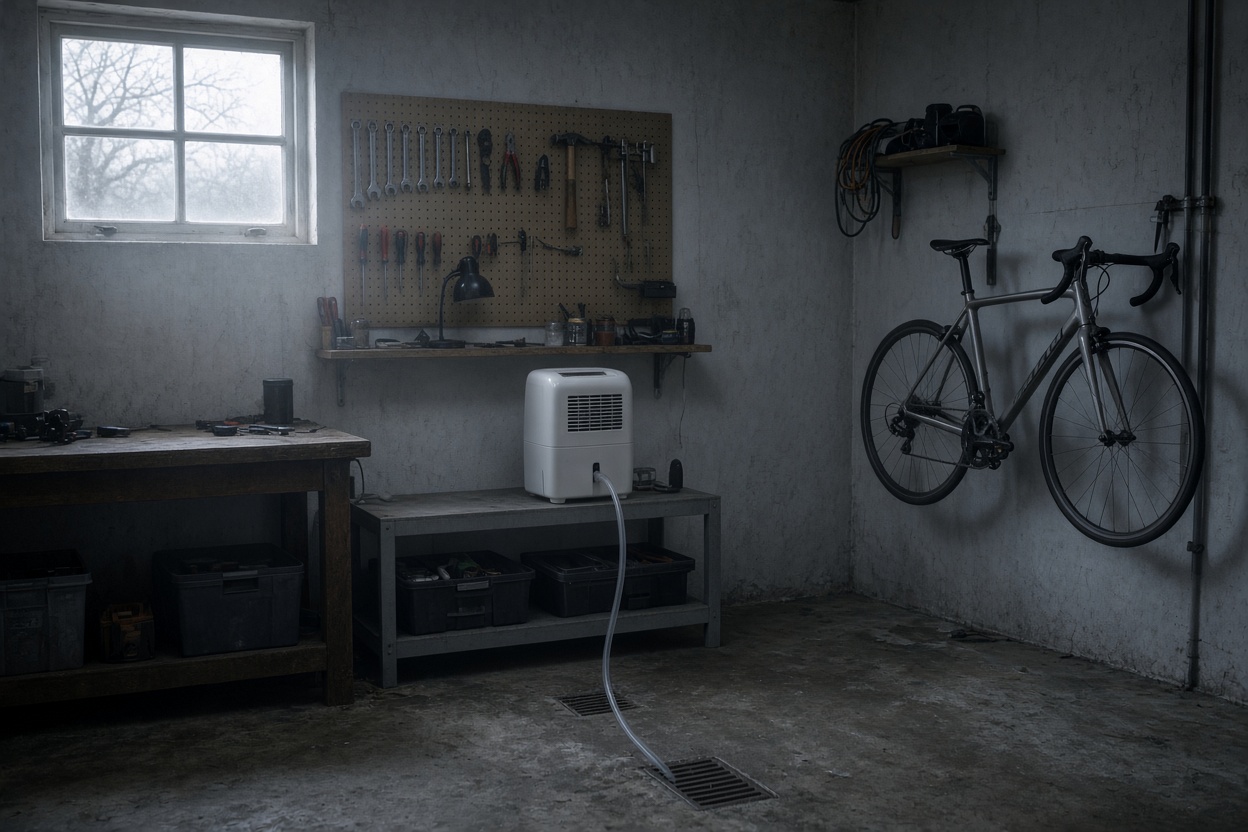
Garages, conservatories, caravans and boats

Frequently asked questions
Heated home? A compressor model is cheaper
Our five picks for heated homes, including the best for drying clothes, bedrooms and damp walls, with real running costs.
See the Best Dehumidifiers →Related Guides
Published 17 October 2026. Meaco extraction, power, noise and warranty figures are from Meaco's UK product pages, checked 17 October 2026, including its test data at 20°C and 10°C. Pro Breeze figures are from Pro Breeze's UK store, with the power rating from The Range's listing. EcoAir figures are from Currys and Atlantic Electrics listings. Running costs use the October 2026 Ofgem price cap of 26.32p per kWh, and January figures use Cornwall Insight's forecast of 30.28p. Compressor power ranges match the figures in our other dehumidifier guides. We have not tested these units ourselves.