
Heat Pumps · Off the Gas Grid
Heat Pump vs Oil Boiler: Running Costs and Switching in the UK
What a year of heating costs on oil against a heat pump at today's prices, what each costs to fit, what happens to the tank, and a calculator for your own home.
Published 14 October 2026
The short answer
On this page:
Calculator: what would a heat pump cost to run in your home?
Put in how much oil you buy in a year (your delivery invoices will tell you) and what you paid per litre. The calculator works out how much heat that oil gives your home, then what a heat pump would cost to deliver the same heat.
Most homes on oil use 1,500 to 2,500 litres a year.
Oil averaged about 121p in mid-October 2026.
We take kerosene as about 10.35 kWh a litre and LPG as about 7.1 kWh a litre. Standing charges are left out because you pay the electricity one either way. Hot water is included, as long as your litres figure covers it.
Is a heat pump cheaper to run than an oil boiler?
Yes, at current prices, and by a wide margin. A litre of kerosene holds about 10.35 kWh of energy. A modern condensing oil boiler turns about 90% of that into heat, so at 121p a litre each kWh of heat costs about 13.0p. An older non-condensing boiler, at around 80%, pushes that to about 14.6p.
A heat pump moves heat in from the outside air instead of burning fuel. The government-funded Electrification of Heat trial found a median seasonal efficiency (SCOP) of about 2.8 for air source heat pumps, meaning 2.8 units of heat for each unit of electricity, and a well-designed system manages 3.5 or more. At the October price cap of 26.32p, that puts a kWh of heat at 7.5p to 9.4p.
| Oil price per litre | Oil heat (modern boiler) | Oil heat (older boiler) | Heat pump (SCOP 2.8 to 3.5) |
|---|---|---|---|
| 70p | 7.5p | 8.5p | 7.5p to 9.4p |
| 89p | 9.6p | 10.7p | 7.5p to 9.4p |
| 105p | 11.3p | 12.7p | 7.5p to 9.4p |
| 121p | 13.0p | 14.6p | 7.5p to 9.4p |
The heat pump wins whenever oil costs more than about 88p a litre with an average heat pump, or about 70p with a good one. Against an older boiler, the break-even is lower still: about 78p. A heat pump tariff with cheaper overnight electricity moves the line further in the heat pump's favour, and our tariff guide compares the options.
A year of heating, costed
Most homes on oil burn 1,500 to 2,500 litres a year, and larger or older rural homes more. Here is what a year costs at 121p a litre with a modern boiler, against a heat pump delivering the same heat at today's price cap.
| Oil a year | Heat it gives | Oil cost | Heat pump cost | Saving a year |
|---|---|---|---|---|
| 1,500 litres | 13,972 kWh | £1,815 | £1,051 to £1,313 | £502 to £764 |
| 2,000 litres | 18,630 kWh | £2,420 | £1,401 to £1,751 | £669 to £1,019 |
| 2,500 litres | 23,288 kWh | £3,025 | £1,751 to £2,189 | £836 to £1,274 |
| 3,000 litres | 27,945 kWh | £3,630 | £2,101 to £2,627 | £1,003 to £1,529 |
At July's price of about 89p a litre, the same 2,000 litres cost £1,780, and an average heat pump would have saved only about £29 a year. That swing is the main thing to understand about oil: the comparison depends on when you look.
Oil prices move fast. Electricity is capped
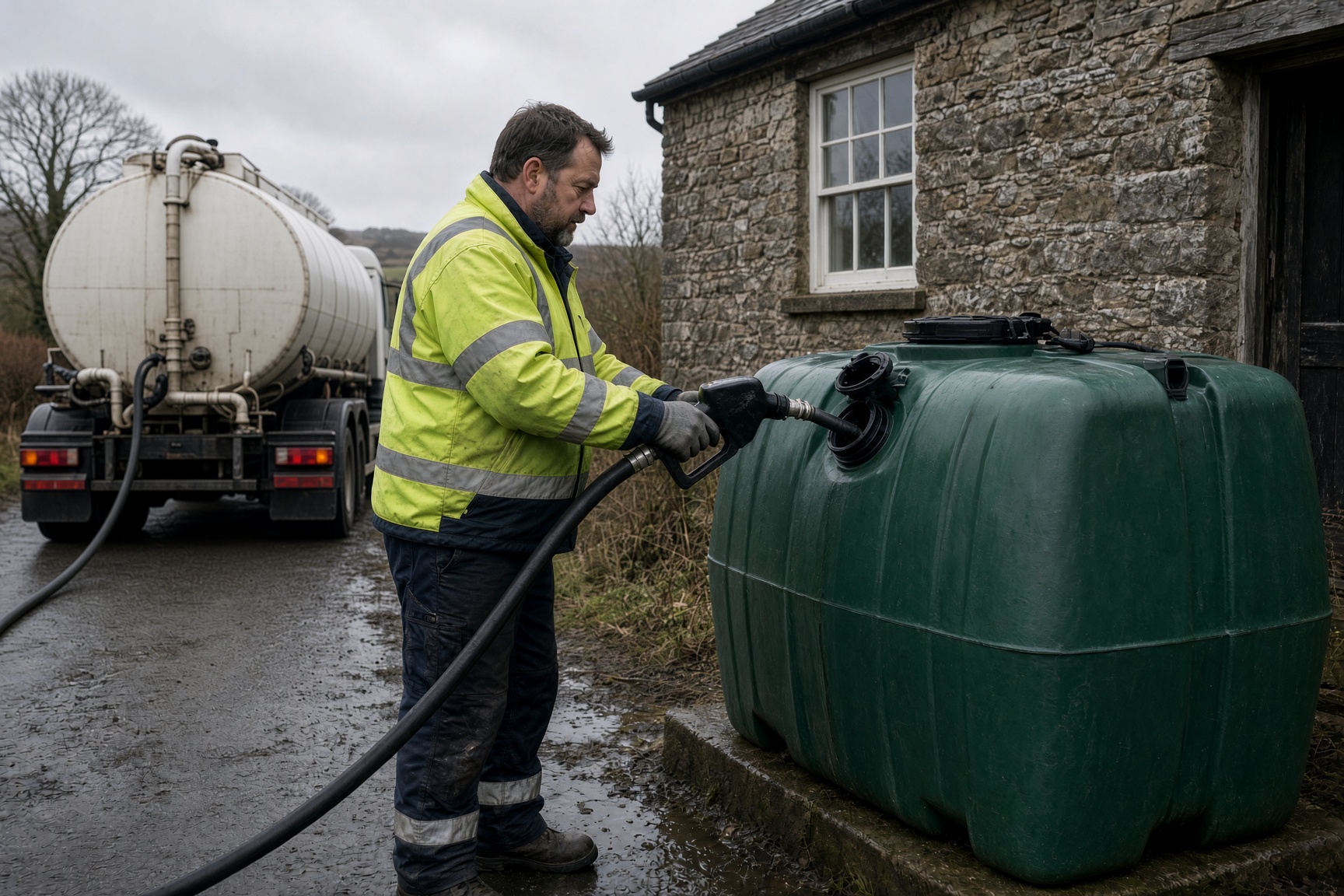
Heating oil has no price cap. Fueltool's UK average for a 1,000-litre order rose from about 89p a litre in mid-July 2026 to about 121p in mid-October (including 5% VAT), a rise of about 35% in three months. What you pay also depends on when you order, how much, and where you live.
Electricity is covered by Ofgem's price cap, which is set every three months. It is 26.32p per kWh until the end of December, and Cornwall Insight forecasts 30.28p from January. At that price an average heat pump's heat costs about 10.8p per kWh, and it still beats oil above about 101p a litre. Our January price cap guide has the forecast in full.
Because oil is bought in large deliveries, the price on the day you order matters more than the average. A heat pump spreads the cost across monthly bills at a price that changes four times a year.
Upfront cost: heat pump vs a new oil boiler
Running costs are only half of it. If your oil boiler still works well, replacing it early costs money. If it is near the end of its life, the comparison is what each replacement costs, and the £9,000 grant brings a heat pump close to a new oil boiler.
| New oil boiler | Air source heat pump | |
|---|---|---|
| Typical fitted price | £2,200 to £5,500 (about £3,300 on average) | Median £13,041 before the grant |
| Grant | None | £9,000 for oil and LPG homes until 31 March 2027, then £7,500 |
| Your cost | About £3,300 | About £4,041 at the median |
| If the oil tank also needs replacing | Add £2,200 to £2,800 for a new bunded tank | Not needed: the tank is drained and removed for £100 to £350 |
| What else may need doing | Usually nothing | Some larger radiators and a hot water cylinder, both normally in the quote |
Oil boiler and tank prices are from MyJobQuote's September 2026 guide. The heat pump figure is the median cost of air source installations under the Boiler Upgrade Scheme in 2025/26, from Nesta's analysis of the scheme's data. Large or older homes cost more, and our heat pump costs guide breaks it down by home size.
The extra £1,500 for oil and LPG homes ends on 31 March 2027. You also have three months from the grant being approved to get an air source heat pump installed. Our £9,000 grant guide covers who qualifies and how the installer applies. There have been press reports this month that heat pump support could be scaled back in the autumn Budget, but nothing has been announced, and the £9,000 rate is what is on offer today.
Will a heat pump heat an older rural home?
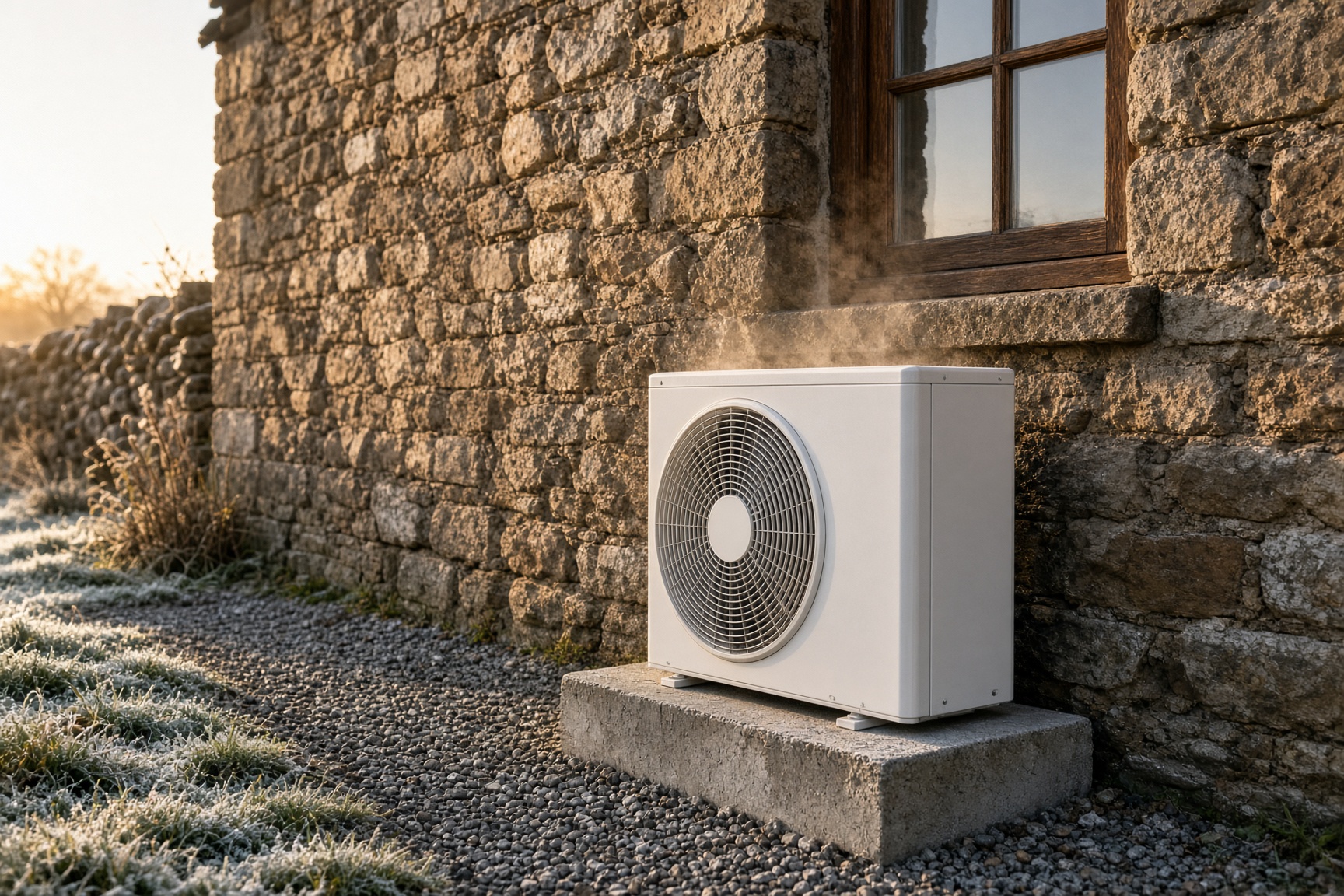
Usually, yes, but these are the homes where the design work matters most. Many oil-heated homes are older, with solid stone or brick walls, and some are draughty. A heat pump runs at a lower water temperature than an oil boiler, so it heats the house more gently over longer hours. That works when the system is sized for your home's heat loss, not for the size of the old boiler.
What happens to your oil tank
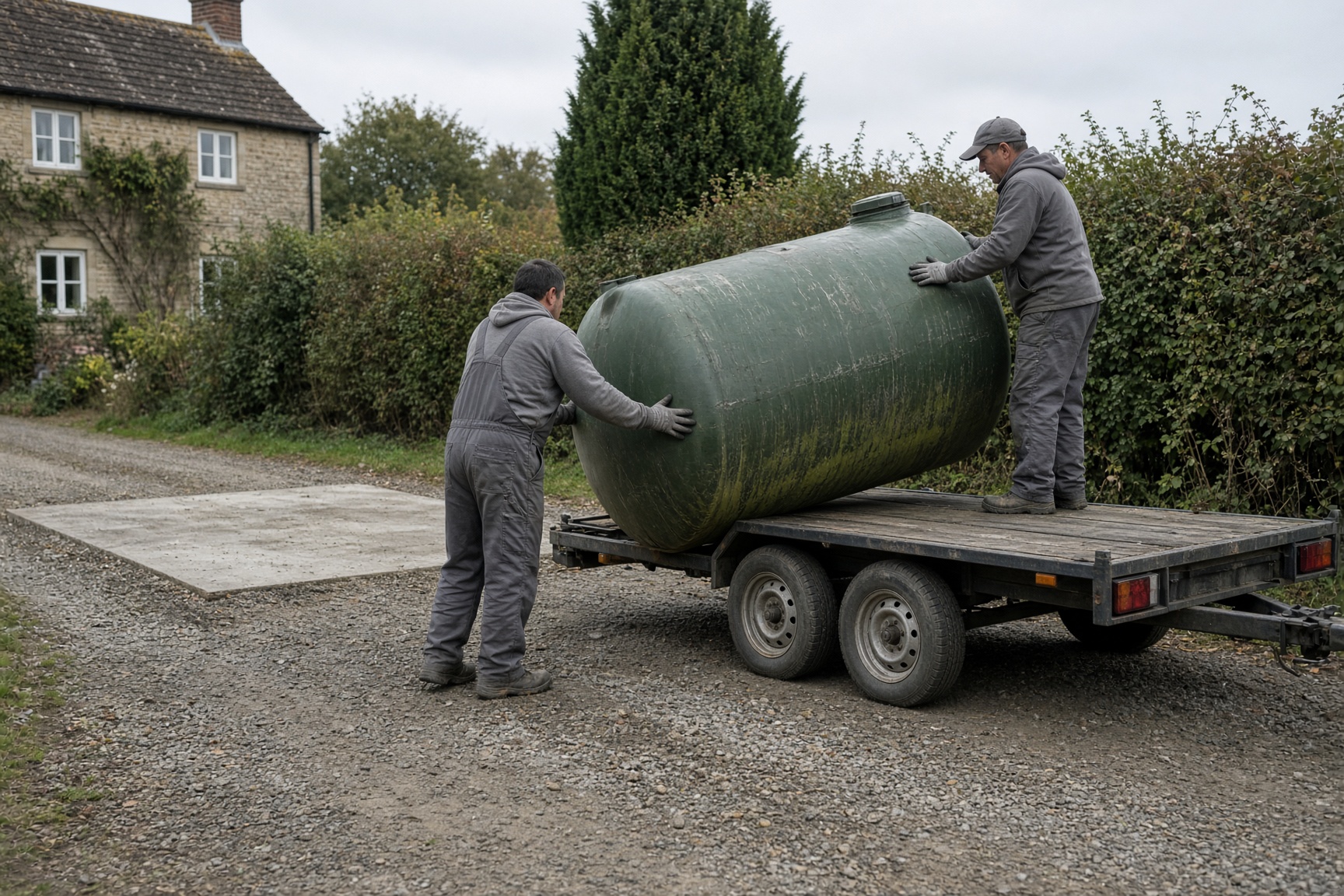
Once the heat pump is running, the oil tank is no longer needed. Plan the switch so you run the tank as low as you safely can, rather than ordering a full delivery in the weeks before. Draining and removing an old tank typically costs £100 to £350, and some installers include it in the quote, so ask.
When a new oil boiler still makes sense
A heat pump is the better long-term choice for most oil homes, but not all of them, and not always right now.
What about LPG?
The same comparison applies to LPG, and LPG homes get the same £9,000 grant. A litre of LPG holds less energy than a litre of kerosene, about 7.1 kWh, so heat from LPG costs more per litre paid: at 80p a litre and a 90% boiler, it works out at about 12.5p per kWh of heat. LPG prices vary widely between suppliers and contracts, and many households also pay tank rental, so choose LPG in the calculator and use the price from your last bill.
Switching from oil to a heat pump, step by step
Frequently asked questions
Which kind of quote suits you?
On oil or LPG? The £9,000 grant runs until 31 March 2027, and the installer applies for it and takes it off your bill.
"I'd rather deal with one good installer" Get a quote from Blue Ape Renewables, the installer we work with. MCS-certified for heat pumps and registered for the Boiler Upgrade Scheme grant, fitting air source heat pumps across England, Wales and Scotland. Get a quote →Tell us about your project and local installers will quote
Both are free and there's no obligation. We earn a commission if you go ahead with Blue Ape or with one of the installers you are matched with.
Related Guides
Published 14 October 2026. Oil prices are Fueltool's UK average for 1,000-litre orders of kerosene on 16 July and 14 October 2026 (85.09p and 115.59p a litre before 5% VAT). Electricity uses Ofgem's price cap for 1 October to 31 December 2026 (26.32p per kWh) and Cornwall Insight's forecast for January to March 2027 (30.28p). Heat pump efficiency of 2.8 is the median for air source heat pumps in the Electrification of Heat trial. Oil boiler, tank and tank removal costs are from MyJobQuote (September 2026); the heat pump installation cost is the 2025/26 median from Nesta's analysis of Boiler Upgrade Scheme data. Energy content of 10.35 kWh a litre for kerosene and 7.1 kWh for LPG, and boiler efficiencies of 90% and 80%, are standard planning assumptions.