
Condensation on Windows and Walls: Causes and How to Stop It
What causes condensation in a house, how to read it on the inside, outside or between the panes of your windows, why it appears on walls, and the four things that stop it.
Affiliate disclosure: Some links on this page may be affiliate links. If you buy through them we earn a small commission at no extra cost to you. This doesn't affect our recommendations.
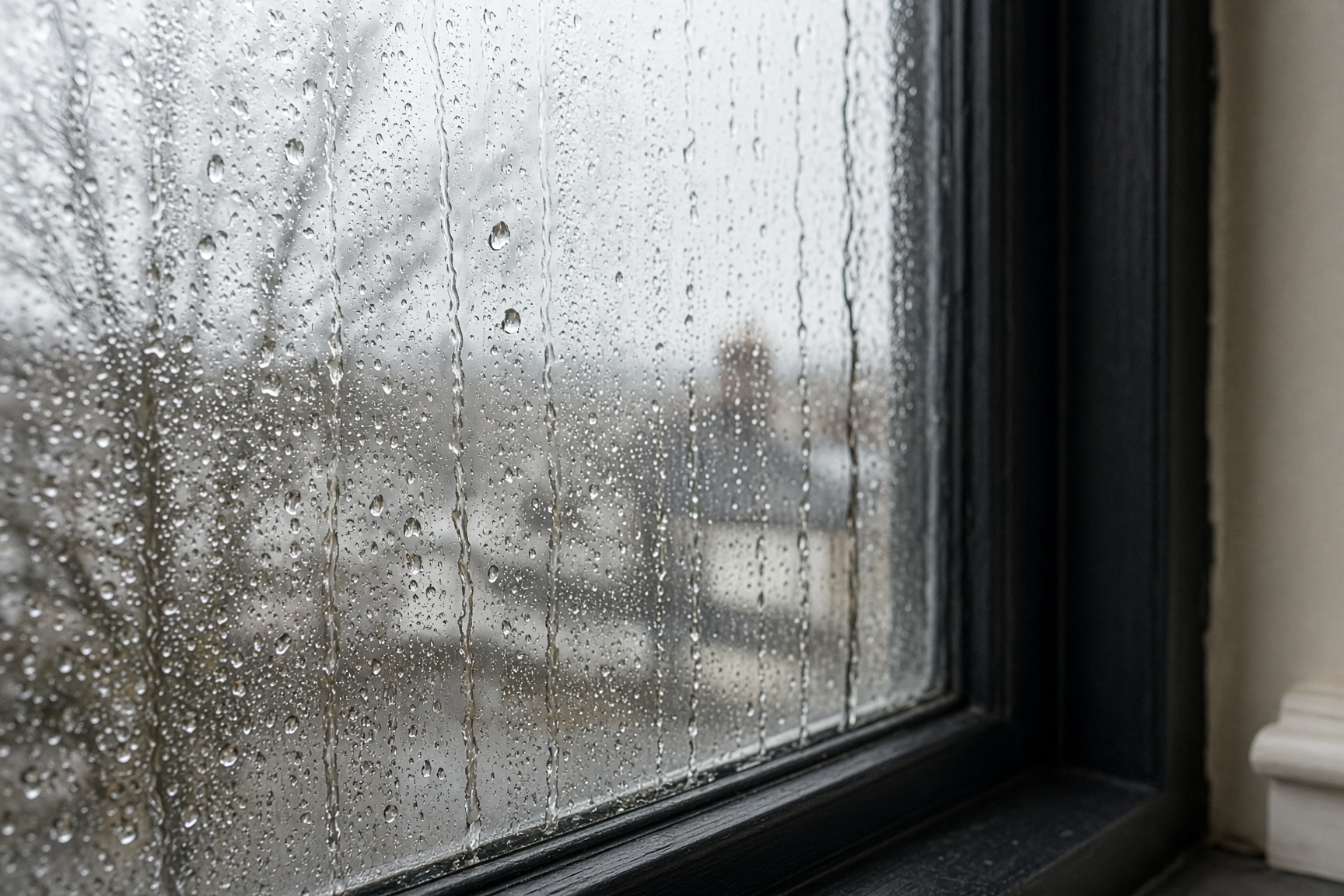
Waking up to a window covered in water, or finding a damp, cold patch on a bedroom wall, is one of the most common autumn and winter problems in UK homes. Condensation is well understood and almost always fixable without building work. Where the water appears tells you most of what you need to know, so this guide starts with the window and then covers walls and the whole house.
Quick answer: condensation forms when warm, moist air meets a cold surface. On the inside of a window or on a cold wall, it means the room's air is too humid for how cold that surface is: reduce moisture, ventilate, keep the room steadily warm and aim for 40–60% humidity. On the outside of a window it is harmless and shows the glazing is insulating well. Mist between the panes of double glazing means the sealed unit has failed and needs replacing. Left alone, persistent condensation leads to black mould.
Which Type of Window Condensation Do You Have?
Check where the water is before you do anything else. Run a finger across the glass: if you can wipe it, it's on that surface. If you can't reach it from either side, it's between the panes.
| Where the water is | What it means | What to do |
|---|---|---|
| On the inside (room side) | Too much moisture in the room for how cold the glass is | Ventilate, cut moisture, keep steady heat. See the fixes |
| On the outside | Normal. Your glazing is keeping heat in | Nothing. It clears as the morning warms up |
| Between the panes | The double-glazed unit's seal has failed | Replace the sealed unit, not the whole window |
| On new windows | Usually less draught, so moisture stays in | Open the trickle vents |
| Only first thing in the morning | A night of breathing in a cooling room | Overnight ventilation and low background heat |
What Causes Condensation in a House?
The air in your home always holds some water, even though you can't see it. Warmer air can hold more moisture than cold air. When that moist air touches a cold surface, such as a window pane, an outside wall or a mirror, it cools quickly and the moisture it was holding turns into droplets. It's the same physics as a cold glass of water "sweating" on a warm day.
This is why condensation is worse in winter and worst on windows: glass is almost always the coldest surface in a room, especially with single glazing or ageing double glazing. In older UK homes built before cavity wall construction became standard, solid walls can also get cold enough for condensation to form directly on plaster, not just glass. The same damp air also rises through gaps around the loft hatch, light fittings and pipes into the roof space: if you see drips on the roofing felt or wet insulation, read our guide to condensation in the loft.
The everyday activities that generate the most moisture
- Cooking without a lid on pans, or without the extractor fan on
- Showering or bathing with the door open and no extractor fan
- Drying clothes on radiators, or using an unvented tumble dryer. One load releases about 2 litres of water (how to dry clothes indoors without damp)
- Keeping windows and vents permanently shut, especially overnight
Why windows get it first
Glass conducts heat far more readily than a plastered wall, which means the inner surface of a window tracks the outdoor temperature much more closely than the wall around it. On a cold night, that inner pane can easily drop below the "dew point", the temperature at which the moisture in the room's air starts condensing into liquid, while the wall right next to it stays comfortably above it. That's why you'll often see a perfectly dry wall next to a window that's streaming with water.
Single glazing is particularly prone to this, since there's only one layer of glass directly exposed to the cold outside. Double glazing helps significantly by keeping the inner pane warmer, but it doesn't eliminate the issue entirely if the room is generating a lot of moisture regardless. Several UK local authorities publish useful, independent advice on this: Tendring District Council's condensation guidance is a clear, practical example.
Condensation on the Inside vs the Outside of Windows
Condensation on the inside of windows
This is the common one, and the one to act on. It's a direct sign of excess moisture and poor ventilation inside your home, and if ignored, it can lead to damp window frames, peeling paint, and eventually black mould.
Condensation on the outside of windows
Nothing to worry about. It forms on cool, still mornings, mostly in spring and autumn, when the outer pane is colder than the dew point of the outside air. That only happens when very little heat is escaping through the glass, so it's a sign your glazing is doing its job. It clears on its own as the sun warms the glass.
Condensation Between the Panes: Water Inside a Double-Glazed Window
This is different from the other two. If mist or droplets are trapped between the two panes of a double-glazed unit, where you can't wipe them from either side, the seal around the unit has failed (often called a "blown" unit). Moist air has got in, and the unit no longer insulates as it should. No amount of ventilation or heating will clear it.
The fix is to replace the sealed glass unit, not the whole window. A glazier measures up, orders a new unit and swaps it into your existing frame, usually in under an hour once it arrives. Checkatrade puts the cost at roughly £140–£300 per unit, depending on its size and whether the window opens. Some firms offer to drill, dry and reseal the unit for less, but it doesn't restore the insulating gas and the mist often returns.
Before you pay, check your paperwork: sealed units commonly come with a 5 or 10-year guarantee, and a unit that has failed inside that period should be replaced free.
Condensation on New Windows: Is It Normal?
It's common, and it usually isn't a fault with the windows. There are three reasons it happens:
Your old windows were draughty. Gaps around old frames let moist air leak out all day. New windows seal tightly, so the same moisture now stays in the room and settles on the glass. The answer is to ventilate on purpose: open the trickle vents and use extractor fans.
The trickle vents are closed. Replacement windows in England have generally had to include trickle vents since June 2022. They're often left shut after fitting. Open them and leave them open through winter.
It's on the outside. New, efficient glazing keeps the outer pane cold, so dew forms on it on still mornings. Your old windows leaked enough heat to stop that. It's a sign of better windows, not worse ones.
If building work came with the new windows, wet plaster and paint also release a lot of moisture for the first few weeks. The one case that is a fault is mist between the panes of a new unit: that's a failed seal and a warranty claim.
Condensation on Double-Glazed Windows in the Morning
Morning is when the gap between the room's moisture and the glass temperature is widest. Overnight the heating is off, the glass cools, and each person asleep in the room breathes out roughly a quarter of a litre of water. By dawn the air is at its dampest and the glass at its coldest.
On the inside, a little mist along the bottom edge that clears by mid-morning is normal in cold weather. Water running down the glass and pooling on the sill most mornings means the room needs more ventilation or a little background heat overnight. On the outside, morning condensation on double glazing is the harmless dew described above.
Condensation on Single-Glazed Windows
Single glazing has just one sheet of glass between the room and the weather, so its inner surface sits close to the outdoor temperature and condenses very easily. Ventilation and moisture control still help, but the glass itself is the weak point. In order of cost:
- Secondary glazing film: a clear film shrunk onto the frame with a hairdryer, for a few pounds a window. It lasts a winter and suits renters.
- Secondary glazing panels: a second pane fitted inside the existing window. The usual choice for listed buildings and sash windows.
- Double glazing: the permanent fix. See our insulation guide for where it sits against other upgrades.
Condensation on Walls
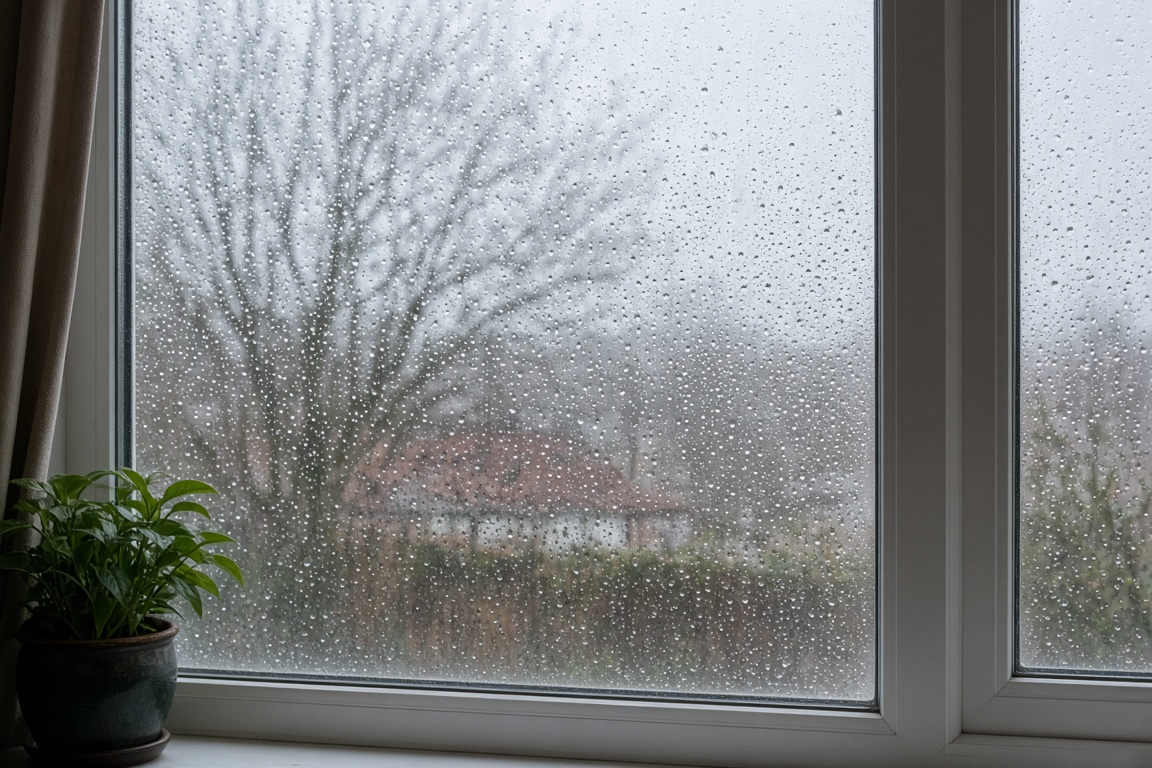
Windows get it first, but walls are where condensation does the most damage, because you often don't notice it until the paint flakes or mould appears. It forms on the coldest parts of a wall, and those are predictable:
Where it shows up
Outside walls, especially north-facing ones. Corners where two outside walls meet. Behind wardrobes, beds and sofas pushed against an outside wall. Around window reveals and above skirting boards.
What it looks like
A wall that feels cold and clammy, a fine film of moisture, peeling paint or wallpaper, and black speckled mould. It's worst in winter and in the mornings, and it isn't linked to rain.
Why bedrooms are worst
They're often the least heated rooms, the door is shut all night, and two people breathe out about half a litre of water while they sleep.
How to get rid of condensation on walls
- Pull furniture 5–10cm away from outside walls so warm air can reach the wall behind it.
- Keep the room at a steady background temperature. A wall that never gets fully cold rarely gets wet.
- Ventilate the room that makes the moisture, and keep kitchen and bathroom doors shut so it doesn't drift to the coldest bedroom.
- Wipe mould off early with a mould cleaner, and let the wall dry before repainting. Painting over it doesn't stop it.
- If one wall is always cold, insulate it. Cavity, internal or external wall insulation raises the surface temperature above the dew point, which is the permanent fix.
Severe condensation on walls, where water runs down the surface or mould returns within weeks of cleaning, means the room is well above 70% humidity for long periods. That needs a dehumidifier now and a ventilation or insulation fix soon. And if the damp patch is low down, appears after rain or has a tide mark, it may not be condensation at all: see damp patches on walls to tell the three types apart.
How to Stop Condensation: The Four Things That Fix It
Every credible source agrees on the same approach: reduce moisture at the source, move air, keep the home warm, and only then consider mechanical help. Most homes need attention to more than one of these; a single fix rarely solves persistent condensation on its own.
1. Reduce the moisture you're generating: the single biggest lever
Lids on pans while cooking. Extractor fan on during cooking and for 10-15 minutes after. Bathroom door shut and fan running during and after a shower. Dry clothes outside where possible. If you can't, follow our rules for drying clothes indoors without damp, and make sure a tumble dryer is properly vented, not venting moisture straight into the room.
2. Improve ventilation: let the moist air leave
Open windows for 5-10 minutes a day, ideally morning and evening, to exchange the air rather than just moving it around the room. If extractor fans exist in your kitchen and bathroom, make sure they're actually working. A fan that's stopped extracting properly is a common, easily-missed cause. The window tips below help too.
3. Keep the home consistently warm: steady, not blasting
Letting a room get properly cold, then heating it in bursts, creates exactly the temperature swing that causes condensation. A steady background temperature, even a modest one, keeps surfaces further from the dew point than repeatedly letting the house go cold.
4. Address cold surfaces, if the above isn't enough
If condensation persists even with good moisture control and ventilation, the surface itself may simply be too cold, because of poor window performance or inadequate wall insulation. See our insulation guide for what's involved and current grant availability.
Extra steps for windows
- Wipe windows each morning if they're wet: not a fix on its own, but it stops that water soaking into the frame or sill and causing rot or mould locally. A squeegee or window vacuum makes it a 30-second job; tip the water down the sink rather than leaving a wet cloth on the radiator.
- Check trickle vents aren't blocked or painted shut: many UK double-glazed windows have small built-in vents specifically to manage this, and they're easy to accidentally seal up during decorating
- Move plants and furniture slightly away from windows: it reduces localised humidity right at the glass and improves airflow
- Never dry washing on or near the window: an airer by the glass puts moisture straight onto the coldest surface in the room
- Measure the humidity: a cheap hygrometer shows whether a room is above the 60% danger line and whether your changes are working. Wi-Fi versions log it and alert your phone (see room sensors)
How to Stop Condensation on Bedroom Windows Overnight
Bedroom windows are usually the worst, because two people breathing overnight in a closed room can add several hundred millilitres of moisture to the air while the glass gets colder. Three things make the biggest difference:
1. Leave the trickle vent open, or the window on the latch. A small, constant air change overnight does more than a big blast of fresh air in the morning.
2. Keep a low, steady background heat. A bedroom that drops to 12°C overnight will stream; one held around 16–18°C often won't.
3. Run a quiet dehumidifier set to 50–55%. If the windows still stream after the first two, this is the most reliable fix. A compact 10L compressor unit runs at around 35dB and costs about 4p an hour, roughly 32p a night.
If you're doing everything right (good ventilation, moisture control, steady heating) and the windows still stream every morning, the room's moisture load is too high for the current setup. That's when a dehumidifier earns its place: see our best dehumidifier for a bedroom, with quiet picks, or consider whether the room needs better ventilation, such as an extractor fan if it doesn't already have one.
What Humidity Should Your Home Be?
Aim for 40–60% relative humidity indoors. Below 60%, condensation and mould struggle to take hold; above 70% for long periods, especially in cold rooms, they almost certainly will. A cheap digital hygrometer (usually under £10) tells you where you stand, and it's the quickest way to see whether your fixes are working. Wi-Fi versions log each room and alert your phone; see room sensors.
| Indoor humidity | What it means |
|---|---|
| Below 40% | Too dry: can irritate eyes, skin and throats |
| 40–60% | The healthy range: condensation is rare |
| 60–70% | Condensation likely on cold windows and walls |
| Above 70% | Mould risk: act now with ventilation or a dehumidifier |
Do You Need a Dehumidifier for Condensation?
A dehumidifier treats the symptom, not the cause. (Our guide to how a dehumidifier works explains what it can and can't do.) If a room makes a lot of moisture and is poorly ventilated, a dehumidifier will keep the humidity down in the meantime, but fixing the four things above first means it has less to do, and in milder cases you may not need one at all.
Where a dehumidifier earns its place: a room that's structurally hard to ventilate well, drying laundry indoors during winter when outdoor drying isn't practical, or as a stopgap while you sort out a longer-term ventilation or insulation fix. If your hygrometer regularly reads above 60% even after the fixes above, it's worth getting one.
Using a dehumidifier for condensation
- Running cost: about 4–9p an hour at October 2026 prices, so roughly £10–£22 a month at 8 hours a day.
- Setting: 50–55% humidity, and let it switch itself on and off.
- For a bedroom or flat: a quiet 10L compressor unit is plenty.
- For a whole damp house or daily laundry: go for 20L with continuous drainage.
When Condensation Becomes a More Serious Problem
Left unaddressed, persistent condensation leads to black mould: the moisture it leaves on windows, sills and walls is exactly the damp environment mould needs to establish. If you're already seeing dark spotting on walls, window frames, or in corners, that's a step further than condensation alone. See our black mould guide for what to do next. And if the damp is low on a wall or appears after rain, it may not be condensation at all: our guide to damp patches on walls helps you tell the difference.
Are cold walls or old glazing part of the problem?
Cold walls and single or ageing glazing make condensation far more likely. See what insulation upgrades are available for your home, including current grant eligibility.
Check Insulation Grants →Condensation: Frequently Asked Questions
Related Guides
Published September 2026, updated 9 October 2026. This guide now combines our earlier guides to condensation on windows and condensation in the home. General guidance based on established building science and UK glazing industry and local authority sources. Sealed-unit replacement costs from Checkatrade. Dehumidifier running costs use the October 2026 price cap of 26.32p/kWh. If you suspect rising or penetrating damp, or a failed double-glazed seal, a qualified surveyor or glazier can confirm the cause.
Struggling With Condensation or Damp?
Compare dehumidifiers, or check if insulation grants could help fix the root cause for free.