
Battery Storage Guide
Tesla Powerwall 3 UK: Price, Specs and Whether It's Worth It
What a Tesla Powerwall 3 costs to have fitted in the UK, what you get for the money, what it can save on a time-of-use tariff, and who should pick something cheaper instead.
Last reviewed: 23 November 2026
Quick answer: A Tesla Powerwall 3 usually costs £7,000 to £9,000 fitted in the UK for 13.5kWh of usable storage, with 0% VAT until 31 March 2027. It has a solar inverter built in, so it suits new solar installs and homes with big evening use or an electric car. On a cheap overnight tariff a typical home saves around £450 to £750 a year, which puts payback at roughly 11 to 18 years. If your home uses less, a smaller and cheaper battery often pays back sooner.
Tesla Powerwall 3 Price in the UK
What you will pay for the battery, the optional extras, and how VAT and loans change the total.
| What you are buying | Typical UK price | Notes |
|---|---|---|
| Powerwall 3, installed (13.5kWh, no backup) | £7,000 to £9,000 | Most UK quotes land here. Octopus listed £7,999 fitted in 2026; one owner we found paid £7,719. |
| Backup Gateway 2 (keeps the lights on in a power cut) | About £1,000 to £1,200 extra | Only needed if you want backup. A grid-tied install works without it. |
| Expansion pack (extra 13.5kWh), fitted at the same time | About £3,800 to £5,000 | Adds storage, not extra output. |
| Expansion pack added later | About £5,000 to £6,000 | Costs more because it is a second visit. |
| Powerwall 3 with new solar panels | From about £12,000 | Depends on how many panels. Octopus quoted £12,362 with 4 panels. |
| DNO (G99) application for output above 3.68kW | Often included, or £100 to £300 | Ask whether it is in the quote. |
Cost per kWh: at £7,000 to £9,000, a Powerwall 3 works out at roughly £520 to £670 per kWh of storage. That is close to many 10kWh batteries (about £550 to £750 per kWh in our best home battery guide). You pay more overall because it is a bigger battery, not because each kWh costs much more.
Prices vary by installer and region. National firms tend to quote towards the top of the range, and local Tesla Certified Installers towards the bottom. Get at least three quotes and check each one says whether the Backup Gateway, any consumer unit work and the DNO application are included.
VAT: home batteries are zero-rated until 31 March 2027, whether you fit them with solar panels or on their own. From 1 April 2027 the rate goes to 5%, which adds about £350 to £450 to a typical Powerwall 3 quote. See our guide to VAT on solar panels and batteries.
Grants and loans: there is no national grant for home batteries, and the Boiler Upgrade Scheme does not cover them. The Warm Homes Loan Scheme does: it opened on 27 October 2026, has no income test and can fund a battery (capped at £15,000). Tesla ran a £375 per unit rebate for orders between December 2025 and June 2026, but that has now closed. Our home energy grants guide lists everything else you might qualify for.
Powerwall 3 Specs That Matter
The numbers from Tesla's 2026 UK datasheet, and what they mean in a normal home.
| Spec | Powerwall 3 (UK datasheet, 2026) |
|---|---|
| Usable storage | 13.5kWh per unit |
| Output on the grid (UK) | Set by the installer between 3.68kW and 11.04kW |
| Charging speed | 5kW (8kW once an expansion pack is fitted) |
| Built-in solar inverter | Yes, 3 solar inputs (MPPTs), handles 20kW of panels |
| Efficiency | 97.5% solar to home, 89% solar to battery to home |
| Battery chemistry | Lithium iron phosphate (LFP) |
| Size and weight | 1105 x 609 x 193mm, 130kg |
| Weather rating | Indoor or outdoor, IP67 battery (IP55 enclosure), -20°C to 50°C |
| Expansion | As many as 3 expansion packs per Powerwall 3, and 4 Powerwall 3s per home |
| Warranty | 10 years, at least 70% capacity left after 10 years, needs an internet connection |
| Grid connection | Single phase 230V (the Backup Gateway 2 also works on three-phase homes) |
The big change from the older Powerwall 2 is the built-in solar inverter. If you are having new panels fitted, the Powerwall 3 runs them directly, so you do not pay for a separate inverter. If you already have solar, it can be wired in alongside your existing inverter instead. Our guide to adding a battery to existing solar panels explains the two ways of doing that.
The 11.04kW output is far more than most homes need at once, so it will happily run an electric shower, oven and heat pump together. The 5kW charging speed matters less than it sounds: on an overnight tariff with a six-hour cheap window, 5kW is enough to fill it from empty in under three hours.
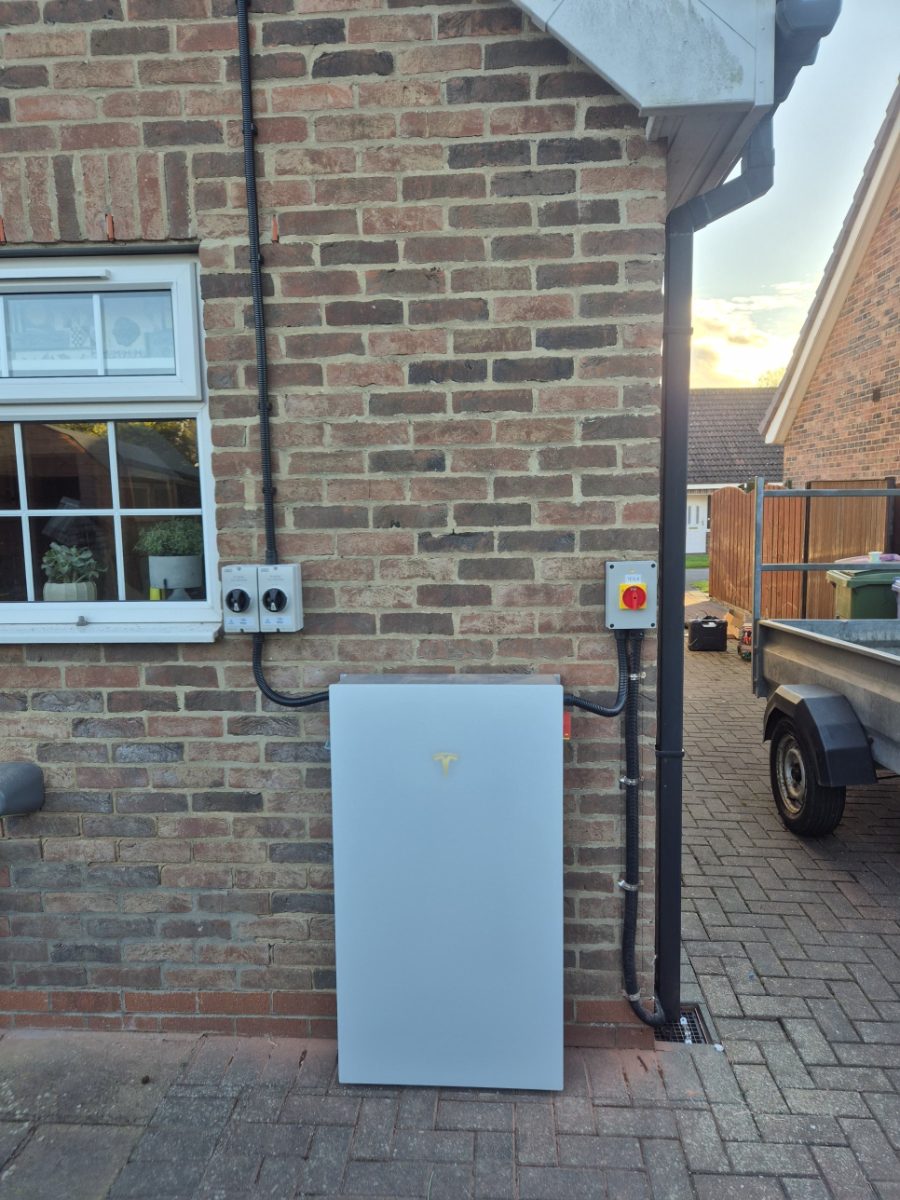
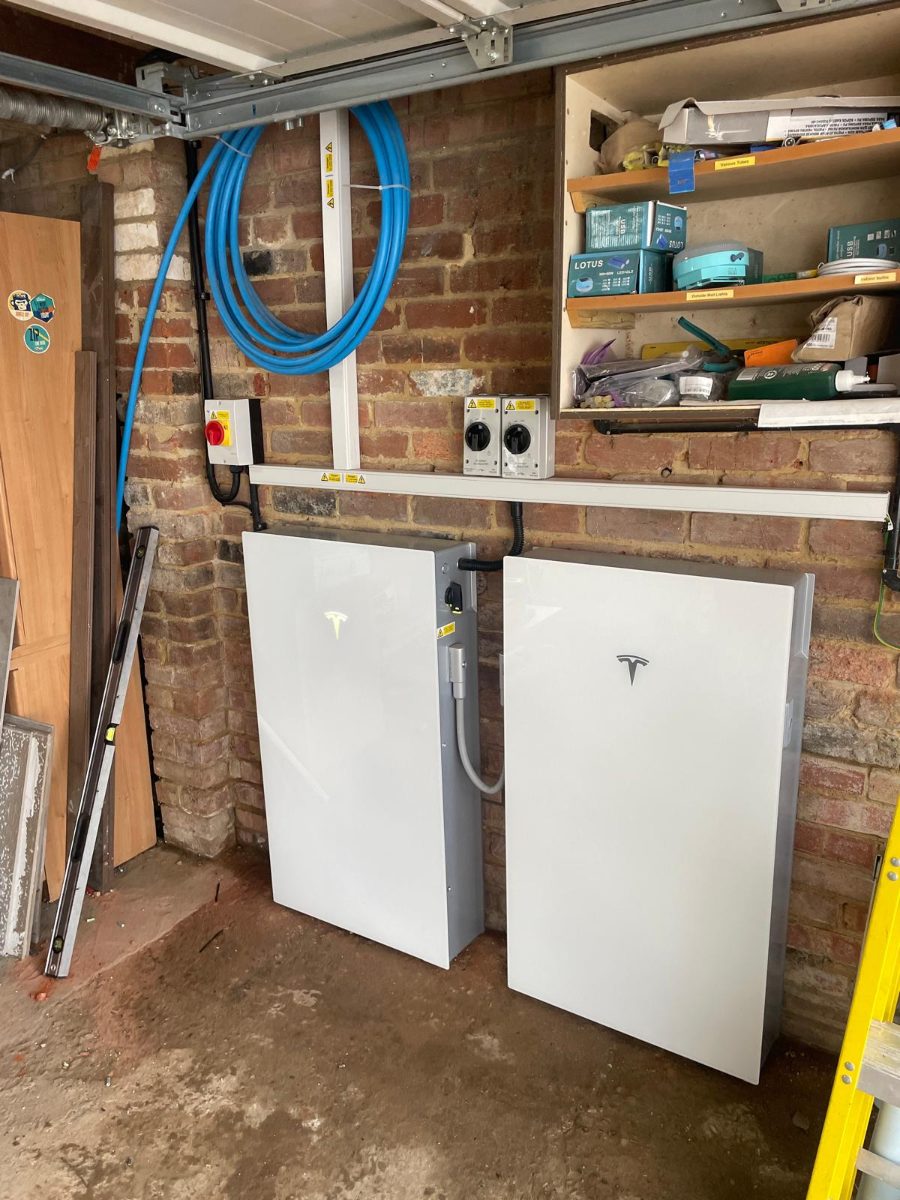
Where it can go: at 130kg it is heavy, and the battery rules that came in this year limit where any home battery can be fitted (not in a loft, a bedroom or an escape route). Most go in a garage, utility room or on an outside wall. Our battery storage rules guide covers what is allowed.
How Much a Powerwall 3 Saves
Worked out for a cheap overnight tariff, at current prices.
| Your home | Yearly saving | Payback on £8,000 |
|---|---|---|
| Light evening use (6kWh a day moved to cheap power) | About £450 a year | About 18 years |
| Typical 3-bed (8kWh a day) | About £600 a year | About 13 years |
| Heavy use or an EV (10kWh a day or more) | About £750 a year or more | About 11 years |
These figures assume you charge overnight on a tariff like Intelligent Octopus Go (about 8.5p per kWh) and use that power instead of daytime grid power (about 30p per kWh), after allowing for the energy lost charging and discharging. With solar panels you save more in summer, because the battery also stores your own free power. Our battery storage calculator works it out for your usage, and our Octopus tariffs comparison shows which tariff suits a battery.
Rates change with the price cap. Ofgem announces the January 2027 cap on 25 November, and we will update these numbers once it is out.
The catch: for a lighter user, payback runs past the 10-year warranty. The battery will very likely keep working after that, but you should not count on it. If your evening use is low, a smaller battery is usually the better buy (see below).
Is the Powerwall 3 Worth It?
It is a very good battery. Whether it is the right one depends on how much power you use and what else you are having fitted.
Good choice if...
- You are getting new solar panels as well, so the built-in inverter saves you buying one.
- You have an electric car, a heat pump or a big family, so you use a lot of power in the evening.
- You want backup in power cuts, with enough output to run most of the house.
- You want to fit it outside: it is rated for rain and cold, which many batteries are not.
- You may add more storage later: expansion packs bolt on without a new DNO application.
Look elsewhere if...
- Your home uses under about 2,700kWh a year. A 5kWh to 10kWh battery will pay back sooner.
- You already have solar with a newer hybrid inverter that can take its own brand of battery more cheaply.
- You want to add storage a little at a time. Expansion packs only come in 13.5kWh, 110kg blocks.
- Budget is the main thing. Other well-made batteries cost less overall.
In the owner reviews we read, the common complaints were about settings rather than the hardware: backup reserve levels resetting, export switching back on, and tariff changes needing to be set up again in the app. Some reviewers also find it louder than smaller batteries under heavy load, which is another reason it often goes in a garage or outside.
Powerwall 3 vs Other UK Batteries
How it compares with the batteries installers most often quote instead.
| Battery | Size | Main strength | Best for |
|---|---|---|---|
| Tesla Powerwall 3 | 13.5kWh (expandable) | Built-in solar inverter, 11.04kW output, outdoor rated | New solar plus battery, big users, backup |
| Fox ESS (EP and EQ ranges) | Several sizes, smaller add-on modules | Lower total cost, add storage in smaller steps, longer warranties on some models | Tighter budgets, growing storage over time |
| Other 5kWh to 10kWh batteries | 5kWh to 10kWh | Lower upfront cost, often quicker payback for average homes | Homes with modest evening use |
GivEnergy went into administration in April 2026, so check carefully before choosing a GivEnergy system or relying on its warranty. For full picks with prices, see our best home battery UK guide. If you do not have solar, read battery storage without solar first.
Before You Buy: Six Checks
The things that change the price or cause delays if they are missed.
- Use a Tesla Certified Installer. Tesla only sells the Powerwall 3 through certified installers, and the warranty depends on a proper install. Ask to see their certification.
- Decide on backup now. Adding the Backup Gateway 2 later means a second visit. If power cuts matter to you, include it in the first quote. Our power cut guide explains what backup covers.
- Check the DNO step. Exporting or running above 3.68kW needs G99 approval from your network operator, which can take several weeks. The installer normally applies for you.
- Agree where it goes. Garage, utility room or an outside wall are the usual spots. Check the route for a 130kg unit and the cable run to your consumer unit.
- Line up the tariff. Switch to a battery-friendly tariff once it is commissioned, and check the app settings after any tariff change.
- Get it fitted before 1 April 2027 if you can, while the 0% VAT rate still applies. Read our home battery installation guide for what happens on the day.
Frequently Asked Questions
How much is a Tesla Powerwall 3 in the UK?
Most UK quotes for a Powerwall 3 are £7,000 to £9,000 fitted, for 13.5kWh of usable storage with 0% VAT. Backup in power cuts adds about £1,000 to £1,200 for the Backup Gateway 2, and each 13.5kWh expansion pack adds about £3,800 to £5,000 if fitted at the same time.
Is there a grant for a Tesla Powerwall in the UK?
There is no national grant for home batteries. You can pay 0% VAT until 31 March 2027, and the Warm Homes Loan Scheme, which opened on 27 October 2026, can fund a battery with no income test. Tesla's £375 per unit rebate ran for orders from December 2025 to June 2026 and has closed.
Can I add a Powerwall 3 to my existing solar panels?
Yes. It can be wired in alongside your existing solar inverter, so your current panels, inverter and export payments stay as they are. If your old inverter needs replacing anyway, the Powerwall 3 can run your panels directly through its built-in inverter.
How long does a Powerwall 3 last?
Tesla gives a 10-year warranty, with at least 70% of the original capacity left after 10 years. It uses lithium iron phosphate cells, which hold up well over many cycles, so most units should keep working beyond the warranty with some loss of capacity.
Does the Powerwall 3 work in a power cut?
Only if it is installed with the Backup Gateway 2. Without it, the battery shuts down with the grid in a power cut, like most home batteries. With it, the house switches over to the battery automatically.
Can a Powerwall 3 go outside?
Yes. It is rated for indoor and outdoor use, with an IP67 battery and an operating range of -20°C to 50°C. An outside wall or a garage is often the easiest place for it, as home battery rules rule out lofts, bedrooms and escape routes.
Already got a solar or battery quote?
Check it free against hundreds of real UK quotes, with an instant score on price, equipment, savings claims and installer protection.
Which kind of quote suits you?
"I'd rather deal with one good installer" Get a Powerwall 3 quote from Blue Ape Renewables, the installer we work with. They are a Tesla Certified Powerwall installer, MCS-certified and NAPIT-accredited, fitting batteries and solar panels across England, Wales and Scotland. Get a quote →Tell us about your project and local installers will quote
Both are free and there's no obligation. We earn a commission if you go ahead with Blue Ape or with one of the installers you are matched with.