
How Much Electricity Does a Heat Pump Use? (Plus the Best Tariff to Run It On)
Real owner data on daily and annual usage, plus why the best tariff for a heat pump matters more than the size of your battery.
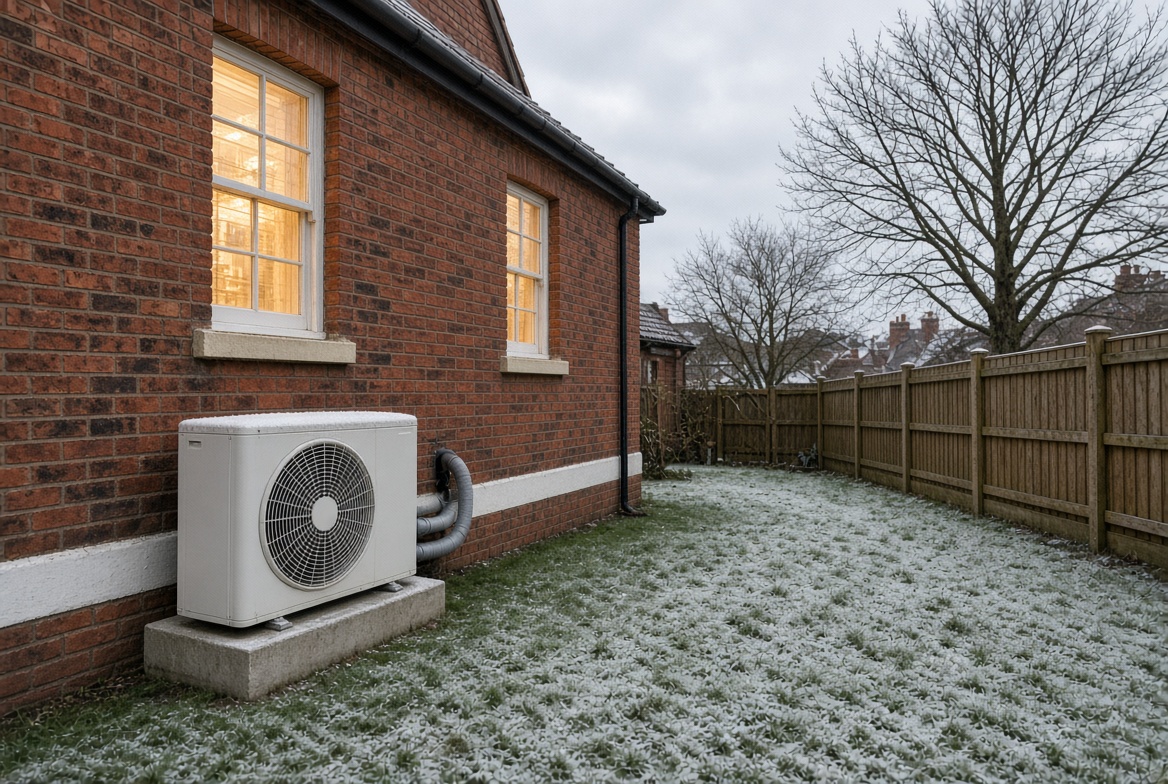
Winter is when a heat pump's electricity use climbs the most, real owner data shows this is exactly where tariff strategy matters most.
Quick answer: How much electricity a heat pump uses varies enormously by season and house, real UK owners report daily use from around 10 kWh in summer (hot water only) to 40-80 kWh on a cold January day, with a typical 3-bed home using roughly 3,500–5,000 kWh a year, and larger or draughtier homes (like the 12kW example below) 8,000–12,000 kWh. (New to heat pumps? Here's how a heat pump works.) The best tariff for a heat pump is usually a dedicated smart tariff like Octopus Intelligent Go or Cosy, and, surprisingly, a big battery matters far less than most people assume.
How Much Electricity Does a Heat Pump Use Per Day?
This is one of the most-asked questions by anyone considering a heat pump, and the answer is: it depends heavily on the season, your house, and the outdoor temperature on any given day. A quick rule of thumb: divide the heat your home needs by the heat pump's SCOP. A home needing 12,000 kWh of heat with a SCOP of 3 uses about 4,000 kWh of electricity for heating, plus hot water. Manufacturer estimates and sales figures rarely tell the full story, real, measured usage from actual UK homes is far more useful.
One real UK owner running a 12kW Vaillant Arotherm with no gas backup tracked their daily average electricity use across the seasons on a typical home:
That's roughly an eightfold difference between a mild summer day (mostly just hot water) and a cold January peak. Across a full year, this owner's estimated total landed around 10,000 kWh: a useful benchmark for a larger, 12kW-sized home with a heat pump as the sole heating source. A typical 3-bed semi needs a much smaller system and uses far less.
Your own heat pump electricity usage will differ based on a few real, measurable factors:
- House size and insulation: a well-insulated home needs meaningfully less energy to hold the same temperature
- Flow temperature: a system designed to run at 45°C is more efficient than one running at 55-65°C for the same heat output
- System sizing: an oversized heat pump short-cycles and runs less efficiently than a properly sized one
- Outdoor temperature: the colder it is outside, the harder the system works, and the more electricity it draws
What Does That Electricity Usage Actually Cost?
At the October 2026 Ofgem standard rate of 26.32p/kWh, a 47 kWh January day would cost roughly £12.37 on a standard tariff. But almost nobody running a heat pump seriously stays on a standard tariff, which is exactly why the tariff question below matters so much more than the raw usage number on its own.
Want your own numbers rather than these averages? Use our free heat pump running cost calculator to model usage and cost for your specific home.
What's the Best Tariff for a Heat Pump?
Real heat pump owners consistently land on one of two strategies, and which one suits you depends on how you want to run the system.
Strategy 1: Overnight preheat (Octopus Intelligent Go or similar)
Run the heat pump harder overnight during the cheap window (around 7p/kWh; Intelligent Go needs a compatible EV or charger to join), warming the house and its thermal mass, then coast on lower power through the day. This uses more total kWh than running efficiently around the clock, but shifts the bulk of it into the cheapest hours. Real owners running this strategy on a 6kW heat pump report average import costs as low as 8.58p/kWh across December, despite the standard rate being over three times higher.
Strategy 2: Multi-window efficiency (Octopus Cosy or similar)
The opposite approach: chase running efficiency by heating across Cosy's three cheaper windows (early morning, mid-afternoon and late evening), rather than dumping most of the day's heat overnight. This suits households who are home more during the day and want steadier, gentler operation rather than one big overnight push.
Whichever tariff you choose, the underlying lesson from real owner data is consistent: a heat pump on the right tariff, run with a clear strategy, costs meaningfully less than the headline "electricity vs gas" comparison suggests. See our full Octopus tariff comparison for the detail on each option, and our heat pump vs gas boiler comparison for how this affects the wider cost picture.
Do You Need a Big Battery to Run a Heat Pump?
This is the reason we set out to write this piece, because the answer surprised us, and it contradicts what most people assume. The instinct is to size a home battery for the worst-case winter heat pump day, on the theory that a bigger battery means less reliance on expensive grid electricity during a cold snap. Real usage data suggests this instinct is usually wrong.
One real UK owner, running a heat pump installed the previous spring alongside a modest 13.5 kWh battery, tracked exactly how often the battery ran flat over an entire winter. It happened 8 times. The total extra cost of buying peak-rate electricity on those 8 occasions came to just £4.74 across the whole winter. A larger battery pack would have saved roughly £2.37 of that, not worth the extra cost of a bigger battery, once you actually measure it rather than assume it.
The real job of a battery paired with a heat pump is arbitrage, not winter storage. Charging cheaply overnight and using that stored electricity instead of buying at peak rate is worth real money, consistently, every single day. Trying to store enough to cover several consecutive cold winter days is a far more expensive way to chase a much smaller saving.
This lines up with what most heat pump owners actually run day to day, typically a 10-16 kWh battery, not a 30-60 kWh bank sized to "cover January." More solar panels, where roof space allows, generally does more to reduce your electricity need than a larger battery does. See our full best home battery comparison for real installed prices at the sizes that actually make sense.
One practical note worth flagging: several owners report that solar orientation matters more in winter than most people expect. An east/west-facing array is poor for covering a heat pump's winter demand, a south-facing array does meaningfully better, though even then, December and January are mostly covered by cheap-rate grid electricity and battery, not solar generation itself.
Real Owner Examples: A Full Winter Snapshot
To ground all of this in something concrete, here's what two real UK households actually reported for a December month, running a heat pump alongside solar and battery:
Setup: 10kWp east/west solar, 13.5kWh battery, 6kW heat pump plus EV charging
In December, only 5 days drew more than 1kWh at peak electricity rates. Average import cost across the month: 8.58p/kWh, close to gas prices, on an all-electric home with EV charging included.
Similar setup, more granular breakdown
Around 1,200 kWh used in December (roughly 40 kWh/day). Of that, 701 kWh came from the grid (split between EV and house), 408 kWh from the battery, and only 91 kWh directly from solar, unsurprising given how little a UK roof generates in December. Average import cost on Octopus Intelligent Go: around 10p/kWh.
The consistent thread across every real example: it's the tariff strategy, not the size of the battery or the panel count alone, that determines whether a heat pump's winter electricity use ends up affordable. For an independent view on typical heat pump performance across UK homes, the government's Electrification of Heat demonstration project is a useful reference point.
Frequently Asked Questions
Related Guides
Published September 2026. Usage and cost figures based on real UK heat pump owner data and the October 2026 Ofgem price cap (26.32p/kWh). Individual usage varies significantly by property, insulation, system design and weather. Always get a full heat loss survey from an MCS-certified installer before sizing a system.
Which kind of quote suits you?
"I'd rather deal with one good installer" Get a quote from Blue Ape Renewables, the installer we work with. MCS-certified for heat pumps and registered for the Boiler Upgrade Scheme grant, fitting air source heat pumps across England, Wales and Scotland. Get a quote →Tell us about your project and local installers will quote
Both are free and there's no obligation. We earn a commission if you go ahead with Blue Ape or with one of the installers you are matched with.