
Do Solar Panels Cool Your Loft? Real UK Data Says Yes
A UK homeowner logged their loft temperature every day through two heatwaves, one before solar panels went up, one after. The numbers show a measurable cooling effect, and the physics explains exactly why.
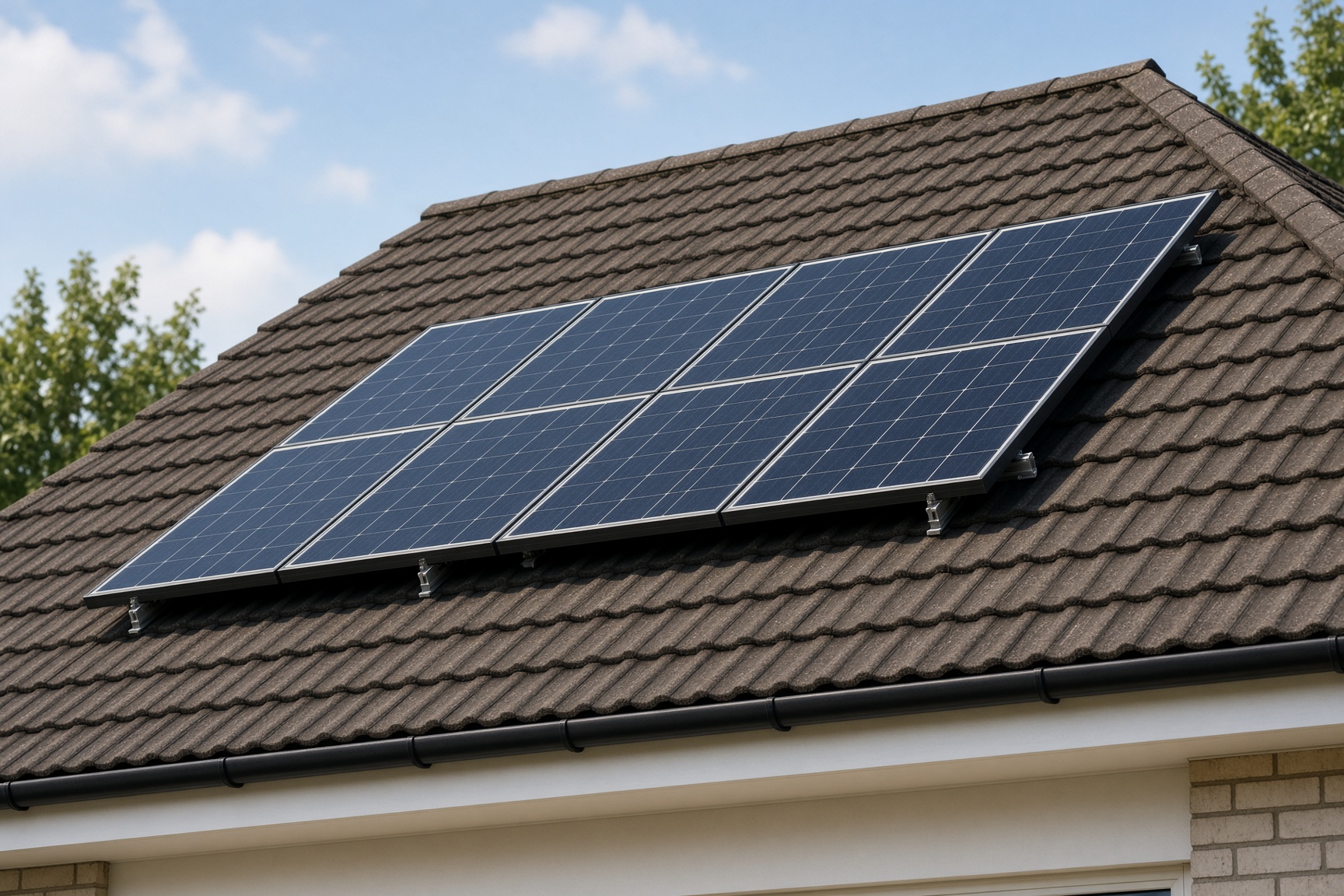
The gap between panel and roof tile is doing more work than most people realise.
It's one of those questions people assume has an obvious answer but almost nobody actually measures: does covering your roof in solar panels make the loft underneath cooler? A homeowner on the r/SolarUK community decided to find out properly, logging loft temperature daily through two separate heatwaves, one before their panels went in, one after. The results are worth sharing, and they tie into something worth knowing if you're considering a loft conversion or already live under a hot roof in summer.
Quick answer: Yes, real household data shows solar panels can cut the temperature gap between your loft and the outside air by around 40%. The mechanism is airflow, not shade: panels sit slightly above the roof, and the gap underneath lets convection carry heat away before it ever reaches the tiles.
The Experiment
The homeowner placed a smart temperature sensor in their loft and logged the daily maximum through a heatwave in late June, before any panels were installed. Their solar system, covering roughly 85–90% of the roof area, went up on 17 July. A second heatwave followed in August, giving them a before-and-after comparison against the same loft, tracked against outdoor shade temperature from a separate garden sensor.
Before the panels: the loft ran an average of 10.3°C hotter than the shaded outdoor temperature on hot days. The worst single day saw the loft hit 47.3°C against an outside temperature of 33.6°C, a gap of nearly 14°C.
After the panels: that average gap fell to 5.9°C. On the hottest day of the second heatwave, itself 2.5°C warmer outside than the worst day before, the loft peaked at 40.7°C, a gap of just 4.6°C. Despite hotter weather, the loft ran measurably cooler relative to outside conditions than it had before installation.
Averaged out, that's roughly a 43% reduction in how much hotter the loft ran compared to outside conditions. Worth being upfront about the limits of this: it's one household's own logging, not a controlled scientific study, and the two heatwaves weren't identical in every respect. But the scale of the effect, and the fact that several other homeowners in the same discussion reported very similar patterns independently, makes it more than just noise.
Why It Happens: the Airgap Does the Work
It's tempting to assume this is simple shade, panels block sunlight, so less heat reaches the roof. That's part of it, but it's not the main story. Solar panels are mostly black and absorb the bulk of incoming solar radiation rather than reflecting it away. Around a fifth of that absorbed energy gets converted to electricity; a meaningful share of the rest gets re-radiated as heat, including downward toward the roof.
What actually limits how much of that heat reaches the loft is the physical gap between the underside of the panel and the roof tiles. Most UK installations aren't flush-mounted, there's a real airgap, and critically, air moves through it. That moving air carries heat away by convection before it can conduct through the tiles and into the loft space below. It's the same principle used in ventilated rainscreen cladding on commercial buildings, the gap and the airflow through it matter more than the material sitting on top.
This also explains why the effect varies between installations. Roof-integrated panels, which sit flush with the roofline and have little to no airgap, would be expected to show a smaller cooling effect than standard on-roof mounted systems, though nobody in the original discussion had directly compared the two side by side. Worth knowing this is a separate consideration from panel brand or efficiency, see our best solar panels guide for how mounting and manufacturer choices interact with the rest of your system.
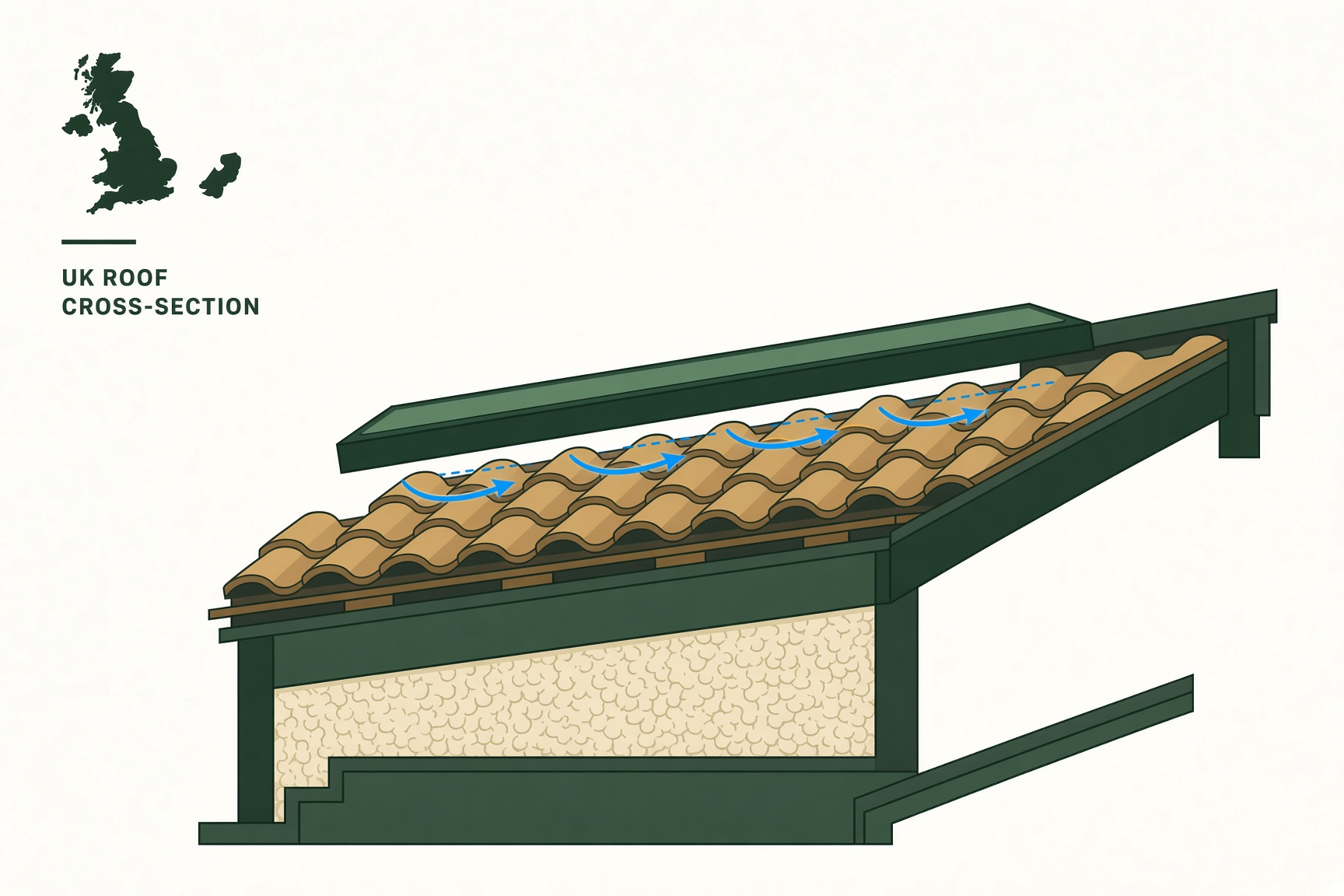
The airgap under a standard on-roof mount lets moving air carry heat away, the same principle as ventilated cladding.
Not Just One Household
Several other homeowners in the same discussion reported comparable results from their own informal tracking. One with panels over a garage saw peak loft temperatures drop from 53°C to 42°C between one year and the next after installing solar, a considerably smaller gap above outside temperature than before. Another, running full south-facing panels with a real airgap and bird-guard mesh allowing airflow underneath, measured an average loft-to-outside gap of almost exactly the same 5°C figure as the original poster's post-install result. A third reported a workshop running roughly 12°C cooler through the summer after solar was added the previous autumn.
None of this is peer-reviewed research, and everyone involved was comparing different roofs, different panel coverage, and different weather years. But the consistency across several independent households, all pointing to a meaningful reduction rather than a marginal one, is a stronger signal than a single data point would be on its own.
What This Means If You're Planning a Loft Conversion
If you're weighing up a loft conversion, or already live under a roof that turns into an oven every summer, this is a useful side benefit to factor in alongside the electricity savings, though not a substitute for proper insulation and ventilation. The original poster's own loft still hit over 40°C on the worst day even with solar panels in place; the improvement is real, but it doesn't turn a hot loft into a cool one.
Don't skip proper insulation because of this. A cooler loft from solar panels is a bonus on top of good insulation and ventilation, not a replacement for it. If you're planning a conversion, budget for both, see our full insulation guide for what a well-insulated loft actually needs. In winter the same roof needs air moving through it too: see condensation in the loft.
Interestingly, one detail from the original data is worth flagging for anyone insulating a loft that's used as living space: the homeowner reported no meaningful change in the temperature of the rooms below the loft, before or after solar. That's not a disappointing result, it's actually a sign the loft insulation is doing exactly its job, stopping heat from radiating down into the house whether the loft itself runs hot or not. If you've already insulated well, don't expect solar panels to noticeably change how your bedrooms feel in summer; the benefit shows up in the loft space itself, and in reduced strain on that insulation over time.
If you're specifically converting the loft into usable space, a bedroom, an office, the calculation is different again, since you'll be living in that heat directly rather than it being blocked by insulation below. In that case, a real airgap-mounted solar system is a small but real point in favour of proceeding, on top of everything else worth checking before a conversion.
Frequently Asked Questions
Related Guides
Published August 2026. Temperature data referenced is drawn from informal household logging shared by members of the r/SolarUK community and is illustrative, not a controlled scientific study. Individual results will vary by roof type, panel mounting, coverage and local weather conditions. Cool Power Co is an independent comparison site.
Which kind of quote suits you?
"I'd rather deal with one good installer" Get a quote from Blue Ape Renewables, the installer we work with. MCS-certified and NAPIT-accredited, fitting solar panels and batteries across England, Wales and Scotland. Get a quote →Tell us about your project and local installers will quote
Both are free and there's no obligation. We earn a commission if you go ahead with Blue Ape or with one of the installers you are matched with.