Solar Panels
Best Solar Panels UK 2026: 6 Compared on Efficiency, Warranty and Value
We've compared six panels UK installers fit, using the manufacturers' own datasheets: efficiency, warranty length, how they cope with heat and what you get for your money.
Updated 21 October 2026
Affiliate disclosure: some links on this page are affiliate links. If you buy through them we earn a small commission at no extra cost to you. It doesn't affect what we recommend.
The short answer
On this page:
Choosing solar panels isn't only about price per watt. The cell type, efficiency and warranty terms all affect how much electricity you generate over 25 years or more, and what happens if something fails. This guide compares six panels UK installers fit in 2026, using figures from the manufacturers' datasheets. New to solar? Start with our complete Solar Panels UK guide for costs, grants and whether it's worth it for your home.
Best Solar Panels UK 2026 at a Glance
| Panel | Cell type | Efficiency (max) | Product / performance warranty | Best for |
|---|---|---|---|---|
| AIKO Neostar 3S54 | ABC back contact | 24.8% | 30 / 30 years | Best overall |
| LONGi Hi-MO X10 | HPBC 2.0 back contact | About 24% | 25 / 30 years | Most homes |
| Maxeon 7 | IBC back contact | 24.1% | 40 / 40 years (registered) | Longest warranty |
| REC Alpha Pure-RX | Heterojunction (HJT) | 22.6% | 25 / 25 years (REC installer) | Hot roofs, premium all-black |
| Jinko Tiger Neo 3.0 | N-type TOPCon | About 22.8–23% (home sizes) | 25 / 30 years | Best value |
| JA Solar DeepBlue 4.0 Pro | N-type TOPCon | Up to about 23% | Varies by version / 30 years | Tight budgets |
Efficiency is the manufacturer's maximum for the home-sized version under Standard Test Conditions. Warranty terms depend on the exact model and where it's sold, so check the datasheet your installer quotes.
Which Solar Panel Suits Your Roof?
The right panel depends more on your roof and budget than on which brand tops a chart. Use this as a starting point, then ask installers to quote two options so you can compare like for like.
| Your situation | Look at | Why |
|---|---|---|
| Small roof, want the most output | AIKO Neostar, LONGi Hi-MO X10, Maxeon 7 | Back-contact cells give 24% or more, so you fit more kW in the same space |
| Plenty of roof space | Jinko Tiger Neo 3.0, JA Solar DeepBlue 4.0 Pro | Add an extra panel instead of paying more for each one |
| Want the longest cover | Maxeon 7, then AIKO | 40 years and 30 years of product warranty |
| South-facing roof that gets hot | REC Alpha Pure-RX, AIKO, LONGi | Lower temperature coefficients lose less output in summer heat |
| Want an all-black look | Any, in the all-black version | Most makers sell a black-frame, black-backsheet model |
| Adding a battery now or later | Any of the six | The inverter and battery matter more here than the panel |
The 6 Best Solar Panels for UK Homes
1. AIKO Neostar 3S54: Best Overall
AIKO's Neostar uses ABC (all back contact) cells, which move the electrical contacts to the back of the cell so nothing shades the front. That's how it reaches up to 24.8% in a home-sized 54-cell panel, among the highest you can get on a UK roof.
The warranty is the other reason it's our top pick. AIKO gives 30 years on the product and 30 years on performance, with no more than 1% loss in the first year and 0.35% a year after that. Most rivals offer 25 years on the product. It's newer to the UK than LONGi or JA, so ask your installer how long they've fitted it and how warranty claims are handled.
2. LONGi Hi-MO X10: Best for Most Homes
LONGi is the world's largest solar manufacturer, and the Hi-MO X10 brings back-contact cells (its HPBC 2.0 design) to a mainstream price. The 490W 54-cell version is rated at 24.0% on the datasheet, with LONGi quoting up to 24.5% across the range.
The performance warranty guarantees 99% of output in year one and no more than 0.35% loss a year after that, over 30 years. LONGi panels are widely stocked by UK distributors, so installers know them and replacements are easy to find.
3. Maxeon 7: Longest Warranty
Maxeon (the company that made SunPower panels outside the US) uses IBC back-contact cells and gives the longest cover on the market: 40 years on both product and power, as long as the panels are registered. Unregistered panels, or ones sold where the 40-year warranty isn't offered, get 25 years.
The catch is supply. Fewer UK installers stock Maxeon now than a few years ago, so you may need to search for one and pay a clear premium. SunPower's US business went bankrupt in 2024, but Maxeon is a separate company and its panels and warranties carry on.
4. REC Alpha Pure-RX: Best for Hot Roofs
REC's Alpha Pure-RX uses heterojunction (HJT) cells. Its temperature coefficient of -0.24%/°C is the lowest on our list, so it loses less output when the panel gets hot on a bright summer day. REC also guarantees more than 92% of output after 25 years, with 0.25% loss a year.
To get the full 25-year product, power and labour warranty (REC ProTrust), the panels must be fitted and registered by an REC Certified Solar Professional. Otherwise the product warranty is 20 years. Ask your installer which applies before you sign.
5. Jinko Tiger Neo 3.0: Best Value
Jinko's Tiger Neo 3.0 uses N-type TOPCon cells, the type now fitted on most new UK roofs. Jinko quotes up to 24.8% for the range, but the home-sized panels most installers fit sit nearer 22.8–23%, which is still well above the older PERC panels sold a few years ago.
You get a 25-year product warranty and a 30-year linear power warranty, matching panels that cost more. If you have room for an extra panel, a Tiger Neo system can match a premium one on output for less money.
6. JA Solar DeepBlue 4.0 Pro: Best Budget
JA Solar is one of the most common panels on UK roofs, alongside Trina and LONGi. The DeepBlue 4.0 Pro uses N-type TOPCon cells at about 22–23% efficiency, and is often the panel in a lower-priced quote.
Check the warranty on the exact version you're quoted. The JAM54D40-445/LB datasheet gives 25 years on the product and 87% of output after 30 years, but some versions carry a 12-year product warranty. Its temperature coefficient (-0.30%/°C) is a little weaker than the others here.
What happened to Panasonic and Q CELLS on this list? Panasonic stopped making solar panels and batteries in April 2025, so it's no longer sold for new installs (existing warranties are still honoured). We've also dropped the Q CELLS Q.Peak Duo, as it uses older P-type PERC cells and newer N-type panels now beat it on efficiency and degradation.
Know which panel you want?
Tell the installer. Any good installer will quote the panel you ask for, or explain why another suits your roof better. Get a fitted price from Blue Ape Renewables, the MCS-certified installer we work with, or compare prices from local installers.
No obligation. We earn a commission if you go ahead.
What "Tier 1" Actually Means
Almost every brand you're quoted will be called Tier 1. The term comes from BloombergNEF's list of bankable manufacturers: companies with the scale and finances that banks will lend against for large solar projects. It's a real classification, not just marketing.
All six makers here are on it, and so are other big names you may be quoted, such as Trina Solar and Canadian Solar. Tier 1 rules out unknown brands with no track record. It doesn't tell you which panel suits your roof, and it says nothing about the quality of a particular product line.
The Two Warranties That Actually Matter
This is the most useful thing to understand before you sign a solar quote, and installers rarely explain it unless you ask.
What to Look for When Choosing Solar Panels
Does the Panel Brand Really Matter?
Less than most sales pitches suggest, but more than the cheapest quotes imply. On a typical UK roof, these things make a bigger difference to what you generate than the gap between two good N-type panels:
Use our solar savings calculator to estimate output and payback for your roof, then compare quotes on those numbers rather than on brand alone.
What Do Premium Panels Cost?
UK installers almost always quote a complete fitted system rather than a price per panel. The Energy Saving Trust puts the average home system at about £7,600 for around 4.5kWp. Back-contact and HJT panels push a quote up, while TOPCon panels from Jinko, JA, Trina and LONGi's mainstream ranges usually keep it down.
The simplest way to see what a premium panel costs you is to ask each installer for two prices on the same system: one with a premium panel and one with a mainstream TOPCon panel. For a full breakdown of what a system costs by size, see our solar panel cost guide.
| Panel type | Examples | When it makes sense |
|---|---|---|
| Back contact (premium) | AIKO Neostar, LONGi Hi-MO X10, Maxeon 7 | Small or awkward roofs where every panel counts |
| HJT (premium) | REC Alpha Pure-RX | Hot, unshaded roofs, or if you want REC's ProTrust cover |
| TOPCon (mainstream) | Jinko Tiger Neo 3.0, JA DeepBlue 4.0 Pro, Trina Vertex S+ | Most roofs with room for an extra panel or two |
Should You Pair Your Panels with a Battery?
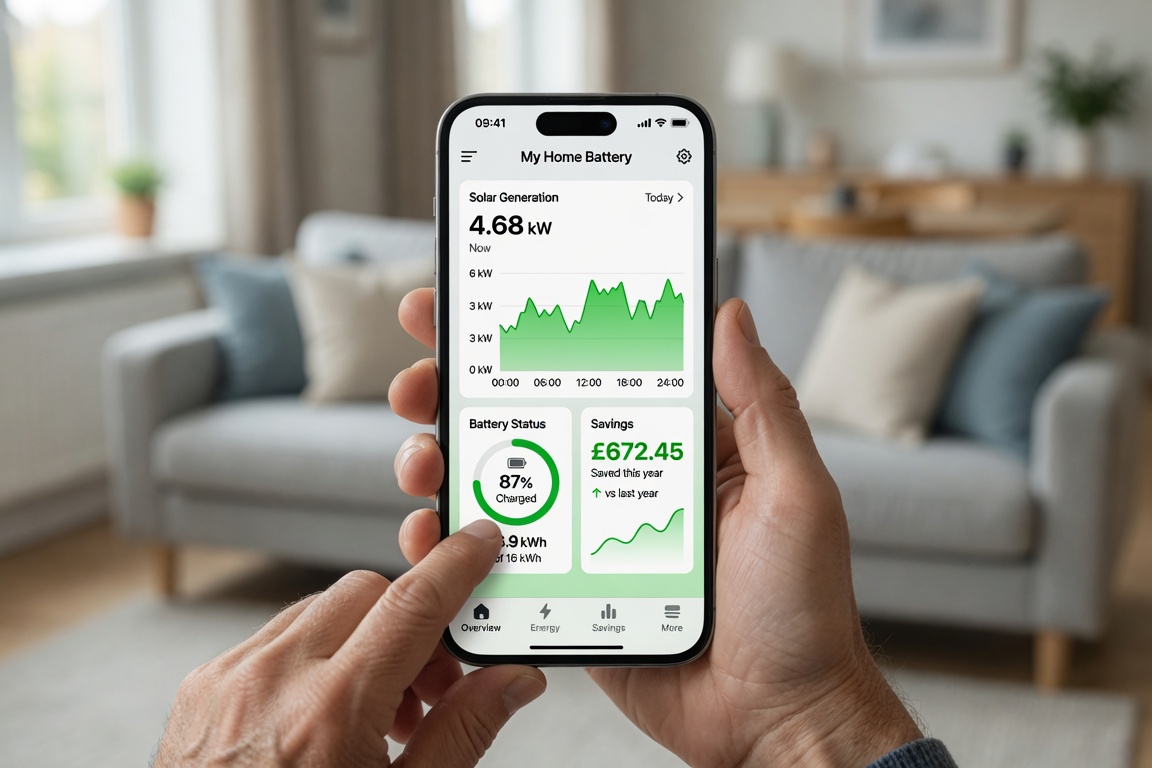
Panels generate most between late morning and mid-afternoon, often when no one is home. Without a battery, much of that goes to the grid, and you buy power back in the evening at up to 26.32p/kWh under the October to December 2026 price cap. Export rates vary hugely by supplier, so see our solar export tariff comparison before assuming what you'll earn.
A home battery stores the surplus for the evening and lets you charge from the grid on a cheap overnight tariff. Batteries also have 0% VAT until 31 March 2027. Try our battery storage calculator to see whether one pays for itself in your home.
Which kind of quote suits you?
"I'd rather deal with one good installer" Get a fitted price from Blue Ape Renewables, the installer we work with. MCS-certified and NAPIT-accredited, fitting solar panels and batteries across England, Wales and Scotland. Get a fitted price →Tell us about your project and local installers will quote
Both are free and there's no obligation. We earn a commission if you go ahead with Blue Ape or with one of the installers you are matched with.
Best Solar Panels UK: FAQs
Related Guides
Updated 21 October 2026. Efficiency, power and warranty figures come from manufacturer datasheets (AIKO, REC, Maxeon, LONGi, Jinko and JA Solar) and are rated under Standard Test Conditions. Seasonal output from the EU's PVGIS tool. Average system cost from the Energy Saving Trust. Warranty terms vary by model and market, so confirm them with your installer before you sign.