Grants · Deadline Approaching
ECO4 Closes 31 December 2026: Who Still Qualifies and How Long You Have
ECO4 funds free insulation and heating upgrades for eligible households, with nothing to repay. The work has to be finished by the end of this year, and there is no like-for-like replacement. Here's who qualifies and what to do this month.
Last updated: 2 October 2026
Quick answer: ECO4 (the Energy Company Obligation) pays for insulation, heating upgrades and sometimes heat pumps or solar for low-income households in England, Scotland and Wales. Energy suppliers fund it, so there is nothing to repay. You qualify if you receive a means-tested benefit and your home has an EPC of D to G, or if your council refers you under ECO4 Flex because your household income is under £31,000 or someone has a health condition made worse by the cold.
The deadline is for finished work, not applications. Measures must be installed by 31 December 2026 and nothing carries over, so October is the realistic last month to start.
On this page:
What ECO4 is
ECO4 is the fourth phase of the Energy Company Obligation. It requires the larger energy suppliers, including British Gas, E.ON, EDF, Octopus and Ovo, to pay for energy efficiency improvements in low-income and vulnerable households. It isn't a grant paid from taxation. The cost sits with the suppliers, which is why you deal with energy companies and their installers instead of a government portal. Ofgem administers it.
It covers England, Scotland and Wales. Northern Ireland has its own schemes. For the full background, see ECO4 explained.
Who qualifies
There are two routes in. Check both before you assume you're out.
Route 1: Benefits
You or someone you live with receives one of these, and your home's EPC is in the right band for your tenure:
Route 2: ECO4 Flex
No qualifying benefit? Your council can refer you if it takes part in ECO4 Flex and you meet one of its routes:
Tax credits used to be on the benefits list. They ended in April 2025, and most claimants moved to Universal Credit or Pension Credit.
Which EPC bands count
The EPC rule depends on who owns the home, and this is where a lot of private renters get caught out:
| Your home | EPC bands that qualify | Notes |
|---|---|---|
| You own it | D, E, F or G | The widest eligibility |
| Private rented | E, F or G only | Band D is excluded. The work must include a major measure such as solid wall insulation, first-time central heating or a heat pump. You need your landlord's consent |
| Housing association or council | D, E, F or G | Your landlord applies, not you. Band D homes are limited to insulation and innovation measures |
Don't know your rating? Search the government's EPC register by postcode. If there's no certificate, the installer's assessment will produce one.
Child Benefit income limits
Child Benefit on its own only counts if your household income is under these limits:
| Household | 1 child | 2 children | 3 children | 4 or more |
|---|---|---|---|---|
| Single adult | £19,900 | £24,800 | £29,600 | £34,500 |
| Couple | £27,500 | £32,300 | £37,200 | £42,000 |
Not sure which route applies?
Five questions, two minutes, no details to hand over.
Check My Eligibility →How ECO4 Flex works
Flex is the council referral route, sometimes called LA Flex. The council doesn't do the work. It signs a declaration confirming you meet one of the routes, and an installer then delivers the upgrade under a supplier's ECO4 funding.
Not every council takes part. Search your council's website for "ECO4 Flex" or its "Statement of Intent", which lists the routes it uses and how to apply. Councils need time to process a declaration, so with the deadline this close, contact them now and ask how long they are taking.
What ECO4 pays for
ECO4 takes a whole-house approach. An assessor works out the package that lifts your home's rating by the required amount: to at least band C for homes starting at D or E, and at least band D for homes starting at F or G. You don't pick from a menu. Typical measures:
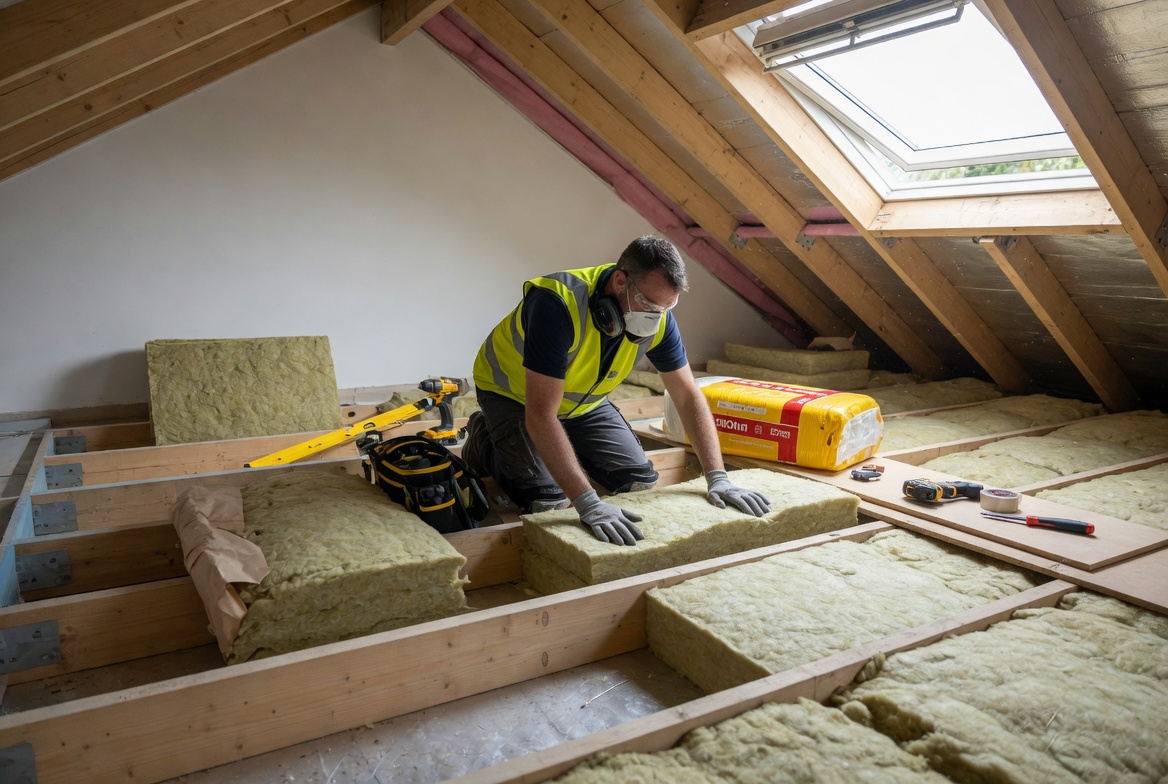
Loft and roof insulation
The most common measure, and the quickest to fit.
Cavity wall insulation
Suitable for most homes built between the 1920s and 1990s. What can go wrong →
Solid wall insulation
Internal or external. The biggest job and the one most likely to run out of time now.
First-time central heating
For homes with no central heating at all.
Heat pumps and boiler upgrades
Usually alongside insulation. Mostly for off-gas homes.
Solar panels
In some packages, mainly for electrically heated homes.
For most eligible households the work is fully funded. Occasionally an installer asks for a contribution, and landlords can be asked to pay towards work on rented homes. Get any contribution in writing before work starts.
How long is left, realistically
ECO4 was extended once, from March to 31 December 2026. The government's response to the extension consultation is clear on two points: the improvement has to be achieved by 31 December, and there is no carry-over into a later scheme because no supplier obligation follows ECO4. An application in December is too late. The work has to be done.
What that means in practice:
What the process looks like
What to watch out for
Quality matters more in a rush. In October 2025 the National Audit Office reported that almost all external wall insulation fitted under ECO4 and the Great British Insulation Scheme had major defects needing repair. A deadline is not a reason to accept a rushed solid wall job. Ask who the retrofit coordinator is, what guarantee you get, and read our guide to what goes wrong with wall insulation first.
If you miss it, or don't qualify
No new supplier obligation replaces ECO4. Support for low-income households moves to publicly funded grants under the Warm Homes Plan, delivered mainly through councils, with the current schemes due to merge into a single low-income programme from 2027/28. The rules are different, so qualifying for ECO4 does not mean you will qualify later. These are the routes open now:
Warm Homes: Local Grant (England)
Free insulation, solar and heat pumps through your council if your household income is £36,000 or less and your EPC is D to G. Private renters in band D can qualify here. Funded to March 2028. Apply on gov.uk.
Boiler Upgrade Scheme
£7,500 off a heat pump for any homeowner in England or Wales, or £9,000 for oil and LPG homes until 31 March 2027. No means test. How the £9,000 grant works →
Warm Homes Loan Scheme
Government-subsidised loans for solar, batteries and heat pumps. No income limit. Lenders are still to be announced. Loan caps and status →
The cheap wins
Turning down the boiler flow temperature, lagging the cylinder and draught-proofing pay back in months, grant or no grant. The energy efficiency bundle →
In Scotland, look at Warmer Homes Scotland and the Home Energy Scotland Grant and Loan. In Wales, the Nest scheme does a similar job.
Frequently asked questions
When does ECO4 end?
ECO4 closes on 31 December 2026. It was extended by nine months from its original March 2026 end date. The government has confirmed there will be no further supplier obligation after it.
What happens if the work isn't finished by 31 December 2026?
It won't be funded under ECO4. The required improvement has to be achieved by 31 December 2026 and the government has confirmed there are no carry-over arrangements. That is why installers are unlikely to start a job they can't finish in time, and why you should ask for a completion date in writing.
Does ECO4 really cost nothing?
For most eligible households, yes. In some cases an installer asks for a contribution towards a particular measure, and landlords can be asked to contribute for rented homes. Any contribution should be agreed in writing before work starts.
Which benefits qualify for ECO4?
Universal Credit, Pension Credit (Guarantee or Savings Credit), income-based Jobseeker's Allowance, income-related Employment and Support Allowance, Income Support and Housing Benefit. Child Benefit also counts if your household income is under a limit that runs from £19,900 for a single adult with one child to £42,000 for a couple with four or more.
Can I get ECO4 if I'm not on benefits?
Possibly, through ECO4 Flex. Your council can refer you if your household income is under £31,000, or if someone in the home has a serious health condition made worse by the cold. Not every council takes part, so check its website for its ECO4 Statement of Intent.
I rent. Can I still apply?
Private tenants can qualify, but only if the home has an EPC of E, F or G, and you need your landlord's consent. Band D private rented homes are excluded from ECO4. Housing association and council tenants should speak to their landlord, who applies on their behalf.
What EPC rating do I need for ECO4?
Owner-occupied homes need an EPC of D, E, F or G. Private rented homes need E, F or G. Homes rated C or above don't qualify.
What replaces ECO4 after December 2026?
Nothing replaces it directly. Support for low-income households moves to publicly funded grants under the Warm Homes Plan, such as the Warm Homes: Local Grant in England, with a single low-income scheme planned from 2027/28. Eligibility is different, so qualifying for ECO4 doesn't mean you'll qualify for what follows.
Check your ECO4 eligibility in two minutes
Free, no obligation, and worth doing this week while there is still time to get work finished.
Check My Eligibility →Related Guides
Published 12 August 2026, updated 2 October 2026. ECO4 is administered by Ofgem and delivered by obligated energy suppliers. Sources: Ofgem's ECO4 guidance for homeowners and tenants, the government response on extending ECO4, and the Warm Homes Plan. Eligibility, funding and dates can change, so confirm the details with your installer, supplier or council before going ahead. This is general guidance, not a guarantee of eligibility or funding.