
How to Cool Your Home Without AC: 15 Proven Methods for UK Homes
After 15 years living in Thailand, Mexico, Brazil and Spain, places where whole cities stay comfortable at 40°C without air conditioning, here's every method that actually works in a UK home, ranked by impact and costed at today's electricity prices.
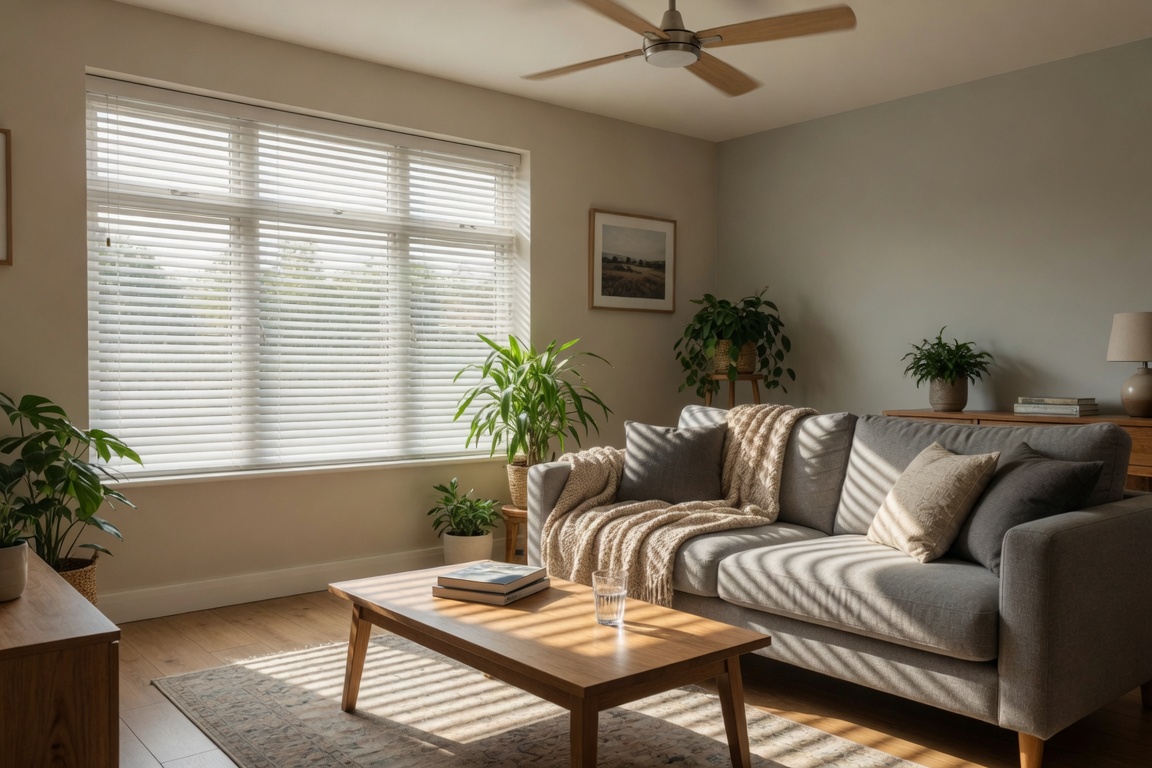
Most of the hot world stays comfortable without air conditioning, and the techniques translate to UK homes better than you'd think.
Learning how to cool your home without AC is mostly about unlearning one instinct: the British habit of throwing every window open the moment it gets hot. In Seville, Mexico City and São Paulo, places that live with heat the UK only sees a few weeks a year, people do almost the exact opposite, and their homes stay remarkably comfortable.
Below are the 15 methods that work, grouped into a simple routine and ranked by impact, with the physics behind each one and what it costs to run at the October 2026 price cap rate of 26.32p/kWh. They matter more each summer: UK heatwaves are getting more frequent, and portable air conditioners sold out across most UK retailers during the 2026 heatwave.
Quick answer: Keep heat out during the day (windows and sunny-side blinds closed from about 9am), flush the house with cool air at night (windows open on opposite sides and at different heights), use fans to cool you rather than the room, and stop making heat indoors. Together these can keep a UK home 4–7°C cooler than doing nothing, for a few pence a day.
In this guide:
The 24-Hour Heatwave Plan
Everything below fits into one daily routine. If you only remember one thing from this page, make it this:
Methods 1–4: Keep the Heat Out During the Day
This is the counterintuitive one, and the biggest mistake made in UK homes every heatwave. On a hot day the air outside is usually hotter than the air inside, so an open window lets heat in. Walk through southern Spain at 3pm and every shutter is closed: the house becomes a sealed cool box, holding on to the night's low temperature for as long as possible.
1. Close windows by 8–9am
The moment the outside temperature passes the inside temperature, every open window is heating your house. A cheap indoor/outdoor thermometer takes the guesswork out: close up when outside reads higher than inside.
2. Shut blinds and curtains on the sunny side
Follow the sun round: east-facing rooms in the morning, south at midday, west in the afternoon and evening. Light-coloured or blackout-lined curtains reflect more heat than dark ones.
3. Block the sun outside the glass
External shutters, awnings or even a shade sail stop solar energy before it passes through the window and can cut indoor temperatures by up to 5°C. Internal curtains help, but by then the heat is already inside.
4. Add reflective film to problem windows
A one-off £15–£30 fix for the south- or west-facing window that turns a room into an oven every afternoon. It rejects a large share of solar heat permanently, though it also darkens the room in winter.
Methods 5–8: Flush the Heat Out at Night
If daytime is about sealing the house, night is when you cash in. Building scientists call it night-flush or purge ventilation: open up on cooler evenings, let cool air run through the house all night, and start the next day with cold walls and furniture that soak up heat for hours.
5. Cross-ventilate from evening to early morning
Open windows on opposite sides of your home to create a through-draught. Wind pressure on one side and suction on the other moves far more air than any single open window.
6. Use the stack effect: open high and low
Hot air rises, so open a downstairs window and an upstairs or loft window at the same time. Cool air is pulled in at the bottom and warm air pushed out at the top. In a two-storey UK house this chimney effect is your most powerful free tool.
7. Open internal doors along the airflow path
A trick from older Brazilian homes, built so air passes straight through. Prop open the doors between your two purge windows so the airflow isn't blocked halfway through the house.
8. Point a fan out of the window
Sounds backwards, but a fan blowing out of one window, with a window open on the other side of the house, pumps hot indoor air out and pulls cool evening air in, the same idea firefighters use to clear smoke. It only works when it's cooler outside than in: evenings and early mornings, never mid-afternoon.
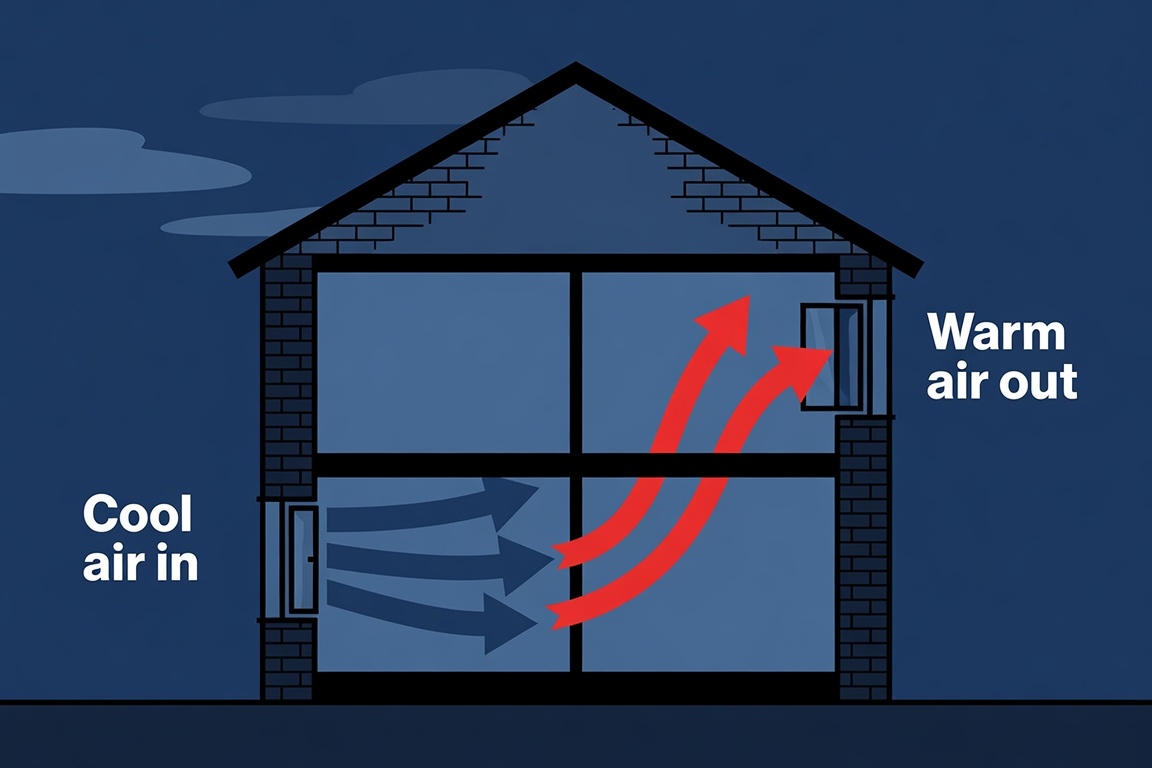
The night purge: cool air pulled in low, hot air pushed out high. Run it from late evening until you close up at 8–9am.
Methods 9–10: Fans and Evaporative Coolers
A fan doesn't cool a room at all. It creates a wind-chill effect that makes you feel 2–4°C cooler by evaporating sweat from your skin. That's useful, but only if the fan is pointed at a person.
9. Run a fan on yourself, ideally a ceiling fan
A ceiling fan set to spin anticlockwise (viewed from below) pushes air straight down on you and costs under 2p an hour, against 26–40p for a portable air conditioner. A pedestal or desk fan pointed at you does the same job in one spot. We've reviewed the best ceiling fans for UK homes. The bowl-of-ice-in-front-of-a-fan trick gives a cooler breeze for the 20–30 minutes the ice lasts: fine at a desk, not a strategy.
10. Use an evaporative cooler, but only on dry days
Evaporative coolers cost 3–6p an hour and can blow air 4–9°C cooler on a hot, dry day. On the UK's muggy days they do very little, which is why they're everywhere in Mexico and rare in Bangkok. Check the humidity forecast, not just the temperature. Our honest guide covers whether evaporative coolers work in the UK.
Methods 11–13: Stop Making Heat Indoors
Everything electrical in your home is a small heater. On a normal day you don't notice; on a 32°C day it's the difference between bearable and miserable.
11. Don't use the oven
Ovens and hobs keep giving off heat long after you've turned them off. Cold meals, the microwave, an air fryer or a barbecue outside: anything but a 200°C box running for an hour in your kitchen.
12. Run appliances at night, skip the tumble dryer
Run the dishwasher and washing machine overnight, when the purge can carry the heat away. Skip the tumble dryer entirely: washing dries on an airer in a couple of hours in heatwave conditions.
13. Swap old bulbs for LEDs and switch off standby
Halogen and incandescent bulbs turn most of their energy into heat. LEDs run cool and cut your bill. TVs, consoles and chargers on standby add a little more heat; small individually, but it adds up in a sealed room over a full day.
Methods 14–15: Cool Yourself, Then Fix the House
A lesson from the hot-country playbook: it's often cheaper and faster to lower your body temperature than the air temperature. And once the summer's over, a couple of permanent fixes stop the problem coming back.
14. Cool your body, not the air
Swap polyester bedding for cotton or linen, which breathe far better. Take a cool shower before bed, and hold a wet flannel on your neck and wrists, where blood runs close to the skin. A hot water bottle filled with cold tap water under the pillow or at your feet works surprisingly well, for free.
15. Insulate the loft and shade the south and west walls
Insulation slows heat moving in both directions, so the loft roll that cuts your winter gas bill also slows the sun cooking your bedrooms through the roof. Pair it with good ventilation, because a well-insulated house holds heat once it gets in, which is why the night purge matters. Deciduous trees and climbing plants on south and west walls shade the house in summer and let the sun through in winter. Our UK insulation guide covers costs and grants, and if you're considering solar panels, they shade the roof too.
How to Cool a Bedroom Without AC
Hot bedrooms are the main reason people search for this, and sleep is where heat hurts most. The NHS suggests keeping the bedroom as cool as you can; the recipe that works:
- Keep it sealed and dark all day: curtains closed from morning, door shut, nothing on charge.
- Purge it from about 9pm: open the window and the bedroom door, with a window open elsewhere in the house so the air has somewhere to go.
- Fan on you, not the room: point it across the bed. In a single-aspect room, a second fan in the doorway pushing air out helps.
- Cotton or linen sheets only, and swap the duvet for a single sheet. Sleep on the lowest floor if you can.
- Cold water bottle at your feet and a cool (not cold) shower just before bed.
- Pull a damp sheet over a clothes airer in front of the open window on dry nights: a homemade evaporative cooler. Skip it on humid nights, when it just makes the room muggier.
If a bedroom stays above about 26°C at night despite all of this, and someone sleeping there is elderly, very young or unwell, that's the situation where a portable air conditioner is justified.
Top-Floor and Single-Aspect Flats
These are the hardest homes to cool. With windows on one side only, there's no cross-breeze, and a top floor takes heat through the roof all day. What still works:
Window film and blackout blinds on every sunny window, because keeping heat out matters even more when you can't flush it. One fan blowing out of the window at the top and another drawing air in at the bottom of the same opening, so you get a little exchange without a second window. Leave the front door to a cooler communal hallway open during the evening purge if it's safe. And focus on cooling yourself: fans on people and cold water. If summers are consistently unbearable here, AC is justified rather than a luxury.
What 40°C Countries Taught Me
Spain: The whole system is timing. Shutters down and house sealed by mid-morning, life shifted to early morning and evening, the big meal eaten in the coolest room. External roller shutters (persianas) are the single most effective piece of heat-control kit I've ever used, and it's baffling they aren't standard in the UK.
Mexico: Homes are built around shaded courtyards that act as cool-air reservoirs, and in the dry interior evaporative coolers really do shine in a way they rarely can in the UK. The transferable lesson: shade your outdoor space, and the air coming into your house at night is cooler too.
Brazil: Older buildings are designed so air passes straight through: doors and windows aligned front to back, vents above internal doors. You can copy it for free by opening internal doors along your purge path.
Thailand: The humidity means evaporative tricks fail, so it's fans, everywhere, all the time, plus accepting that moving air is comfortable even when the air itself is warm. On the UK's muggy days, this is the mode to copy: airflow above everything else.

Seville at 3pm: shutters closed, streets empty. It looks asleep, but it's a heat-management system perfected over centuries.
Every Method Compared
| Method | Cost | Effect | Best time |
|---|---|---|---|
| 1–2. Windows and blinds closed by day | Free | High: 3–5°C | 9am–8pm |
| 5–7. Night purge (cross-vent + stack) | Free | High: 3–6°C by morning | 10pm–8am |
| 8. Exhaust fan out of the window | About 1p/hr | Medium–high | Evenings only |
| 9. Ceiling or pedestal fan | Under 2p/hr | Feels 2–4°C cooler | All day |
| 10. Evaporative cooler | 3–6p/hr | Dry days only | Low-humidity days |
| 4. Reflective window film | £15–£30 once | Medium, permanent | South/west windows |
| 3. External shutters or awnings | £100s once | High: up to 5°C | Permanent |
| 15. Loft insulation | Varies; grants available | Medium, all year | Permanent |
| Portable AC | 26–40p/hr | Highest, any weather | When all else fails |
Running costs at the October 2026 price cap rate of 26.32p/kWh: a 50W fan uses about 1.3p an hour; a 1–1.5kW portable AC about 26–40p.
When You Need AC
Some situations the free methods can't fully solve: top-floor single-aspect flats, rooms where someone vulnerable to heat needs reliably cool air, and multi-day heatwaves where nights stay above 20°C so the purge never gets going. A portable AC is the stopgap; a fixed split system is the proper fix, and it doubles as one of the cheapest ways to heat a room in winter. Our air conditioning guide compares every option, and we explain how air conditioning works (BTU, EER and the physics). Whatever you choose, the methods above cut how many hours it needs to run.
Considering permanent air conditioning?
A split system cools reliably whatever the weather and doubles as efficient heating in winter. Autumn and winter are the quietest time to book an installer. Get free quotes from F-Gas certified local installers.
Get Free AC Quotes →Free · No obligation · F-Gas certified installers only

Seal by day, purge by night, move the air in between: the routine that keeps most of the hot world comfortable for pennies.
Frequently Asked Questions
Related Guides
Further reading: the Natural History Museum's guide to keeping homes cool and the NHS advice on coping in hot weather, particularly important for older people, young children and anyone with a long-term health condition.
First published July 2026, updated 1 October 2026. Temperature figures are illustrative and vary by property, orientation, weather and technique. Running costs use the October 2026 Ofgem price cap rate of 26.32p/kWh. Personal experience references reflect the author's time living in Thailand, Mexico, Brazil and Spain. Extreme heat can be dangerous: follow NHS guidance and check on vulnerable neighbours during heatwaves. Cool Power Co is an independent comparison site.
Free Methods Not Enough?
For rooms that stay hot whatever you do, a split system gives guaranteed cooling, and efficient heating in winter. Compare free quotes from F-Gas certified installers.
Get Free AC Quotes →Free · No obligation · F-Gas certified installers only