
Solar Comparison Guide
Plug-In Solar vs Installed Solar Panels UK: Which Should You Choose?
A plug-in kit costs a few hundred pounds and you fit it yourself. A rooftop system costs thousands and saves several times more. Here is how the two compare on cost, savings, payback, batteries and export payments.
Last updated: 4 October 2026
Quick answer: plug-in solar is a small kit of up to 800W that you fit yourself and plug into a socket. It costs £336–£1,199, has been legal to self-install since 27 August 2026, and saves £95–£140 a year. Installed rooftop solar is a full system, typically 3 to 5kW, fitted by an installer. A 4kW system costs £6,000–£8,000 and saves £500–£700 a year. If you rent, live in a flat or have no usable roof, choose plug-in. If you own your home and have a suitable roof, rooftop solar saves far more and is the only one that earns export payments.
On this page:
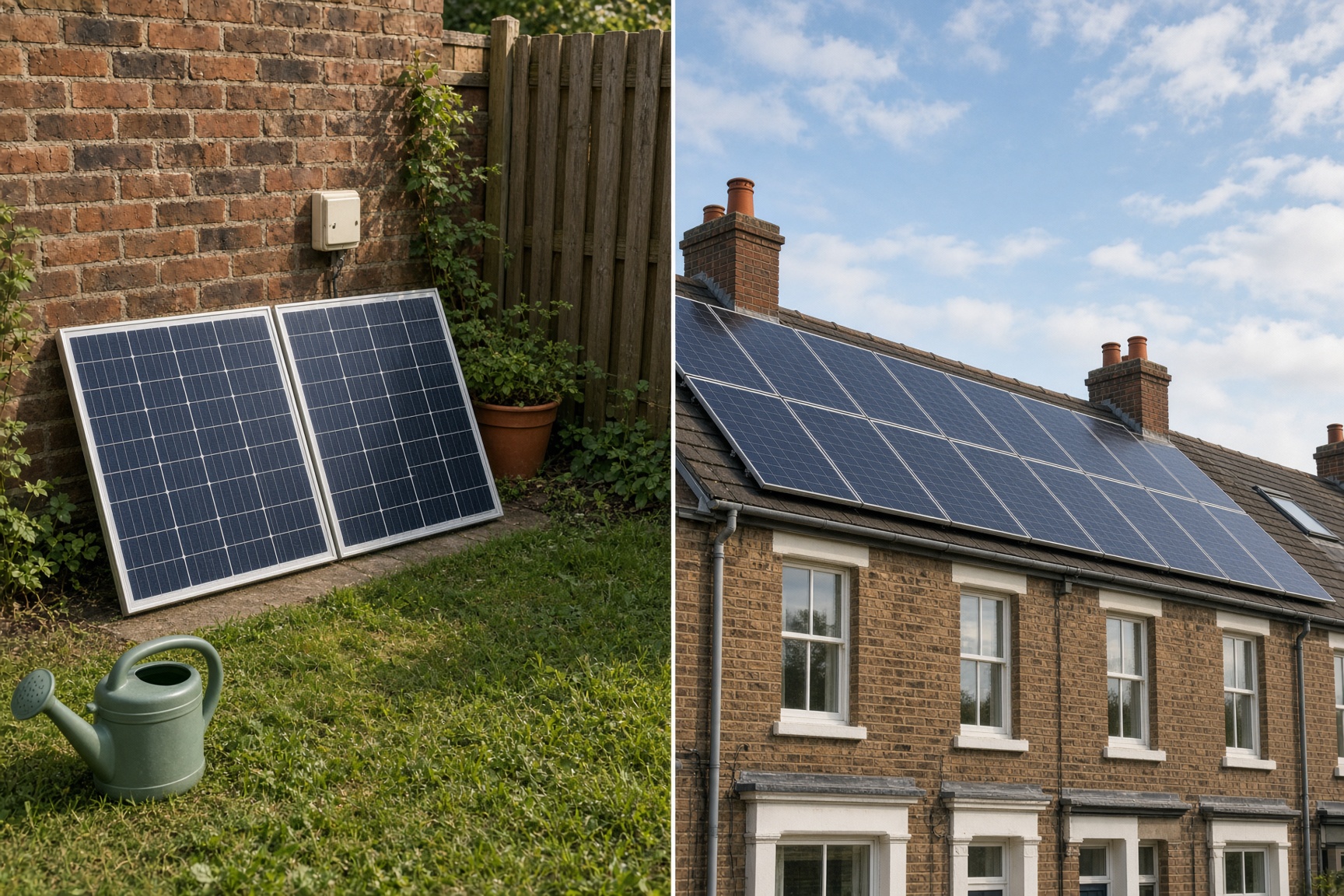
Plug-in solar vs installed solar panels: side by side
These are two different products for two different situations. One is not a cheap version of the other.
| Plug-in solar | Installed rooftop solar | |
|---|---|---|
| Typical cost | £336–£1,199 | £6,000–£8,000 for 4kW |
| System size | 300–800W, capped at 800W into the socket | 3–5kW typical |
| Installation | You fit it and plug it into a socket | Fitted by an installer and wired into the consumer unit |
| Saving a year | £95–£140 | £500–£700 |
| Payback | 4–9 years | 7–12 years |
| Battery storage | Excluded from the self-install rules. Needs an electrician | Designed in and fitted with the panels |
| Export payments (SEG) | No. Needs MCS certification | Yes, with an MCS-certified install |
| VAT | Included in the shelf price | 0% on installation until 31 March 2027 |
| Suits renters | Yes, with the landlord's permission to fix it | Rarely |
| Moves house with you | Yes | No. It stays with the property |
Cost, savings and payback
Plug-in solar pays for itself sooner, and rooftop solar saves far more. Both are true, and the difference is scale.
Plug-in: fast payback, small saving
A two-panel 800W kit starts at about £444 and saves £95–£140 a year, so it can pay for itself in four to nine years. After that it trims around £10 a month from the bill. It will not cover a household's electricity.
Rooftop: slower payback, large saving
A 4kW system costs £6,000–£8,000 and saves £500–£700 a year, so payback takes seven to twelve years. Panels are expected to last about 25 years, which leaves well over a decade of savings after the system has paid for itself.
Rooftop savings depend heavily on how much of the power you use at home and what you are paid for the rest. Our solar savings calculator works it out for your roof and usage, and the solar panel cost guide has prices by system size.
Plug-in solar: the low-cost option you fit yourself
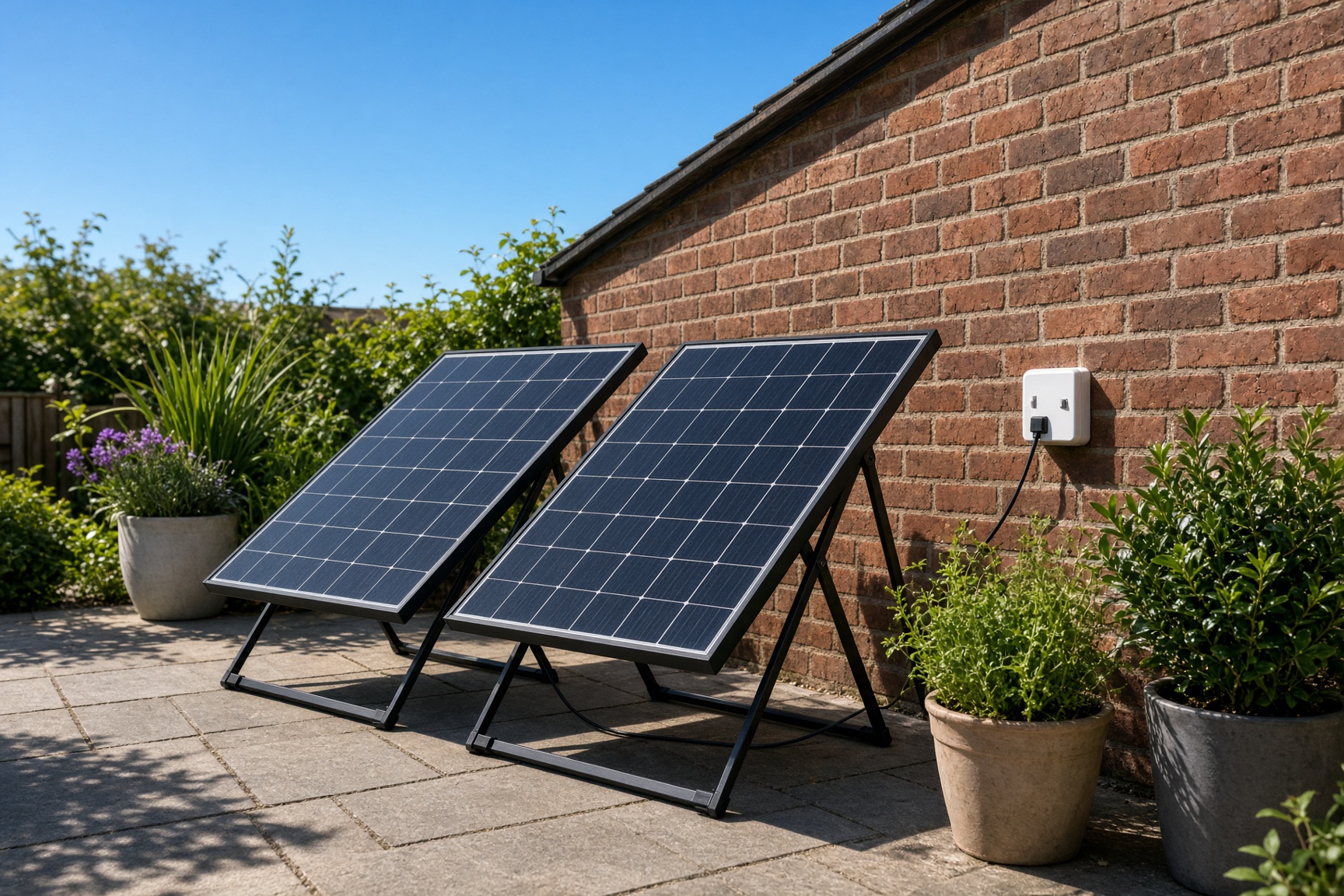
A plug-in kit is one or two panels and a micro-inverter. You mount it on a balcony rail, patio, garden wall or sunny house wall and plug it into a standard socket. Since SI 2026/848 came into force on 27 August 2026 you no longer need an electrician, provided the kit is listed as Compliant on the Energy Networks Association register. There were 84 compliant kits on 30 September.
The plug-in solar hub lists the compliant kits and current prices, and is balcony solar legal? covers the rules in full.
Installed rooftop solar: the full system
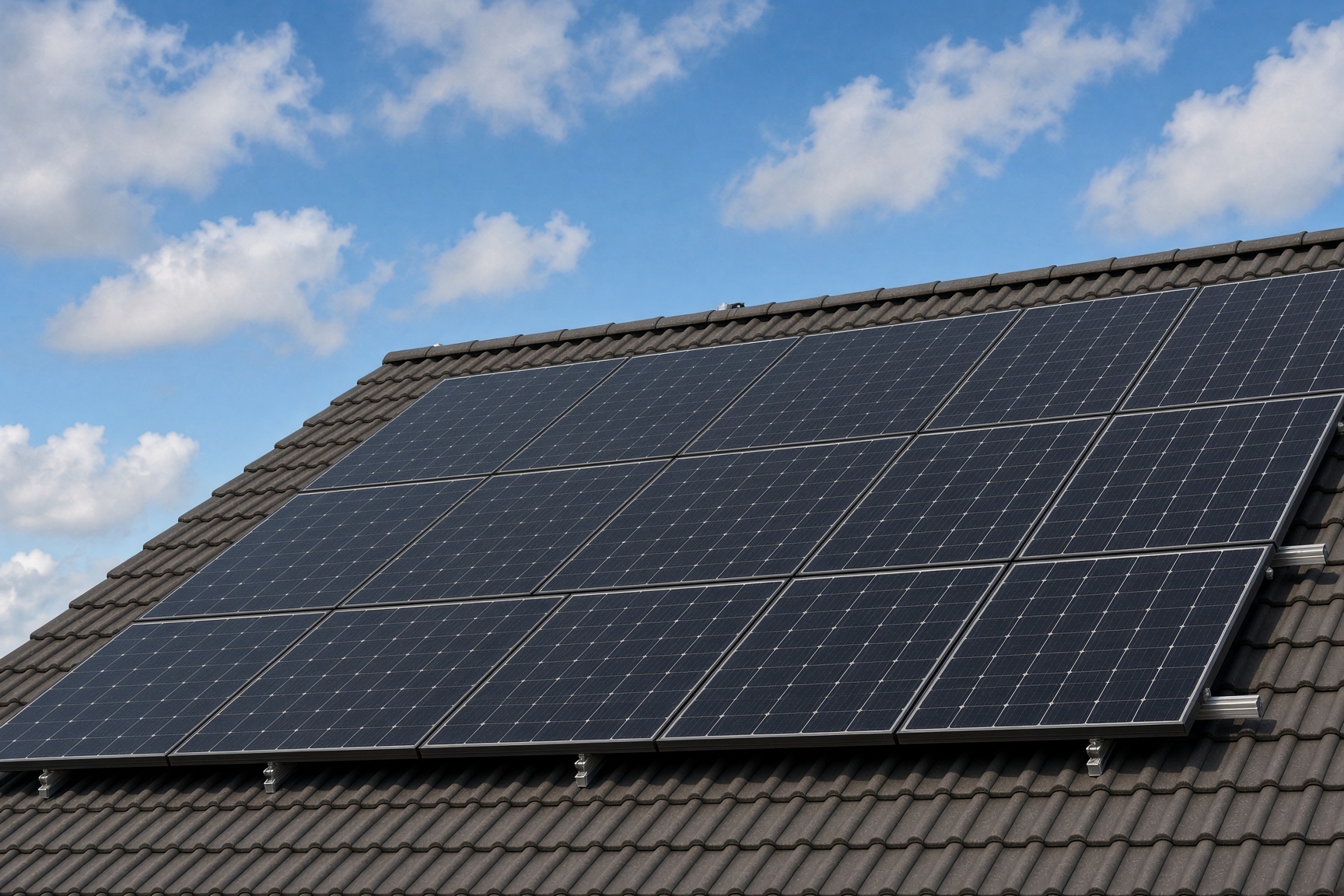
A rooftop system is typically 3 to 5kW for an average home and connects to your consumer unit, not a wall socket. A 4kW system generates about 3,800 kWh a year, which is more than a typical household uses.
Because it is fitted and certified by an MCS installer, it qualifies for the Smart Export Guarantee, which pays you for power you send to the grid. The better tariffs pay 12p to 15p per kWh, and our export tariff comparison lists every supplier. Installation is also free of VAT until 31 March 2027.
Most houses don't need planning permission. The exceptions are in our solar planning permission guide, and the full picture on costs and installers is in the solar panels guide.
Where battery storage fits
Batteries are one of the clearest dividing lines between the two.
Which should you choose?
Choose plug-in solar if you
- Rent, or can't alter the building
- Have only a balcony, patio or small garden
- Want to try solar before committing to more
- Have a budget under £1,200
Choose rooftop solar if you
- Own your home and have a suitable roof
- Want the largest cut to your bill
- Want a battery or export payments
- Plan to stay for several years
A caveat: plug-in solar won't make a real dent in a typical electricity bill. It is a way into solar and the best option for renters. It is not a rooftop system on a budget.
Frequently asked questions
Not sure which fits your home?
If a plug-in kit won't be enough, get free, no-obligation quotes from MCS-certified installers for a rooftop system sized to your home.
Get Free Solar Quotes →Related Guides
Last updated 4 October 2026. Plug-in kit prices, savings and the count of compliant kits are from our plug-in solar hub, last checked 30 September 2026. Rooftop costs and savings are typical UK figures for a 4kW system at the October 2026 price cap of 26.32p per kWh. The self-install rules are in SI 2026/848, in force from 27 August 2026. Your own figures will depend on your roof, your usage and your tariff.