
Damp · Guest Article
Rising Damp Is Over-Diagnosed: What to Check Before You Pay for Damp-Proof Injection
Low-level damp on a wall doesn't automatically mean you need a chemical damp-proof course. Here's how to check the likely causes yourself, what a proper damp survey should include, and the questions to ask before you accept a quote.
Published November 2026
Affiliate disclosure: some links on this page are affiliate links. If you buy through them we earn a small commission at no extra cost to you. It doesn't affect what we recommend.
The short answer
On this page:
Why Rising Damp Is So Often Misdiagnosed
Rising damp is groundwater moving up through a wall by capillary action, the same way water creeps up a sugar cube. It happens where a wall has no working barrier at its base, and it shows a typical pattern: a horizontal tide mark of salts, which the SPAB says can reach 900mm or more, with damp and staining below it.
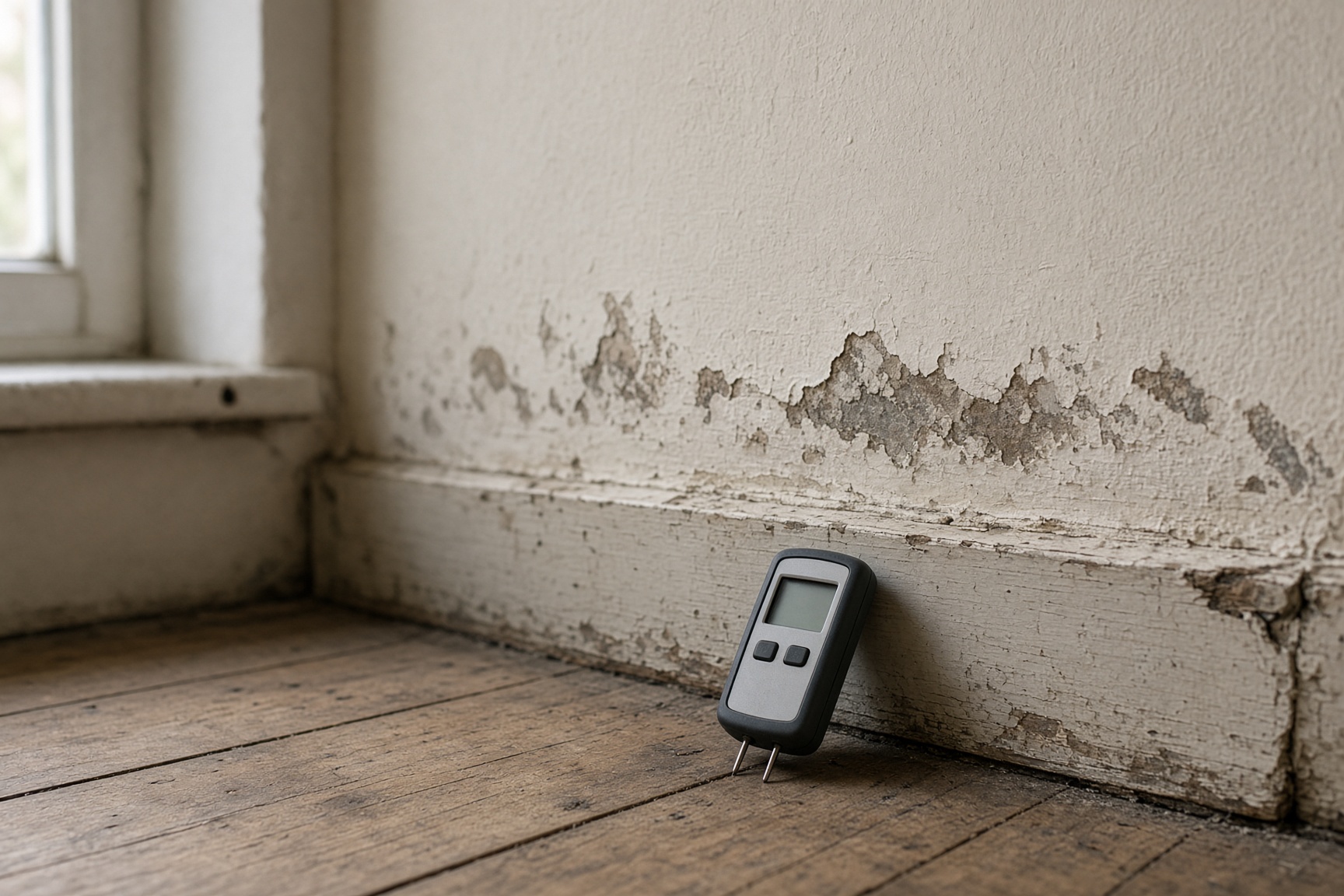
Damp patches, peeling paint and stained skirting boards near the floor look similar, but they have many possible causes. That's why the organisations that study old buildings warn against assuming rising damp:
“True rising damp is rarer than commonly perceived but is regularly misdiagnosed.”
The Society for the Protection of Ancient Buildings (SPAB), What is rising damp?
Historic England, the Royal Institution of Chartered Surveyors (RICS) and the Property Care Association, the trade body for damp specialists, agreed a set of principles in 2022 for investigating damp in traditional buildings. Historic England's introduction to that joint position statement puts the cost of getting it wrong plainly:
“Time and money can be wasted if the cause of damp is not properly diagnosed. In such cases, far from solving the problem, remedial work can make it much worse.”
Historic England, Investigation of Moisture and its Effects on Traditional Buildings (2022). The statement is written for traditional buildings, but the principle applies to any home.
The point is simple: the right treatment depends on where the moisture is coming from, not on the fact that a wall is damp.
Six Things to Check Before Paying for Damp-Proof Injection
You can do most of these yourself in an afternoon, ideally on a rainy day.
1. Check outside ground levels and anything bridging the damp-proof course
Over the years, patios, paths, flower beds and soil can build up against outside walls. Historic England says this is "a very common problem with older houses": once the ground is higher than the damp-proof course (DPC) or the inside floor, moisture can get into the wall above any DPC there is, whether it's original slate, plastic or injected.
Look for the DPC line, usually a thin layer in the mortar a few courses above the ground, and check nothing sits higher than it. Building regulations guidance for new homes puts the DPC at least 150mm above the ground. If the ground has crept up, lowering it or fitting a gravel drainage strip may fix the problem without a new barrier. Render or pointing that runs down over the DPC can bridge it too.
2. Check gutters, downpipes and drains
Watch the outside of the wall in heavy rain. Overflowing gutters, a cracked downpipe, a blocked gully or rain splashing back off hard ground can soak the base of a wall and look exactly like rising damp from inside. Historic England notes that if gutters and drains are kept clear and are big enough, there's little chance of them overflowing and causing damp walls.
A useful clue: if the damp patch gets worse after rain and recovers in dry spells, the water is probably coming from outside, not up from the ground.
3. Rule out condensation
Condensation forms when warm, moist indoor air meets a cold surface, so it often appears low on outside walls, in corners and behind furniture, with black mould spots. Injection can't stop it, because the water comes from the air inside your home. Our guide to telling condensation, rising and penetrating damp apart explains the signs, and a dehumidifier can keep humidity down while you deal with the cause.
4. Look for leaks and rain getting in
A leaking pipe, a failed shower seal, cracked render or worn pointing can wet a wall from inside or out. A damp patch in one spot, rather than a band along the whole wall, usually points to a local source like this. Find and fix any leak before you pay for treatment. Our damp patches guide covers penetrating damp in more detail.
5. Check for an existing damp-proof course and earlier repairs
Damp-proof courses have been required in new walls since 1875, according to the SPAB, so many houses already have one. Before anyone adds another, find out whether one exists and why it might not be working: bridging, raised ground or later alterations are common reasons.
Older solid-wall homes need particular care. They were built from materials that absorb moisture and let it evaporate again. Covering them in cement render, cement pointing or waterproof coatings can trap moisture, and RICS warns that in some older solid-wall buildings, damp-proofing measures "may not be appropriate and may exacerbate damp issues".
6. Question the moisture meter readings
Most damp diagnoses start with a hand-held electrical meter pressed against the plaster. These meters measure how easily a current passes through the surface, so salts, foil-backed paper and other conductive materials can push the reading up even when a wall is fairly dry.
“Be wary of any surveyor or commercial specialist who uses only a damp meter to diagnose the source of dampness, especially in hard walls and solid floors.”
RICS consumer guide, Damp and mould (2025)
The SPAB goes further: "Rising damp is widely misdiagnosed on the basis of high electrical moisture meter readings alone." Where a diagnosis matters, further tests can help, such as measuring moisture at different depths in the wall or analysing drilled samples for moisture and salts. Historic England's 2026 guide, Assessing Damp in Historic Buildings, explains what each method can and can't tell you.
What Should a Proper Rising Damp Survey Include?
RICS advises asking for an inspection that complies with the 2022 Joint Position Statement (often shortened to JPS 2022). It says such a report gives "an unbiased professional opinion from someone who does not have a commercial interest in selling you a product". Before you accept a recommendation for treatment, you can reasonably expect:
Not every home needs drilled samples or laboratory tests. The conclusion just needs to fit the evidence. RICS also points out that RICS membership alone doesn't mean a surveyor is experienced in damp, so ask about their experience in building pathology, the study of building defects.
When Is Chemical Damp-Proof Injection Actually Necessary?
Injection does have a place. It involves drilling a line of holes along the base of a wall and filling them with a water-repellent cream or fluid, which forms a barrier against moisture rising from the ground. Where rising damp has been reliably diagnosed and other causes ruled out, it can be the right fix, particularly in a home that already works like a modern sealed building.
For older buildings, the SPAB's guidance is cautious. It says there should be "a presumption against retrospective DPCs" in buildings from before about 1919, which, wrongly installed, "can be damaging, ineffective and an unnecessary expense". Where a DPC is needed and a physical one isn't practical, it says chemical injection is the only method that currently meets its test of an Agrément or other third-party certificate. It also says injected DPCs should be avoided in earth buildings, and are difficult to install in flint and rubble-filled walls.
Whatever the building, injection only stops moisture coming up from the ground. It won't fix condensation, a leaking pipe, rain getting in or a DPC bridged by raised ground. The order matters: diagnose first, then treat.
Listed or in a conservation area? Check with your council before any damp-proofing work. Historic England advises getting advice and any permissions you need before repairs to a listed building.
How Much Does Damp-Proof Injection Cost?
Prices vary with the length of wall, how it's built and how much plaster has to come off and go back on. MyBuilder's UK pricing guide gives these typical figures:
| Work | Typical cost |
|---|---|
| Chemical damp-proof injection | £40 to £60 a metre |
| Injection for a three- or four-bedroom semi | About £800 to £1,500 |
| Injection in an older house | £1,500 to £3,000 |
| Replastering and redecorating afterwards | £100 to £500, or £500 to £1,000 in an older house |
Source: MyBuilder damp proofing cost guide, checked November 2026.
Set that against the cost of the checks above. Clearing a gutter, lowering a flower bed or fixing a leak often costs far less, and an independent survey can cost less than unnecessary treatment.
Five Questions to Ask Before Accepting a Damp-Proofing Quote
If the diagnosis isn't clear, or the quote is for major work, get a second opinion. The SPAB suggests seeking one in writing "from an independent chartered surveyor or consultant (note, not contractor)". If you rent, damp is your landlord's responsibility to investigate, and our guide to Awaab's Law and private renting explains what's changing.
The Bottom Line: Find the Source Before You Treat the Wall
Rising damp exists, but not every damp patch near the floor is rising damp. A wrong diagnosis can mean paying for work you don't need and still living with the damp. Often the fix is simpler: clearing gutters, lowering the ground outside, mending a leak or improving ventilation. A properly evidenced diagnosis, from someone with no treatment to sell, is the best place to start.
Rising Damp and Damp-Proof Injection: FAQ
Is damp-proof injection necessary?
Only if rising damp has been properly diagnosed and other causes, such as raised ground levels, leaking gutters, plumbing leaks and condensation, have been ruled out. The SPAB says true rising damp is rarer than commonly perceived and regularly misdiagnosed, and advises a presumption against adding damp-proof courses to buildings from before about 1919.
Can rising damp be diagnosed with a moisture meter?
Not on its own. RICS says damp meters are accurate in timber but can give high readings in other materials because of conductive materials, not just moisture, and warns against anyone who uses only a damp meter to diagnose dampness in hard walls and solid floors.
How much does damp-proof injection cost?
MyBuilder's UK pricing guide puts chemical injection at £40 to £60 a metre, or about £800 to £1,500 for a three- or four-bedroom semi, and £1,500 to £3,000 in older houses. Replastering and redecorating afterwards typically adds £100 to £1,000.
Does every older house need a damp-proof course?
No. Historic England says many historic buildings were built without one and will not benefit from adding one if the source of excess moisture can be found and resolved. Older solid walls are designed to absorb and release moisture.
Is chemical damp-proof injection always effective?
It can only work against moisture rising from the ground. It won't fix condensation, leaks, rain getting in or a damp-proof course bridged by raised ground or render. The SPAB says it should be avoided in earth buildings and is difficult in flint and rubble-filled walls.
Should I get a second damp survey before paying for treatment?
If the diagnosis is unclear or the work is expensive, yes. The SPAB suggests a written second opinion from an independent chartered surveyor or consultant rather than a contractor, and RICS advises asking for an inspection that complies with the 2022 Joint Position Statement.
About the author
Anabela, Federation of Damp
Anabela is part of the marketing team at the Federation of Damp, where she helps share practical guidance on damp, mould and waterproofing.
Visit the Federation of Damp →Related Guides
Published November 2026. Sources: SPAB, "What is rising damp?"; RICS consumer guide "Damp and mould" (16 June 2025); Historic England, "Investigation of Moisture and its Effects on Traditional Buildings" (22 September 2022) and the joint position statement with RICS and the Property Care Association; Historic England, "Understanding Decay in an Older Home" and "Assessing Damp in Historic Buildings" (13 July 2026); MyBuilder damp proofing cost guide. This article is general guidance, not a survey of your home.