
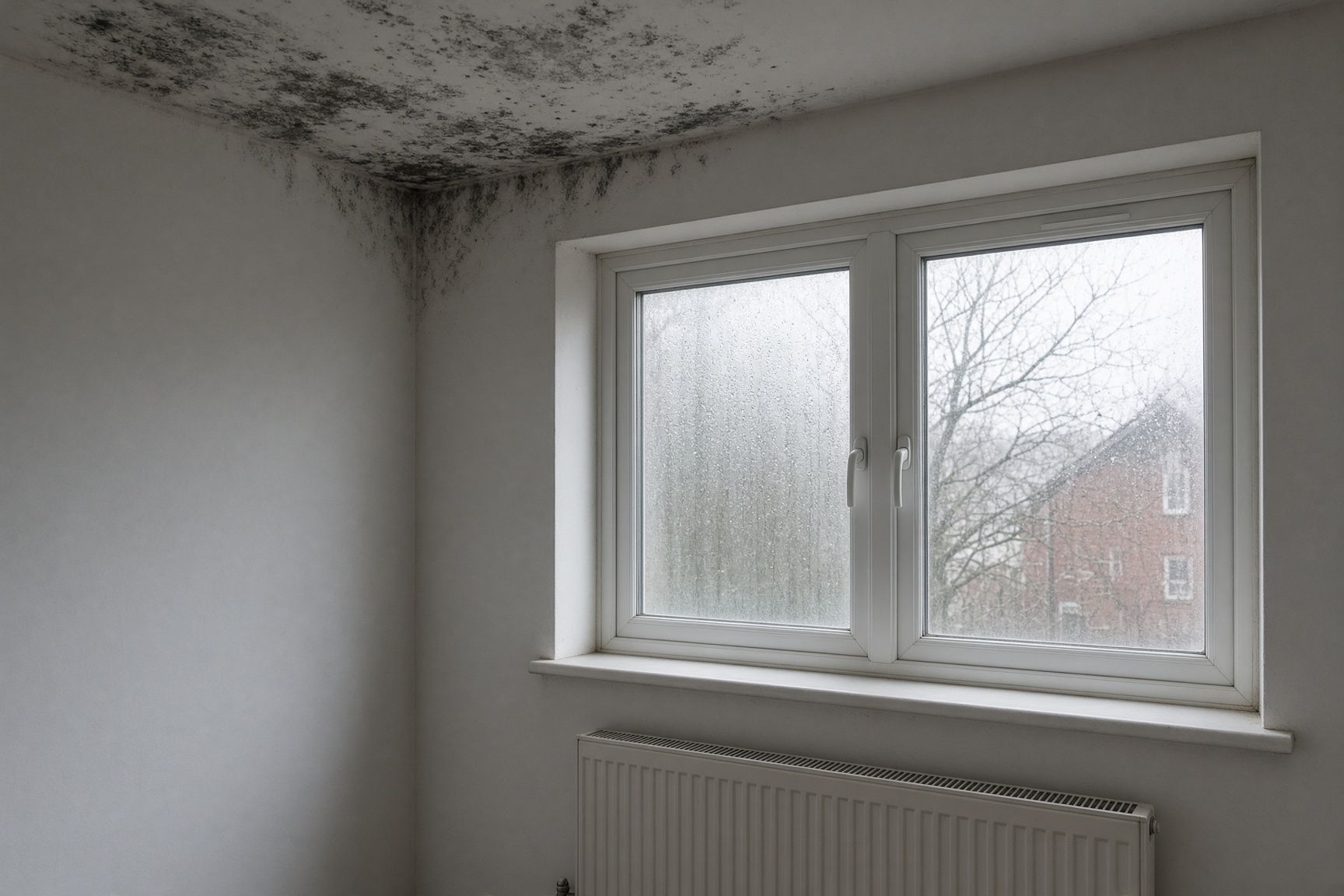
Renting · Damp and Mould · Awaab's Law
Awaab's Law for Private Renters: What's Proposed for Damp and Mould
The government is consulting on giving private renters in England the same legal repair deadlines for dangerous damp and mould that social tenants already have. Here is what is proposed, what is still undecided, and what you can do now.
Published 2 November 2026
Affiliate disclosure: some links on this page are affiliate links. If you buy through them we earn a small commission at no extra cost to you. It doesn't affect what we recommend.
The short answer
On this page:
What Awaab's Law is
Awaab's Law is named after Awaab Ishak, a two-year-old boy who died in 2020 after long exposure to mould in his family's social housing flat in Rochdale. It puts fixed deadlines on landlords to investigate and repair hazards that put tenants' health at serious risk.
It came into force for social housing in England on 27 October 2025, starting with damp and mould and all emergency hazards. The government is extending it in stages:
| Phase | Start date | What it covers |
|---|---|---|
| Phase 1 | 27 October 2025 | Significant damp and mould hazards, and all emergency hazards |
| Phase 2 | 30 November 2026, subject to Parliament approving it | Adds excess cold and heat, falls, structural collapse, fire and explosions, electrical hazards, and domestic hygiene and food safety |
| Phase 3 | 2027 | All remaining hazards in the Housing Health and Safety Rating System, except overcrowding |
These phases apply to social housing (councils and housing associations). Source: MHCLG guidance for social landlords and the consultation document.
For social tenants, the deadlines that apply now are:
| Step | Social landlord deadline |
|---|---|
| Investigate a possible significant hazard | Within 10 working days of becoming aware of it |
| Send the tenant a written summary of what was found | Within 3 working days of the investigation ending |
| Do the work to make the home safe | Within 5 working days of the investigation ending |
| Emergency hazards | Investigate and make safe in 24 hours |
| Longer-term work to stop it coming back | Start, or take steps to start, in 5 working days, and physically start in 12 weeks if that isn't practicable |
| If the home can't be made safe in time | Provide suitable alternative accommodation at the landlord's expense |
What's proposed for private renters
The consultation, Extending Awaab's Law to private rented tenancies and to licences, asks how the same idea should work for private landlords. It uses the social housing rules as the starting point but offers options either side for each deadline.
| Step | Social housing now | Options for private renters |
|---|---|---|
| Investigate a possible significant hazard | 10 working days | 5, 10 or 15 working days |
| Written summary to the tenant | 3 working days after the investigation | 1, 3 or 5 working days |
| Make the home safe | 5 working days | 3, 5 or 10 working days |
| Emergency hazards | 24 hours | 12, 24 or 48 hours, and whether to have a separate emergency deadline at all |
| Start longer-term preventative work | 5 working days | 3, 5 or 10 working days |
| Alternative accommodation if it can't be made safe in time | Required | Undecided |
The consultation also allows "other" answers for each deadline. Source: MHCLG consultation, 9 October 2026.
Who it would cover
The government says extending the law this way could take the number of protected homes from about 4 million to around 9 million.
Which hazards
The proposed starting point is every hazard in the Housing Health and Safety Rating System except "crowding and space", the same end point as social housing. It would cover hazards that pose a significant risk of harm, plus emergencies. The government asks whether to bring it in all at once or in phases, and says there is "a strong case" for putting damp and mould, and all emergency hazards, in the first phase, as it did for social housing.
Alternative accommodation is the big open question
Social landlords must rehouse tenants at their own cost if they can't make a home safe in time. The consultation hasn't proposed the same for private landlords. It says a requirement would be "highly challenging" for small landlords, and lists concerns about hotel or B&B use, delays to repairs and rent rises. It also says there is a good case for it, because moving out can be the best way to protect a tenant, and asks for views.
Other proposals worth knowing
When could it start?
Not yet. The consultation says "the earliest feasible implementation date would be 2027", and asks people to choose between 2027, 2028, 2029 or another date. The government's impact assessment models a phased rollout from 2028 to 2030, starting with damp, mould and emergency hazards, but says no decision has been taken and the dates are only assumptions for its costings.
It also asks whether the new private rented sector Landlord Ombudsman should be up and running first. Landlords are expected to have to join the Ombudsman from 2028.
Bottom line on timing: private renters are unlikely to have Awaab's Law deadlines before 2027, and possibly later. The consultation closes on 18 December 2026, and the government will then draft regulations, which Parliament has to approve.
How it would be enforced
The Renters' Rights Act 2025 already contains the power to do this, in sections 60 and 61. It works by writing Awaab's Law into every tenancy as an implied term, so a landlord who misses the deadlines would be breaking the tenancy agreement.
What private renters can do about damp and mould now
You don't need to wait for Awaab's Law. Private landlords in England already have to keep the structure, exterior and things like heating and water in repair, and keep the home fit to live in, under the Landlord and Tenant Act 1985. Councils can inspect and take action on serious hazards, and the Renters' Rights Act brought in fines of up to £7,000 for serious hazards.
"It's your lifestyle": can a landlord say that?
Government guidance for landlords, private landlords included, says it is "totally unreasonable to blame damp and mould in the home on 'lifestyle choices'". Cooking, washing and drying laundry are everyday sources of moisture, and the guidance puts the causes down to the building, ventilation and heating. The consultation keeps that line for private renters: hazards caused by a tenant breaking their tenancy could be excluded, but that wouldn't let a landlord write off damp and mould as lifestyle.
It helps to know what kind of damp you have. Condensation, rising damp and penetrating damp look different and have different causes. Our guide to damp patches on walls explains how to tell them apart, and condensation on windows covers why it forms. While you wait for repairs, opening trickle vents, using extractor fans and drying clothes the right way can stop mould spreading. A dehumidifier for damp walls helps too. None of this makes the repair your job.
How to have your say
Anyone can respond, whether you rent, let a property or work in housing.
The government asks people not to include personal details in their answers. If you've had damp or mould in a rented home, the questions on deadlines and alternative accommodation are where your experience counts most.
Awaab's Law for private renters: FAQ
Does Awaab's Law apply to private renters?
Not yet. Awaab's Law applies to social housing in England, and has done since 27 October 2025. The government is consulting until 18 December 2026 on extending it to private rented homes, and says the earliest it could start is 2027.
When will Awaab's Law apply to private landlords?
No date has been set. The consultation says 2027 is the earliest feasible date and asks whether it should be 2027, 2028, 2029 or later. The government will decide after the consultation closes on 18 December 2026.
How long would a private landlord have to fix damp and mould?
That is still being decided. The starting point is the social housing rules: investigate within 10 working days and make the home safe within 5 working days of the investigation. The consultation also offers shorter and longer options for each step.
What are the Awaab's Law timescales for social housing?
Social landlords must investigate a possible significant hazard within 10 working days, send a written summary within 3 working days of the investigation, and make the home safe within 5 working days. Emergency hazards must be investigated and made safe in 24 hours.
Would a private landlord have to rehouse me?
That is undecided. Social landlords must provide alternative accommodation if they can't make a home safe in time. The consultation says requiring the same of private landlords would be highly challenging, and asks for views.
What can I do now if my private rented home has mould?
Report it to your landlord or agent in writing, keep dated photos, and allow access for an inspection. If nothing happens, contact your council's private housing or environmental health team, which can inspect the home and act on serious hazards.
Does Awaab's Law apply in Scotland or Wales?
No. Awaab's Law and this consultation cover England. Scotland and Wales have their own housing laws.
Related Guides
Published 2 November 2026. Sources: MHCLG consultation "Extending Awaab's Law to private rented tenancies and to licences" (9 October 2026); MHCLG press release "Clampdown on dangerous homes to protect more tenants and families" (8 October 2026); MHCLG guidance for social landlords on Awaab's Law timeframes and phase 2; the options assessment published with the consultation; MHCLG guidance "Understanding and addressing the health risks of damp and mould in the home"; the Renters' Rights Act 2025 implementation roadmap. This is a summary of proposals, not legal advice. Some links on this page are affiliate links: we may earn a commission at no extra cost to you.