
Solar Panels · Hot Water
Best Solar Diverter UK 2026: 6 Compared, and When One Is Worth It
A solar diverter sends spare solar power to your immersion heater instead of exporting it. Whether that saves you money depends on how you heat your water now and what you're paid for export. Here are the sums, and the six diverters worth considering.
Prices checked 23 October 2026
Affiliate disclosure: some links on this page are affiliate links. If you buy through them we earn a small commission at no extra cost to you. It doesn't affect what we recommend.
The short answer
On this page:
How a Solar Diverter Works
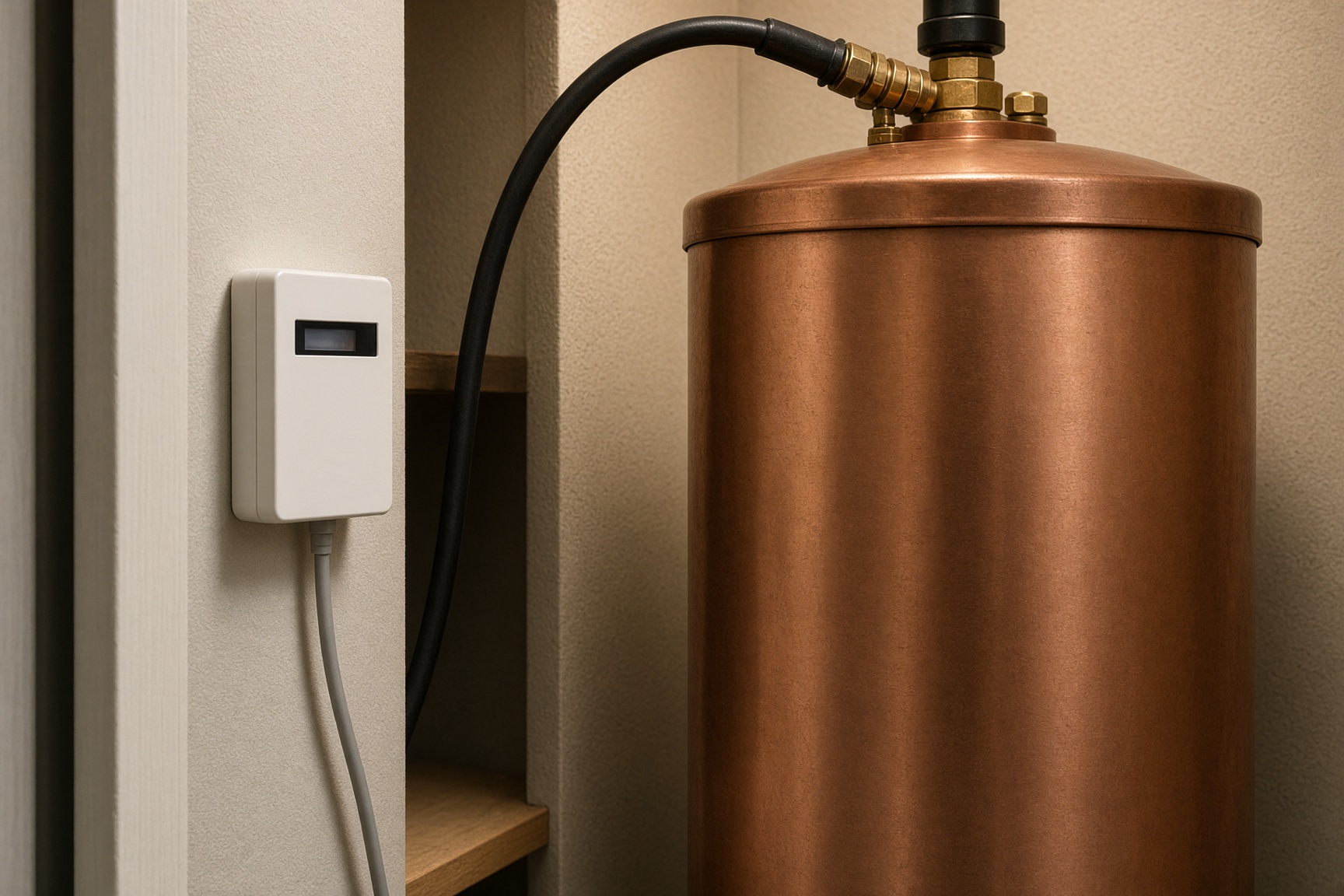
A sensor clipped around the cables by your electricity meter watches whether your home is exporting. When your panels make more than the house is using, the diverter sends that spare power to the immersion heater in your hot water cylinder instead of letting it go to the grid. It does this in small, varying amounts, so it only ever uses surplus and doesn't pull from the grid. When the cylinder is hot, the power goes back to the grid as normal.
Is a Solar Diverter Worth It for You?
Every unit you divert is a unit you don't export, so a diverter is only worth it when hot water from your usual source costs more than your export rate. Under the October to December 2026 price cap, gas costs 7.97p per kWh, or about 9.4p per kWh of hot water from a boiler around 85% efficient. An immersion heater on the grid costs 26.32p.
For a 4kW south-facing system in the Midlands, we estimate a diverter would use about 1,200kWh a year of surplus. That assumes 60% of output is exported without one and that the cylinder can take up to about 4kWh a day, from PVGIS monthly output figures. Here's what that's worth:
| How you heat water now | Export rate 4p | Export rate 12p | Export rate 15p |
|---|---|---|---|
| Immersion heater on the grid (26.32p) | About £268 a year | About £172 a year | About £136 a year |
| Gas boiler (about 9.4p) | About £65 a year | Loses about £31 | Loses about £67 |
| Heat pump (about 8.6p) | About £55 a year | Loses about £40 | Loses about £76 |
Our estimate. Heat pump hot water assumes Cosy at an average of 21.6p per kWh and an efficiency of 2.5 for hot water. Your own figures depend on your system size, roof, usage and cylinder. See our export tariff comparison for what you could be paid.
So the clear wins are homes that heat water by immersion, and homes on a low export rate, such as a basic 4p tariff or no export payment at all. A diverter can also suit you if you'd rather use your own power than sell it, or if your export is limited by your network operator. With gas hot water and a decent export tariff, keep exporting.
The 6 Best Solar Diverters UK 2026
1. myenergi eddi: Best Overall
The eddi is the most capable diverter for most homes. It varies the power to the immersion smoothly, handles two outputs, and the 2.1 version has Wi-Fi and Ethernet built in, so you can see what it has diverted and set boost timers in the myenergi app. It can schedule a boost on a cheap overnight tariff, which makes it useful in winter too.
It's built to work alongside a home battery, and with myenergi's Zappi EV charger it can share the surplus between the car and the hot water. If the eddi can't be wired to a sensor at the meter, you'll need myenergi's wireless harvi sensor (£66).
2. Solar iBoost+: Best Value
Made by Marlec in the UK, the iBoost+ is the diverter most installers know. A wireless sender clips to the meter cables, so the controller can sit by the cylinder. It feeds the immersion from as little as 100W of surplus, switches to a second immersion once the first is hot, and has a boost button and a programmable timer for grid top-ups.
There's no app or Wi-Fi. If you want to see what it has diverted, the optional iBoost+ Buddy display shows it. It's also listed on Amazon, where the price varies.
3. SOLiC 200: Best Budget
The SOLiC 200 is the plainest diverter here: no display, no settings to change, and a 10-year return-to-base replacement guarantee, the longest on our list. It starts diverting once surplus passes about 200W.
Stock is patchy, so check before you plan around it. And one retailer recommends the iBoost+ or eddi instead if you have a battery, because the SOLiC can compete with the battery for surplus.
4. SolarEdge Home Hot Water Controller: Best for SolarEdge Systems
If your solar uses a SolarEdge single-phase inverter (HD-Wave or SE series), this controller plugs into the system you already have. You see diverted energy and hot water savings in the same mySolarEdge app as your panels, and can set timers and the diversion threshold there.
It only works with SolarEdge inverters, so it's not an option for anyone else. It's weatherproof (IP65), so it can go outside or in a garage.
5. Fronius Ohmpilot: Best for Large and Three-Phase Systems
The Ohmpilot steplessly controls loads from 0 to 9kW, on single or three-phase supplies, and includes legionella protection. It suits large solar systems, three-phase homes, and setups that heat a buffer tank or a large cylinder with more than one element.
It needs a Fronius Smart Meter and is designed around Fronius inverters. At around £958 including VAT, it's only worth it for bigger systems. Stock varies at UK sellers.
6. Mixergy Solar X: Best If Your Cylinder Needs Replacing
Mixergy's Solar X is a smart hot water cylinder with a solar diverter built in, so there's no separate box. It heats water from the top down, so you get usable hot water sooner, and the app shows how much hot water you have. The built-in diverter varies from 30W to 3kW.
It's a full cylinder, fitted by a plumber, so it only makes sense if your old cylinder is due for replacement. Prices vary by size.
Getting solar or a battery fitted?
Ask the installer to quote for a diverter at the same time, so it's wired in on the same visit. Get a fitted price from Blue Ape Renewables, the MCS-certified installer we work with, or compare prices from local installers.
No obligation. We earn a commission if you go ahead.
Solar Diverters Side by Side
| Diverter | Price | Max load | Outputs | App | With a battery | Warranty |
|---|---|---|---|---|---|---|
| myenergi eddi | From £439 | 3.68kW | 2 | Yes, built-in Wi-Fi | Yes | 3 years |
| Solar iBoost+ | About £350 | 3kW | 2 | No (Buddy display) | Yes | 2 years |
| SOLiC 200 | About £206 | 16A | Not stated | No | Not recommended | 10-year guarantee |
| SolarEdge controller | About £213 | 3kW | 1 | mySolarEdge | With SolarEdge | Check with seller |
| Fronius Ohmpilot | About £958 | 0 to 9kW | Up to 3 phases | Fronius | With Fronius | Check with seller |
| Mixergy Solar X | From £2,330 | 30W to 3kW | Built in | Mixergy app | Yes | Check with seller |
Prices are before fitting, from myenergi, Quality Heating, Plug in Solar and Wind & Sun, checked on 23 October 2026. Prices and stock change often.
Solar Diverter or Battery?
A battery stores surplus solar and gives it back in the evening, saving 26.32p a unit or more. A diverter turns surplus into hot water, worth 9.4p a unit if you'd otherwise use gas. So if you can only have one, a battery usually saves more, though it costs far more. Our battery calculator shows what one would save you.
With both, the battery should get first call on the surplus and the diverter takes what's left once it's full. The eddi and iBoost+ are designed to work that way. If you're adding a battery to existing solar, see our guide to adding a battery.
Fitting a Solar Diverter
Solar Diverter FAQs
Which kind of quote suits you?
"I'd rather deal with one good installer" Get a fitted price from Blue Ape Renewables, the installer we work with. MCS-certified and NAPIT-accredited, fitting solar panels and batteries across England, Wales and Scotland. Get a fitted price →Tell us about your project and local installers will quote
Both are free and there's no obligation. We earn a commission if you go ahead with Blue Ape or with one of the installers you are matched with.
Related Guides
Published 23 October 2026. Prices from myenergi, Quality Heating, Plug in Solar and Wind & Sun on 23 October 2026. Specifications and warranties from the manufacturers and sellers. Gas and electricity prices from Ofgem's October to December 2026 price cap. Solar output from the EU's PVGIS tool. Savings are our own estimate for a 4kW south-facing system in the Midlands, so yours will differ.