
Share Your EV Charger UK: How to Earn Money From Your Driveway
If you have a home charger and a driveway, there's a genuine way to earn real money from it — the honest numbers, the tax rule that matters, and how to do it properly.
Affiliate disclosure: Some links on this page may be affiliate links — if you buy through them we earn a small commission at no extra cost to you. This doesn't affect our recommendations.
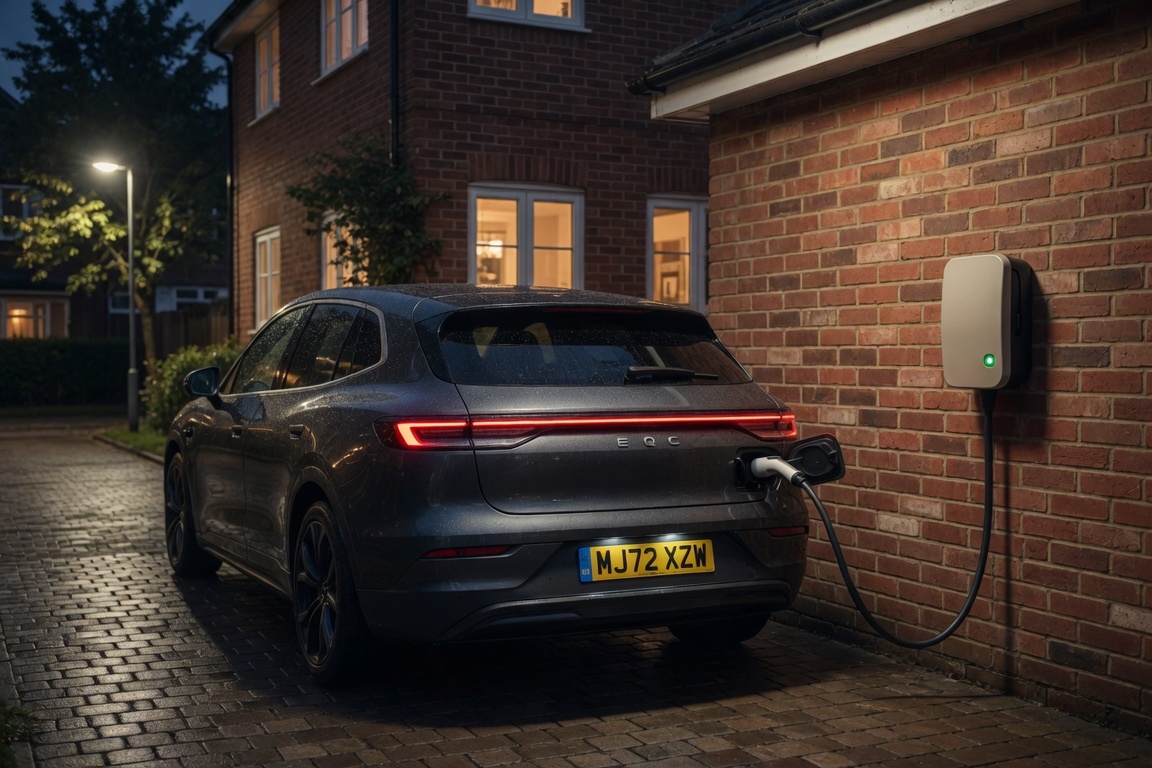
If you've got a home EV charger and a driveway, there's a genuine, growing way to earn money from something that likely sits unused most of the day. Sharing your charger with nearby EV owners — especially the roughly 40% of UK households without a driveway of their own — is a real, legal option, provided you understand a couple of important rules first. For the wider picture on installing a charger in the first place, see our complete EV charger guide.
Quick answer: Yes, you can genuinely earn money sharing your home EV charger — real hosts report roughly £470–£1,300 a year sharing with a handful of regular neighbours. The single most important rule: electricity supplied at your domestic rate carries 5% VAT, but if you start charging a price that includes a genuine profit margin, that changes the tax picture — worth understanding before you set a price. Dedicated platforms like Co Charger make the booking and payment side straightforward.
How It Actually Works
The concept is genuinely simple: you have a home charger that sits idle for most of the day while you're at work or your car is already charged, and a neighbour without off-street parking needs somewhere to plug in. You agree a price, they book a slot, they charge, you get paid — usually through a dedicated app that handles the booking and payment so neither side needs to manage cash or manual invoicing.
This genuinely matters more in the UK than it might first seem, given roughly 40% of households don't have private parking — exactly the audience our recent piece on cross-pavement charging rules covers from the other side. Charger sharing is a genuine, already-available alternative for many of those households right now, without waiting for any council scheme.
The Real Numbers
Real hosts sharing their charger with a small, regular group of neighbours — typically around four — report genuine annual income somewhere between £470 and £1,300, depending on how often the charger gets used and what price is set. This isn't a full-time income, but for a charger that would otherwise sit idle, it's a genuine, meaningful return on an asset you've already paid for.
What actually drives the income
- 🔌 How many regular users you have — most hosts settle into a small, consistent group rather than one-off strangers
- ⏰ How much of your own charger downtime genuinely exists — a charger you use daily yourself has less to share
- 💷 The price you set per kWh or per session — covered properly below, since this affects more than just your income
The VAT Rule That Genuinely Matters
This is the single most important thing to understand before setting a price. Domestic electricity in the UK carries 5% VAT. Electricity supplied through public EV charging infrastructure carries the full 20% VAT rate. Sharing your home charger sits in a genuinely favourable position precisely because it's domestic electricity — but that favourable position depends on what you're actually charging for.
⚠️ If you're simply recovering roughly what the electricity cost you, this is straightforward and low-risk. If you start charging a price that includes a genuine profit margin on top of the electricity cost, you're moving into territory HMRC would treat differently — worth taking proper advice if you're planning to do this at meaningful scale, rather than treating it as a grey area to ignore.
The Legal Bit — Genuinely Worth Getting Right
The cable itself needs to stay within your own property boundary. If a neighbour parks directly outside your house and the cable runs entirely across your own driveway or frontage to their car parked right there, that's genuinely straightforward. If the cable needs to cross a shared driveway, a neighbour's land, or any land you don't own, you need their written consent — and if this is going to be a regular, ongoing arrangement rather than a one-off favour, a proper Deed of Easement is worth having drawn up, since it formalises the arrangement in a way a casual verbal agreement doesn't.
Worth also checking your home insurance covers this kind of use, and being sensible about basic safety — a trailing cable across any shared path is a genuine trip hazard, same principle as the cross-pavement charging rules we covered separately.
Don't have a home charger yet?
See real UK installation costs, the current grant, and which chargers suit different homes.
See the Full EV Charger Guide →Where to Actually List Your Charger
Rather than improvising an arrangement over text messages, several genuine UK platforms exist specifically for this — they handle booking, payment, and often insurance considerations, which is worth the modest fee they typically take:
Co Charger
Built specifically for ongoing community charging rather than one-off destination stops — the app calls the two sides "Hosts" and "Chargees." It handles matching, communication, booking and payment in one place, aimed squarely at turning your charger into a neighbour's regular "home" charging point.
Bookmycharge
One of the earliest platforms in this space, launched in 2017 and often described as working "like Airbnb" for chargers — hosts set availability and price, drivers book and pay through the site. A genuine, established option with a real national network of home charge points.
Zap-Home
Run through Zap-Map, the UK's most widely used app for finding charge points generally. Worth knowing it works slightly differently to the other two — rather than fully automated booking, users typically contact the charger owner directly to arrange access, a more manual process.
Worth knowing honestly: some hosts on UK EV forums report the automated match-up between host and chargee doesn't always happen as often as hoped, and a number simply arrange payment directly with a known neighbour via bank transfer rather than using a platform at all — avoiding any commission, but losing the built-in booking and payment structure.
Worth genuinely comparing what each platform charges as a fee and how they handle payment before committing to one, since terms and coverage vary.
Frequently Asked Questions
Related Guides
Published September 2026. General guidance only, not tax or legal advice. If you're planning to share your charger regularly or at scale, take independent advice on tax treatment and get proper written consent for any arrangement involving a neighbour's land. Cool Power Co is an independent site and is not affiliated with Co Charger, Bookmycharge or Zap-Home.
Considering a Home EV Charger?
See real installation costs and current grants — and whether sharing it could offset the cost.
See the Full Guide →