
Plug-In Solar
Lidl Plug-In Solar Panels UK 2026: Price, Launch Date & Are They Worth It?
Lidl still hasn't confirmed a UK kit, but the company that makes Lidl's solar kits in Germany has just appeared on the UK register. Here's what that tells us, what a UK Lidl kit would likely cost, and what you can buy today.
Last updated: 1 October 2026. No Lidl plug-in solar kit is on sale in the UK yet, and Lidl GB hasn't announced one. What's new: VALE GmbH, the supplier behind Lidl's balcony solar kits in Germany, now has two plug-in solar entries on the UK ENA register. That's the strongest sign yet that a Lidl-style kit is heading for the UK, though it doesn't confirm Lidl will be the one selling it.
Lidl plug-in solar panels UK has been one of the fastest-growing searches in home energy since the government named Lidl as a hoped-for retail partner in March 2026. Plug-in solar has been legal to self-install since 27 August, and the ENA register now lists 84 compliant kits. Lidl's isn't one of them yet. Here's exactly where things stand.
On this page: What's confirmed · The VALE clue · Likely UK price · Wait or buy now? · What to buy today · FAQ
Lidl Plug-In Solar Panels UK: What's Actually Confirmed
| Detail | Status |
|---|---|
| Named by government as a possible retailer | Yes: March 2026 announcement |
| Lidl GB's own commitment | Not confirmed: "exploring the possibility" only |
| Lidl UK product listing | None as of 1 October 2026 |
| Lidl's German supplier (VALE) on the UK register | Yes: two plug-in solar entries |
| Launch date | Unconfirmed. Spring 2027 looks more likely than this autumn |
| Likely UK price | Roughly £310–£520 (see price maths) |
| Plug-in solar legal in the UK | Yes, since 27 August 2026, for any compliant kit |
In short, the policy is real, the law is in force and a likely supplier is now registered. What's missing is Lidl itself saying yes. Until it does, treat "£300 Lidl solar kit" headlines as informed guesswork.
The VALE Clue: Who Makes Lidl's Solar Kits?
Lidl's balcony solar kits in Germany aren't sold under its own Parkside brand. They come from VALE GmbH, a German supplier selling through Lidl's online shop. VALE now has two plug-in solar entries on the UK ENA register for what look like two versions of a ~900W kit, and they line up closely with two kits Lidl sells in Germany:
| Lidl Germany kit | Panels | Inverter | German price |
|---|---|---|---|
| VALE 900Wp/800W flexible | 4 × 225W flexible panels, about 18kg in total | EcoFlow EF PS-800 | €449 (was €499), online only |
| VALE EcoFlow 880W | 2 rigid panels | EcoFlow | €299 (was €499), sold out online |
The inverter is the interesting detail. The EcoFlow EF PS-800 in the 900Wp kit is the same inverter in one of EcoFlow's own UK entries (ECOFL/21606/V1/A1), which is Compliant on the register. Germany's 800VA limit also matches the UK's 800W cap, so these kits wouldn't need redesigning for the UK, apart from a UK plug and a register entry.
- A VALE approval isn't a Lidl launch. VALE could sell in the UK through Amazon, its own website or another retailer. Lidl GB still has to decide to stock it.
- Don't import the German version. A kit bought from Lidl.de comes with a German plug and isn't the configuration registered in the UK, so it wouldn't be a legal self-install here.
- The flexible-panel kit could fill a real gap. At about 18kg for all four panels it's far lighter than standard 21–25kg rigid panels, which matters for balcony railings. Few compliant UK kits are light enough for that today.
What Would a Lidl Kit Cost in the UK?
German prices look cheap partly because Germany charges 0% VAT on solar kits. In the UK, a kit you buy and fit yourself carries the full 20% VAT; the 0% rate only covers professionally installed systems. Both German prices are also discounts, and the €299 one looks like clearance stock. Converting at roughly 86p to the euro and adding VAT:
| Kit | At German sale price | At full German price |
|---|---|---|
| VALE 900Wp flexible | About £465 | About £515 |
| VALE EcoFlow 880W | About £310 | About £515 |
So a UK Lidl kit is more likely to cost £400–£520 than £300, unless Lidl runs one of its famous middle-aisle promotions. For comparison, you can already buy a compliant two-panel kit from City Plumbing for £444 or a single-panel Octopus kit for £450.
What Plug-In Solar Actually Is
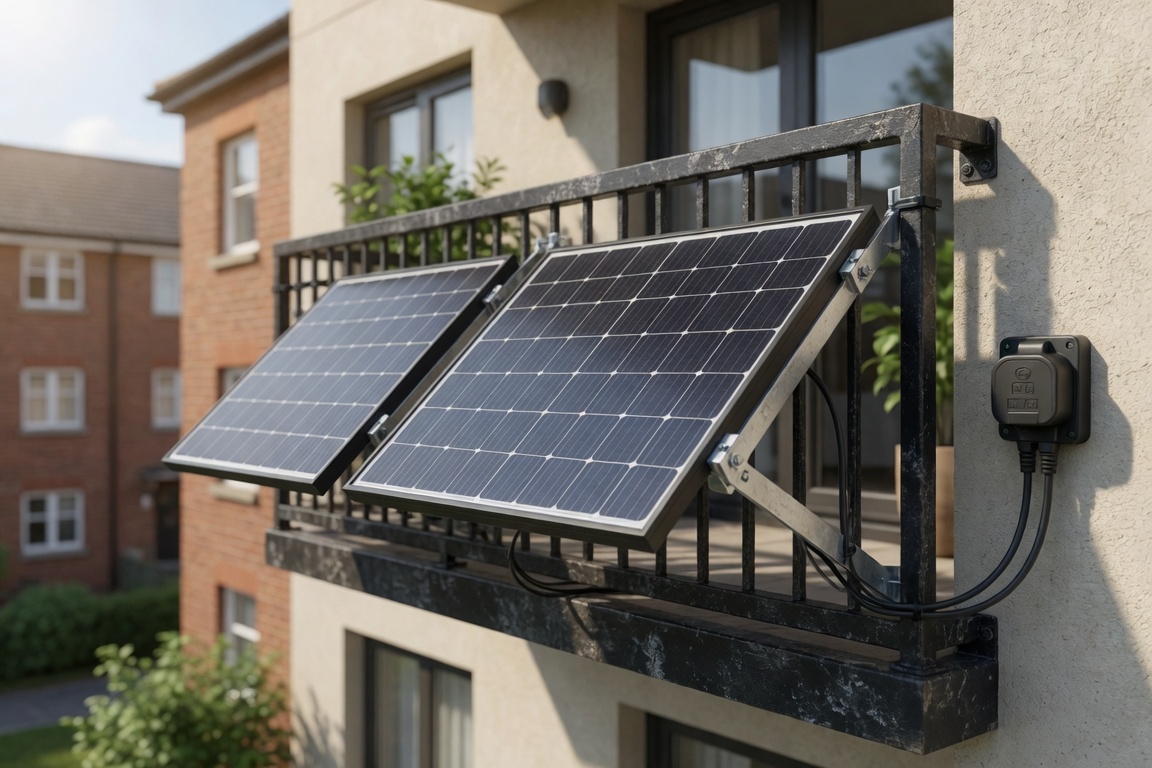
Plug-in solar (often called balcony solar) is one or two panels plus a microinverter that feeds electricity into your home through a standard socket. Under the UK rules, output is capped at 800W and the kit must be listed as Compliant on the ENA register. You fit it yourself, then notify your network operator. Panels can go on a balcony, fence, wall, patio or flat roof.
- No roof or installer needed: a balcony, fence, patio or wall works
- Payback of roughly 3.5–5.5 years at current electricity prices, depending on how much you use at home
- Renters still need permission from their landlord or freeholder before fixing panels to a building or balcony
- Not a whole-home solution: it covers part of your daytime use only
For the full picture, see our plug-in solar hub (every compliant kit, updated weekly) or is balcony solar legal in the UK?
The Legal Picture in One Minute
SI 2026/848: the law
In force since 27 August 2026. It created the "plug-in microgenerator" category, so a certified kit can be self-installed through a standard UK socket without an electrician. You still have to notify your DNO.
Interim Product Specification v2: the rulebook
Published by DESNZ. A kit needs a maximum 800W output, an approved BS 1363 plug and a listing as "Compliant" (not just "submitted") on the ENA Connect Direct register. Approval covers the exact registered configuration, so check the model number, not just the brand.
Where the register is now
From 7 compliant kits on launch day to 84 by 30 September, including Octopus Energy, EcoFlow STREAM, City Plumbing's DMEGC kits, Thunder Energy and InstaGen (now listed at Currys). Listings can drop off as well as appear, so check on the day you buy.
Should You Wait for Lidl or Buy Now?
It comes down to certainty versus a possible saving. Timing helps here: an 800W kit generates very little between November and February, so waiting until spring only costs you a few pounds of electricity.
Wait if…
- Lowest possible price matters most to you
- You want a light, flexible-panel kit for a balcony railing
- You're happy to wait until spring, when output picks up anyway
Buy now if…
- You want a confirmed, compliant kit with a UK warranty today
- You have a garden, wall or flat roof, where heavier rigid panels are fine
- You'd rather not gamble on a launch Lidl hasn't confirmed
What to Buy Right Now Instead
You don't have to wait for Lidl. These are compliant on the ENA register and on sale today:
| Kit | Price | Panels | Where |
|---|---|---|---|
| City Plumbing DMEGC | From £336 (1 panel), £444 (2 panels) | DMEGC rigid panels | City Plumbing |
| EcoFlow STREAM | From £449 | Facade or roof kit | EcoFlow |
| Octopus Energy | £450 (1 panel), £650 (2 panels) | 460W JA Solar | Octopus |
| Thunder Bolt | £529.99 / £729.99 with code COOLPOWER20 | 460W rigid | Thunder Energy |
| InstaGen 870W | £599 (stock not live yet) | 2 × 435W bifacial | Currys |
EcoFlow STREAM Plug-In Kits
EcoFlow was named alongside Lidl in the government's March announcement as the technology partner, and its inverters are inside both of the German VALE kits above. The STREAM Facade (wall) and Roof kits are on the ENA register as Compliant, with app monitoring included.
Only the registered STREAM kit configurations are compliant, not every EcoFlow product. Many configurations sell out quickly, so check stock. We may earn a commission if you buy, at no extra cost to you.
How Much Could You Save?
An 800W kit in a good spot generates roughly 650–750kWh a year in the UK. The saving depends on how much of that you use at home rather than export for nothing: typically 45–70%. At the October 2026 price cap rate of 26.32p/kWh, that's worth roughly £80–£130 a year.
At a £449 kit price, that's a payback of roughly 3.5–5.5 years. A cheaper Lidl kit would shorten that; a £520 one wouldn't change much.
Thinking about adding a battery later?
Batteries are excluded from the self-install plug-in rules, so a battery still needs an electrician. Our full breakdown explains why.
Read: Plug-In Solar Batteries, Why They're Excluded →Want to calculate your exact savings?
Our free solar calculator adjusts for your UK location, panel direction and electricity use.
Use the Free Solar Calculator →Who Plug-In Solar Actually Suits
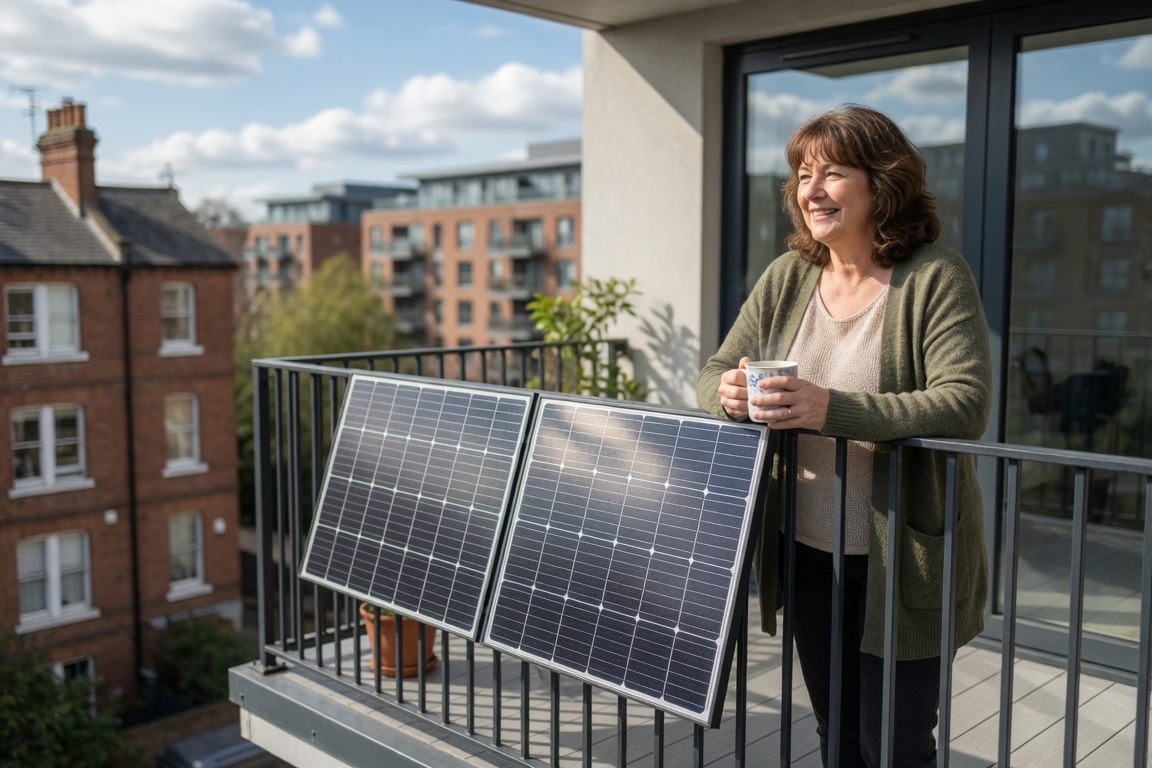
Renters and flat owners are the main audience for plug-in solar, though you'll still need permission to fix panels to a building.
- Renters and flat owners: no roof needed. Get written permission from your landlord or freeholder before mounting anything.
- Homeowners who can't afford a full system: start small for £340–£650 and see savings straight away
- Not ideal if you own a home with a suitable roof: a full rooftop solar system delivers far better long-term returns.
Renting or in a flat? There's a full bundle for this.
Plug-in solar is one piece of a bigger picture for renters. Pairing it with a portable power station and a few other low-cost moves adds up to real savings.
Read the Renter's Solar Bundle →Want a proper rooftop solar system instead?
If you own your home, a full solar installation delivers far better returns than a plug-in kit. Get free quotes from MCS-certified installers.
Get Free Solar Quotes →Lidl Plug-In Solar Panels UK: Frequently Asked Questions
Last updated: 1 October 2026. Based on the government's 24 March 2026 announcement, SI 2026/848, the DESNZ Interim Product Specification v2, the ENA Connect Direct register and Lidl.de product listings checked on 1 October 2026. Savings use the October 2026 price cap rate of 26.32p/kWh. We'll update this post as soon as Lidl confirms a UK product.
1 thought on “Lidl Plug-In Solar Panels UK 2026: Price, Launch Date & Are They Worth It?”