
Complete Setup · Updated July 2026
The Heatwave Survival Bundle
Five steps to a cooler home, ordered by how much cooling you get per pound spent. The cheapest step is also the most effective — and almost nobody does it.
Affiliate disclosure: Some links on this page may be affiliate links — if you buy through them we earn a small commission at no extra cost to you. This doesn't affect our recommendations.
⏱️ The 30-second version
- 🪟 Block sun outside the glass first — biggest effect, lowest cost
- 💨 Then move the air — a fan makes a room feel 3–4°C cooler for pennies
- 🚪 Then seal the room — cheap, and it makes everything else work
- ❄️ Only then buy AC — it's the expensive step, not the first one
- 🔧 Already own a portable AC? £15 of ducting improves it 20–30%
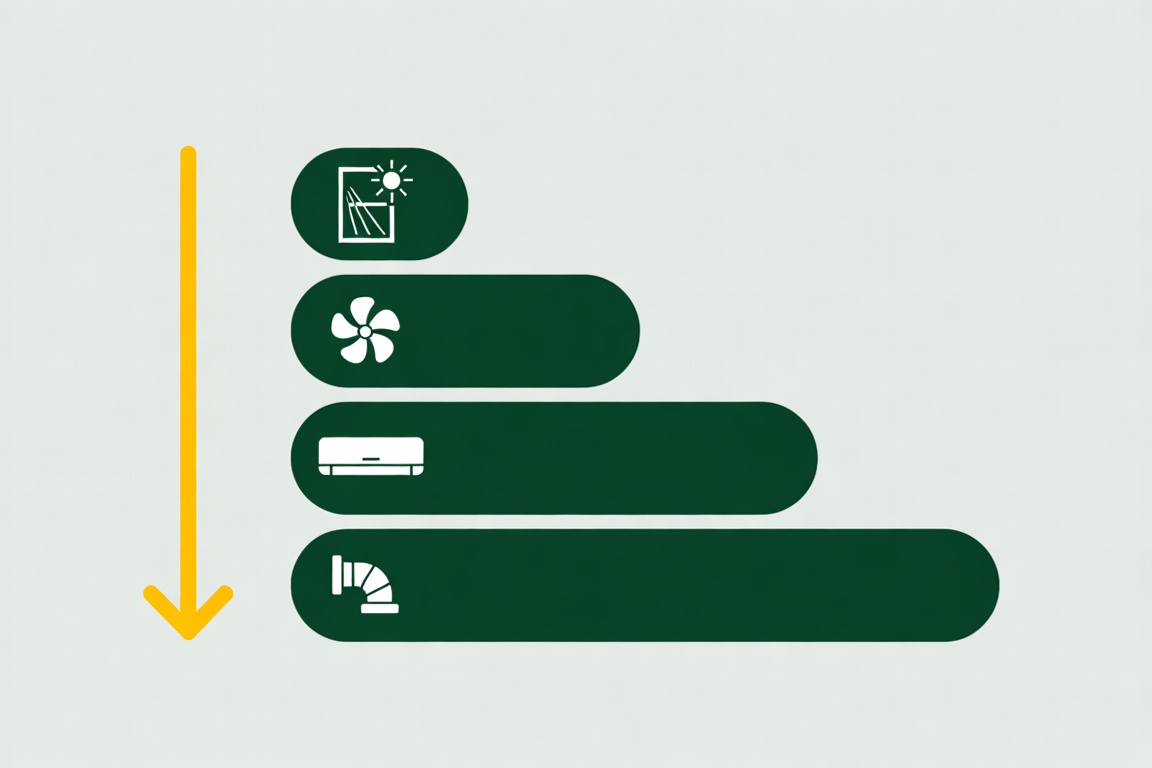
Why this order matters
Most heatwave advice starts with "buy an air conditioner." That's the most expensive step, the one most likely to be out of stock, and the one that costs the most to run. It also fails badly if you skip the cheap steps first, because an AC fighting a room that's absorbing sunlight through unshaded glass all day is doing the work twice.
Research from Loughborough University, using two matched test houses, found that external shading alone reduced indoor temperatures by over 6°C. That's a bigger difference than most people get from a portable AC, for around £20. So this bundle runs cheapest-first, and if you stop after step two, you'll still have made a real difference.
Stop the sun before it hits the glass
Once sunlight passes through a window it becomes heat inside the room, and internal curtains or blinds just trap it against the glass. Blocking or reflecting it at the window is what works. This is the highest-return thing you can do, and it's why every house in southern Europe has external shutters.
Reflective film goes on the inside of the glass, but unlike blinds or curtains it bounces heat back out rather than trapping it. Application is fiddly — spray generously with water and get help with anything large. One roll covers about 1.5m², so most large windows need two.
Proper external shading — two options
Nothing is screwed into the building, so it comes down when you move and there's no landlord conversation. You need a solid floor and ceiling to clamp between, so it suits balconies, covered terraces and porches rather than an open wall.
This is the one that actually shades a specific window, which is what makes the biggest difference to a hot room. It bolts into the wall above the opening, so it's a homeowner job rather than a renter one — but it's cheaper than the clamp-on version and comes in sizes to match almost any window.
Free version that genuinely works: foil-faced foam insulation board from any DIY shed, cut to size and propped or velcroed outside the window. A Reddit user tested this with cardboard painted white and measured a 6°C difference by 11am. Put them up before bed, not when the room is already warm.
Move the air
A fan doesn't lower air temperature, but moving air over skin accelerates evaporative cooling — which makes a room feel 3–4°C cooler. At 1–3p an hour against 24–39p for a portable AC, it's the cheapest comfort you can buy. In a heatwave, a fan running all night costs less than a fifth of what an AC costs for two hours.
One of the quietest pedestal fans available, and the mutable remote beep is a small detail that matters at 3am. DREO quote 20dB at lowest speed, which is a lab figure rather than what you'll measure at home, but 6,500+ reviews back up the quiet-running claim. The auto mode is genuinely useful overnight — it steps the speed up as the room warms rather than running flat out all night.
No timer, no remote, and noticeably louder — but it moves plenty of air for £25 and it's a real brand rather than an anonymous listing. If you're building the £35 setup, this is the fan to get. Worth stepping up to the DREO only if it's going in a bedroom.
Planning ahead rather than buying in a panic? A ceiling fan is quieter, cheaper to run and doesn't take up floor space — see our ceiling fan guide.
Cool the air properly
If you've done steps 1 and 2 and it's still uncomfortable, this is the point to buy a portable air conditioner. Unlike a fan, it genuinely lowers air temperature and removes humidity. It also costs 10–20× more to run, so it's worth being deliberate about which one and when you use it.
Don't skip this bit
Almost every portable AC ships with a flimsy plastic window slider that leaves gaps. Every gap lets warm outside air straight back in, so the unit spends its energy fighting the window rather than cooling the room. A £20 cloth seal is the difference between an AC that works and one that disappoints — and most units don't come with one worth using.
⚠️ Two things to know before you buy. During a heatwave, resellers list sold-out units at up to 127% over RRP — read our resale markup guide before paying over the odds. And unbranded listings routinely claim impossible specs, which our 30-second maths test catches in under a minute.
Make what you own work better
If you already have a single-hose portable AC, this is the best £15 you'll spend all summer. Single-hose units pull air out of your room to cool the condenser, creating negative pressure that sucks warm air back in through every gap. Giving the condenser its own outside air supply fixes that — typically 20–30% more effective cooling from the unit you already own.
The reason for the two-pack: put one in the room you're treating and one in a room you haven't touched, and you can actually measure whether the film, the awning or the fan made a difference. Humidity matters as much as temperature for how a room feels, and the overnight graphs tell you when your room is at its worst — usually later than people expect, because walls and furniture release stored heat for hours after sunset.
Three builds, three budgets
The £45 build
£45–£60
- Reflective window film
- Budget pedestal fan
- DIY foam board shading
Surprisingly effective. Do this before anything else.
The £180 build
£150–£200
- Film on every sunny window
- External awning
- Quiet bedroom fan
- Thermometer
Our recommended starting point for most homes.
The full build
£450–£750
- Everything above
- Portable AC
- Window seal kit
- Dual-hose mod
Worth it if you'll use it every summer for years.
The advice nobody gives you: buy all of this in October. Portable ACs are consistently cheaper and always in stock between October and March, fans go on clearance in September, and you'll never meet a reseller charging double. If you're reading this mid-heatwave, do steps 1–3 now and diarise step 4 for autumn.
Cooling every summer? There's a better answer.
A split system runs at 7–12p/hr instead of 24–39p/hr, never sells out in a heatwave, and heats your home in winter too. Get free quotes from F-Gas certified installers.
Get Free AC Quotes →See also: 15 ways to cool your home without AC · best portable air conditioners · do evaporative coolers work in the UK?
Last updated 22 July 2026. Running costs calculated at the July 2026 Ofgem price cap of 26.1p/kWh. Shading research: Loughborough University matched test-house study. Prices are approximate and change frequently — always check current pricing before buying.