
Black Mould in Bedrooms: Is It Actually Dangerous, and What to Do This Week
What NHS and UK government guidance actually says about black mould, without the scare-story exaggeration — and the practical steps that actually make a difference this week.
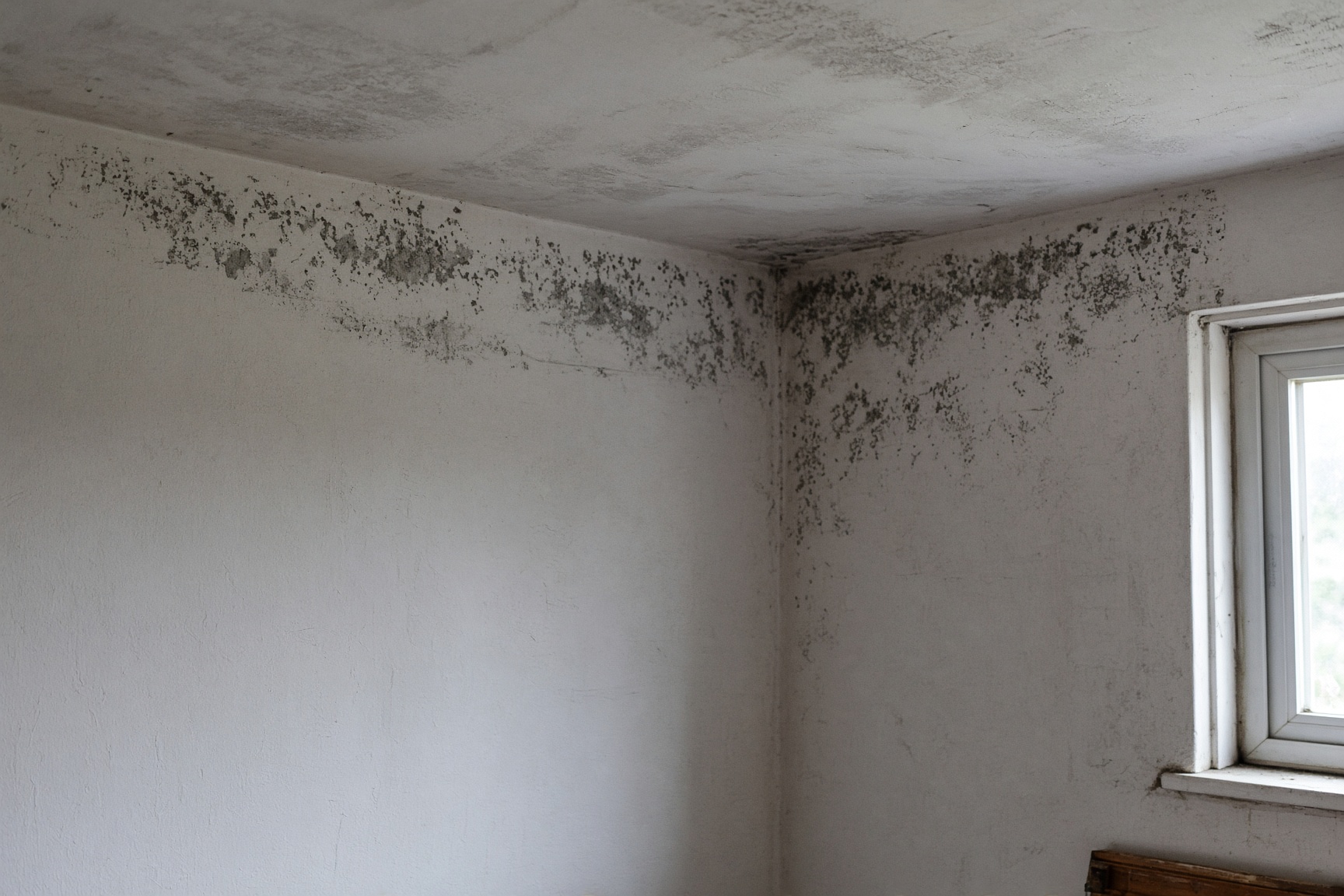
Bedroom corners near windows and exterior walls are the most common place black mould develops in UK homes.
Quick answer: Yes, black mould in a bedroom is worth taking seriously — NHS and UK government guidance confirm it can trigger allergic reactions and worsen asthma, and it's more concerning for babies, older people, and anyone with an existing respiratory condition. It's not usually an emergency, but it shouldn't be ignored or just painted over either. The real fix is dealing with the moisture causing it, not just cleaning the surface.
What "Black Mould" Actually Is
"Black mould" isn't one specific thing — it's the everyday term people use for any dark mould patch on a wall, ceiling, window frame or behind furniture. Most of what shows up in UK bedrooms is common household mould species like Cladosporium or Aspergillus, which can appear dark green or black depending on the surface and lighting. The species people specifically mean by "toxic black mould," Stachybotrys chartarum, does exist but is far less common than the term's reputation suggests.
In practice, this distinction matters less than people assume. UK government guidance treats all indoor mould growth as a genuine hazard worth addressing properly — not just the specific species with the scariest name.
Is Black Mould in Bedroom Rooms Actually Dangerous?
According to NHS guidance, mould produces allergens, irritants, and in some cases toxic substances. Breathing in or touching mould spores can trigger allergic reactions — things like a runny nose, itchy or red eyes, and skin rashes. Mould exposure can also trigger asthma attacks in people who have asthma.
Some people are more vulnerable than others, and NHS guidance is specific about who should be particularly cautious around damp and mould:
- 👶 Babies and young children
- 👴 Older people
- 🫁 Anyone with asthma or another respiratory condition
- 🩺 Anyone with a weakened immune system
Bedroom mould specifically matters more than mould in, say, a garage or shed, simply because of time spent breathing that air overnight. It's genuinely worth taking seriously and dealing with properly — but it's not usually a reason to panic or evacuate the room. It's a reason to fix the underlying moisture problem.
⚠️ Don't just paint over it. Painting over mould hides the surface problem without touching the actual cause. The mould keeps growing underneath and behind the paint, and it will resurface — often within weeks — because the moisture that fed it in the first place is still there.
Why Black Mould in Bedroom Corners Happens
Bedrooms are one of the most common rooms for mould to appear, for a genuinely simple physics reason: overnight, you're breathing out moisture for 7-8 hours into a room that's often cooler than the rest of the house, with the door and windows closed and little to no ventilation running. That warm, moist air hits cold external walls or window reveals and condenses — exactly the conditions mould needs.
The corners you'll most often find it: behind wardrobes and furniture pushed against external walls, in window reveals and frames, in the corner where an external wall meets the ceiling, and behind headboards positioned against a cold outside wall.
What to Actually Do This Week
1. Clean it properly, not just wipe it
A dedicated mould and mildew cleaner, or diluted white vinegar, works better than bleach on porous surfaces like plaster — bleach can whiten mould without killing the roots underneath, giving a false sense it's gone.
2. Open a window or run an extractor daily
Even 10-15 minutes a day of proper cross-ventilation makes a genuine difference to how much moisture builds up overnight.
3. Pull furniture away from external walls
Even a few centimetres of gap lets air circulate behind wardrobes and headboards, which are two of the most common places mould hides unnoticed.
4. Run a dehumidifier overnight
This is genuinely one of the highest-impact single changes you can make. See our full dehumidifier running cost breakdown for real numbers, plus our tested picks below.
5. Look at the room's insulation
If the same corner keeps growing mould no matter what you do, that wall is very likely losing heat fast enough to stay cold and attract condensation — an insulation problem, not a cleaning one. If the same corner keeps coming back, the wall is usually too cold — that's insulation. The cheaper leaks that make a bedroom damp in the first place (draughts under the door, an uninsulated cylinder heating the airing cupboard all day, a boiler running hotter than it needs to) are worth closing this week. They're the opening steps of our energy efficiency bundle See our full insulation guide.
Dehumidifiers That Actually Help
We've already tested and priced these against real UK running costs in our dehumidifier running cost guide — the same models work well for bedroom mould control, not just laundry drying:
De'Longhi Tasciugo AriaDry 14L
Allergy-certified filtration, good for a shared or family bedroom
Check Price →If You Rent — Your Legal Rights
UK government guidance is explicit on one point: damp and mould are not the result of "lifestyle choices," and landlords cannot legally treat them as your fault for cooking, showering, or drying laundry indoors. Landlords are responsible for identifying and fixing the underlying cause — usually structural issues, inadequate ventilation, or insufficient insulation.
Social housing tenants have stricter legal deadlines
Under Awaab's Law, social landlords in England must investigate a reported damp or mould hazard within 10 working days and complete safety work within 5 working days once confirmed — with a 24-hour deadline for genuine emergencies. From 30 November 2026, the same fixed deadlines expand to cover cold, heat, fire, electrical and structural hazards too, not just damp and mould.
Private renters don't get these exact statutory deadlines, but landlords still have repair obligations under existing housing law — your council's environmental health team is the main enforcement route.
Whether you're a tenant or a homeowner, report or address mould in writing (even to yourself, as a record) with photos and a date — useful both for tracking whether it's getting worse and for any later escalation if you rent.
Frequently Asked Questions
Related Guides
Published August 2026. Based on NHS and UK government guidance on damp and mould in homes. This is general information, not medical or legal advice — if you have ongoing symptoms you're concerned may be linked to mould exposure, speak to your GP. If you rent and your landlord isn't addressing a reported hazard, contact your council's environmental health team or, for social housing, the Housing Ombudsman.
Fix the Cause, Not Just the Symptom
Cold walls are the real cause of most bedroom mould. Insulation could be completely free before ECO4 closes in December 2026.
Check My Free Insulation Eligibility →✅ Free · ✅ No obligation · ✅ MCS certified installers only