
What Is Home Battery Storage?
A home battery stores electricity for use later. With solar panels, it captures surplus energy generated during the day — when you're often out — and releases it in the evening when you actually need it. Without solar, it can still save money by charging from the grid at cheap off-peak rates and discharging during expensive peak hours.
The core problem a battery solves: a typical UK household with solar panels and no battery exports 50–70% of the solar energy they generate. The Smart Export Guarantee pays as little as 4p per kWh for that exported electricity — while buying it back at night costs around 24p. A battery lets you use that energy yourself instead of selling it cheaply.
The simple maths
Exporting surplus solar earns you ~4–15p per kWh. Using that same electricity yourself (via a battery) saves you ~24p per kWh. A battery is worth it because using is worth more than selling.
With solar panels
- ☀️Stores surplus daytime generation
- 🌙Powers home in evenings from solar
- 📈Pushes self-consumption to 70–90%
- 💷Best financial case — 5–8 year payback
Without solar panels
- 🌙Charges on cheap overnight tariffs
- ⚡Discharges during expensive peak hours
- 💷Saves £300–£600/year on tariff arbitrage
- 📊Longer payback — 8–12 years
Is Home Battery Storage Worth It?
The honest answer: it depends heavily on your situation. Here's how to work out which camp you're in.
✅ Strong case for a battery
You have solar panels, an EV (or plan to get one), and you're willing to switch to a time-of-use tariff like Octopus Flux or Intelligent Octopus. Payback is 5–8 years and you'll save significantly over the battery's lifetime.
Combined with EV charging: saves an extra £400–£600/year on charging alone.
⚡ Decent case
You have solar panels and are willing to switch to a time-of-use tariff. Payback is 7–10 years. Worth doing, especially if you can get a competitive price on a GivEnergy or BYD system.
⚠️ Weak case
You have solar panels but stay on a flat-rate tariff with no EV. Payback stretches to 12–15 years. Consider switching tariff first — it's free and dramatically improves the economics before you spend on a battery.
⚠️ Important: Battery prices fell 15–20% in 2024–2025 and are expected to keep falling. If your payback calculation is marginal, waiting 12–18 months may significantly improve the economics. Don't let an installer pressure you into buying before you're ready.
Home Battery Storage Costs UK 2026
All prices include 0% VAT, which currently applies to domestic battery installations.
What size battery do you need?
The rule of thumb is to size the battery to cover your evening electricity demand — from sunset to bedtime — using solar surplus generated that day. For most UK homes that's 5–10kWh. Bigger isn't always better: oversized batteries sit partially empty most of the time, worsening your payback.
0% VAT — the saving everyone qualifies for
VAT on domestic battery storage installations is currently 0% — saving you £500–£2,000 depending on system size. No application needed — any reputable installer applies it automatically. This applies whether you're adding a battery to existing solar or installing both together.
Where Can You Install a Home Battery? The 2026 Rules
Home battery storage now has its own dedicated wiring rules for the first time — worth understanding before you agree on a location with your installer.
BS 7671 Amendment 4 — Chapter 57
Published 15 April 2026 by the IET and BSI, Amendment 4 introduced the UK's first dedicated wiring chapter specifically for stationary secondary battery installations — covering home battery storage systems for the first time. It isn't retrospective: an existing installation that complied with the rules in force when it was fitted doesn't need upgrading. But from 15 October 2026, when the previous edition is formally withdrawn, every new battery installation must comply with the new chapter.
❌ Now excluded
- Lofts
- Bedrooms
- Hallways & stairwells
- Small internal cupboards
✅ Standard compliant locations
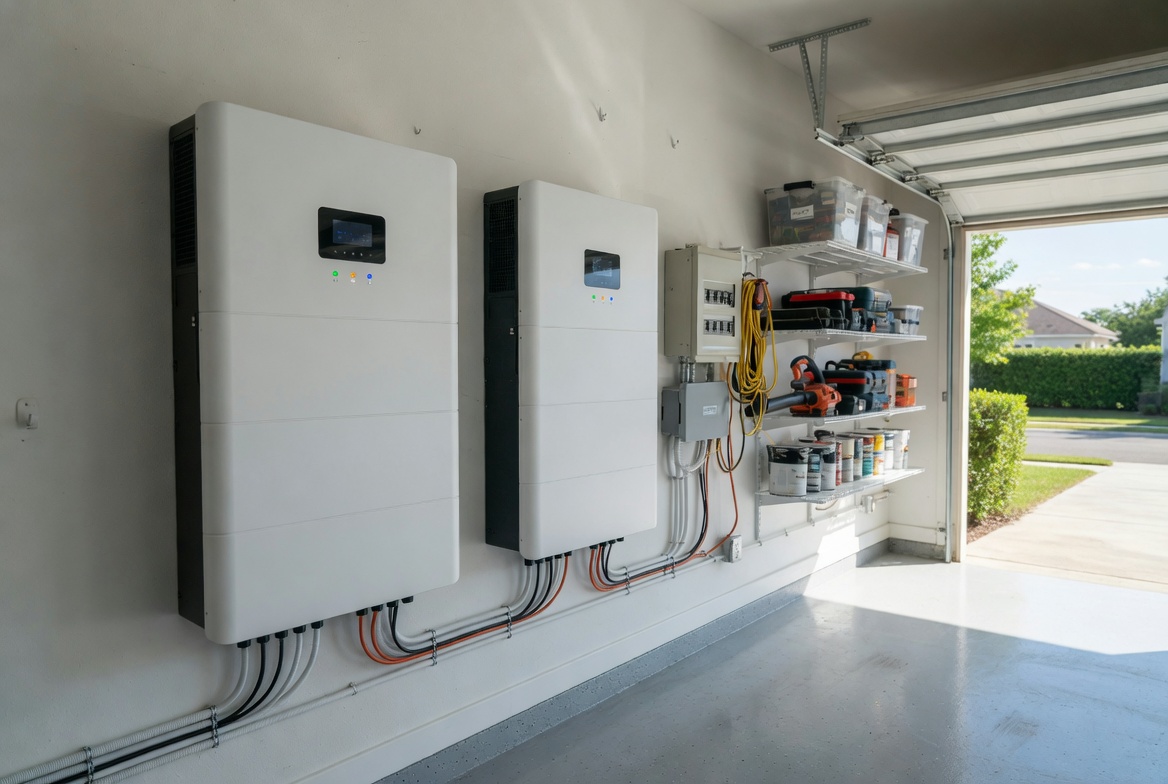
- Garages
- Outbuildings
- Utility rooms with fire separation
- External wall mounts
The change sits alongside the existing fire safety specification PAS 63100:2024. Together they require a minimum 1-metre outdoor clearance from doors and windows, and proper ventilation and smoke detection wherever the battery is sited — addressing thermal runaway risk, the chain reaction that can occur if a lithium-ion cell is damaged or faulty.
⚠️ What to ask your installer: Any genuinely MCS-certified installer should be able to confirm in writing that your design complies with both BS 7671:2018+A4:2026 and PAS 63100:2024, and explain which specific clause covers your chosen location. If a quote doesn't mention either standard, or proposes a loft installation, that's a red flag worth pushing back on.
How Much Can You Save?
Savings depend heavily on whether you have solar, which tariff you're on, and your usage patterns.
Smart tariffs — the game changer
The biggest factor in battery savings is your electricity tariff. On a flat-rate tariff, a battery saves you money by storing solar. But switch to a time-of-use tariff and you unlock a second income stream — charging the battery cheaply at night and using it during expensive peak periods.
Best Home Battery Brands UK 2026
All systems listed are MCS certified and compatible with the Smart Export Guarantee.
GivEnergy All-in-One
UK-designed, best installer network, excellent value
GivEnergy has become the default UK home battery choice in 2025–2026. UK-headquartered with the best installer network in the country. The All-in-One combines battery, hybrid inverter, and gateway in a single wall unit. Seamless Octopus integration and a strong monitoring app. Warranted for 12 years or 10,000 cycles.
Tesla Powerwall 3
Best build quality, whole-home backup, highest efficiency
The most recognised name in home storage. The Powerwall 3 integrates the inverter into the battery unit with 97.5% round-trip efficiency — the highest in its class. Whole-home backup capability switches to battery power in under 20 milliseconds during a grid outage. Premium price but premium product. Installed cost typically £7,500–£12,000 depending on complexity and whether backup gateway is included. Tesla recently won a UK electricity supply licence (March 2026).
BYD HVS / HVM
Stackable, flexible, competitive price per kWh
BYD is the world's largest battery manufacturer. The HVS and HVM ranges use stackable LFP modules — you can start with 5kWh and add more later. Competitive price per kWh and widely available through UK installers. Good option if you want flexibility to expand capacity over time.
EcoFlow PowerOcean
Aggressive pricing, unlimited cycle warranty, smart app
EcoFlow expanded from portable power stations into fixed home storage in late 2025. Aggressive pricing at around £550/kWh installed and a 10-year unlimited-cycle warranty make it compelling. Tight integration with the EcoFlow app that owners of their portables will already know. Good for smart tariff users.
Want a full product comparison with verified 2026 prices?
We've reviewed the top 5 home battery systems available through UK installers right now — including Tesla Powerwall 3, Fox ESS EP11, GivEnergy and more.
Read: Best Home Battery Storage UK 2026 →⚠️ Always use an MCS-certified installer. Only MCS-certified installers can connect battery storage to the grid. Check certification at mcscertified.com before agreeing to any work.
Frequently Asked Questions
Get Free Battery Storage Quotes
Whether you're adding a battery to existing solar or starting from scratch with a battery-only setup, tell us your situation and we'll match you with the right MCS-certified installer.
✅ Free · ✅ No obligation · ✅ MCS certified installers only