UK Solar Panels Guide
Solar Panels UK Homes
Everything you need to know about solar panels in the UK — costs, savings, grants, and how to find a trusted installer.
Are Solar Panels Worth It in the UK?
The short answer, for most UK homeowners with a suitable roof: yes. Solar panel prices have fallen in recent years, electricity costs remain high, and the combination of 0% VAT on qualifying installations and Smart Export Guarantee payments makes the financial case stronger than it's been for years.
That said, solar panels aren't right for everyone. A north-facing roof, heavy shading, or plans to move soon all affect whether you'll see a good return. This guide covers everything you need to make an informed decision — without the sales pitch.
Quick verdict: A typical 4kW solar system costs £6,000–£8,000 installed, saves £500–£700 per year on energy bills, and pays for itself in 7–12 years. With a 25-year lifespan, that's 13–18 years of essentially free electricity after payback.
Thinking about solar?
Get free quotes from MCS-certified installers and compare system sizes, prices and warranties.
Get Free Quotes →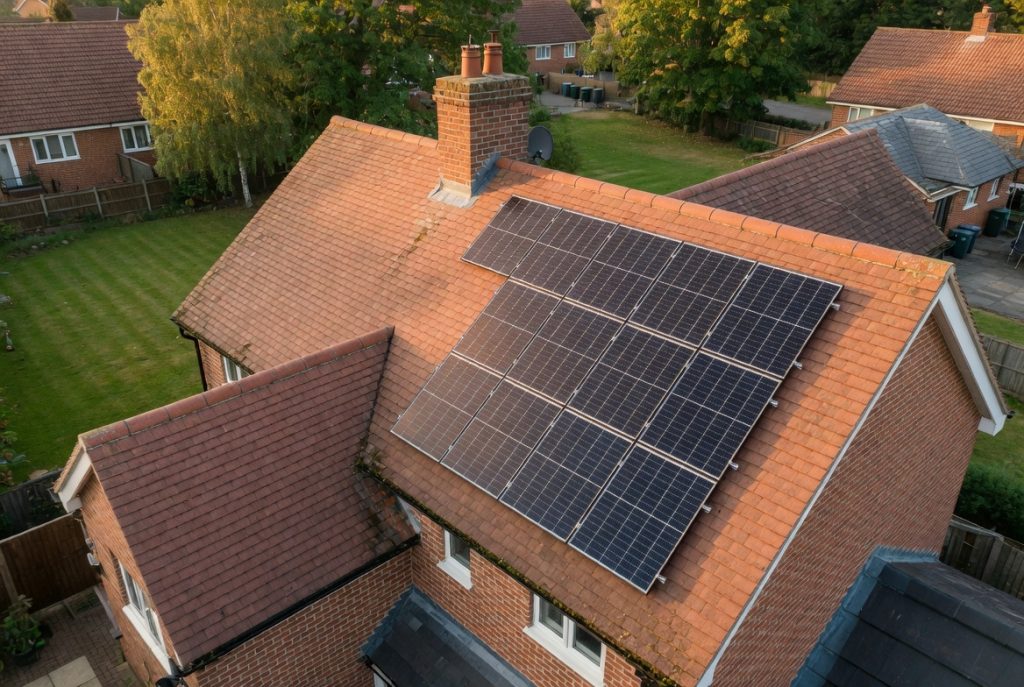
Last reviewed: August 2026. Figures are estimates based on current UK market data and Ofgem rates — actual costs and savings vary by property, system size, electricity usage, tariff, export rate and installer.
Solar Panels UK Costs 2026
Prices vary by system size, panel quality, and installer. Here's what to expect:
What pushes the price up
- ❌ Complex or flat roof
- ❌ Premium panel brands
- ❌ Adding battery storage
- ❌ Remote location
- ❌ Roof repairs needed first
What brings the price down
- ✅ 0% VAT until 31 March 2027
- ✅ Simple pitched roof
- ✅ ECO4 grant (if eligible)
- ✅ Getting multiple quotes
- ✅ South-facing roof
Want your exact numbers rather than these averages?
Use our free solar savings calculator — enter your roof direction, system size and bill to get a personalised estimate.
⚠️ Important: Always get at least 3 quotes. Prices vary significantly between installers for identical systems. Use an MCS-certified installer — MCS certification is required to access Smart Export Guarantee payments, and most reputable installers hold it as standard.
How Much Could You Save?
Solar savings come from two sources — electricity you don't have to buy, and electricity you sell back to the grid.
The Smart Export Guarantee (SEG)
The SEG pays you for every unit of electricity you export back to the grid. Rates vary by supplier — currently between 11p and 25p per kWh. Octopus Energy and others offer competitive rates. Your installation needs to be MCS-certified to access SEG payments.
Maximise your savings — tips
- ☀️ Run appliances during daylight hours to maximise self-consumption
- 🔋 Add battery storage to store unused daytime generation for evenings
- 🚗 Charge your EV during the day using solar power
- 📱 Use a smart tariff like Octopus Agile to get paid more for exports
- 🌡️ Add a smart thermostat to align heating with solar generation
Charge your EV for free with solar?
The right EV charger makes all the difference — the Myenergi Zappi charges your car exclusively from surplus solar, bringing per-mile costs down to 1–2p.
Read: Best Home EV Charger UK 2026 →Solar Panel Grants & Incentives 2026
There's no single national solar grant for all homeowners — but there are several schemes worth knowing about.
0% VAT on Qualifying Solar Installations
Everyone qualifiesQualifying energy-saving-material installations, including solar panels, are zero-rated for VAT until 31 March 2027, after which the rate reverts. No application needed — any reputable installer applies it automatically. This saves between £1,000 and £3,000 on a typical installation.
Expires: 31 March 2027
ECO4 — Free Solar for Low-Income Homes
Means testedThe Energy Company Obligation (ECO4) scheme can cover the full cost of solar panel installation for qualifying households. Eligibility typically requires receiving Universal Credit, Pension Credit, or certain other benefits. Solar panels through ECO4 are worth £5,000–£10,000.
Expires: December 2026 · Applies to: England, Scotland & Wales
Warm Homes Plan
Low-income householdsRunning from April 2025 to 2028, this scheme offers grants up to £30,000 for home energy improvements including solar installations for eligible lower-income households.
Runs until: 2028 · Applies to: England
Home Energy Scotland
Scotland onlyScottish homeowners can access interest-free loans of up to £7,500 specifically for solar PV installations, plus additional grant funding depending on household income.
Applies to: Scotland only
Smart Export Guarantee (SEG)
MCS installationsNot a grant but an ongoing income stream — you're paid for every unit of electricity you export to the grid. Rates currently range from 11p to 25p per kWh depending on your supplier. Shop around for the best rate.
Ongoing · Requires MCS-certified installation
If you're on a low income or receive certain benefits, the ECO4 scheme can fund free solar panel installation — no upfront cost at all. The scheme runs until December 2026.
Check Your Grant Eligibility
Get matched with installers who can advise on which grants apply to your situation.
Check My Eligibility →Choosing between monocrystalline, polycrystalline and specific manufacturers is where most buyers get stuck. We've tested and compared the top 6 solar panel brands available in the UK on efficiency, warranty and real-world performance if you want to skip straight to specific recommendations.
Types of Solar Panels
Three main types are used in UK homes — each with different efficiency, cost and lifespan characteristics.
Monocrystalline
Made from single-crystal silicon. Most efficient and longest lasting. Slightly more expensive but best long-term value.
Polycrystalline
Made from multiple silicon fragments. Slightly less efficient but more affordable. Good for larger roof spaces.
Thin Film
Lightweight and flexible. Works better in low light but needs more roof space. Less common in UK homes.
Also Consider: Balcony Solar
From 27 August 2026, plug-in "balcony solar" kits became legal to self-install in the UK under new regulations (SI 2026/848), without needing an electrician for the connection itself. See our full guide on what changed and what the rules actually allow.
If you rent, live in a flat, or don't have a suitable roof, balcony solar panels are a plug-in alternative. A DNO notification is still required before connecting, and current rules limit you to one certified 800W device per household. They typically generate 300–800W and can meaningfully cut your electricity bills without any structural work.
Read our Balcony Solar Guide →Want to compare specific panel brands?
We've reviewed the top 6 solar panel brands available in the UK in 2026 — rated on efficiency, warranty, real-world performance and value.
Read: Best Solar Panels UK 2026 →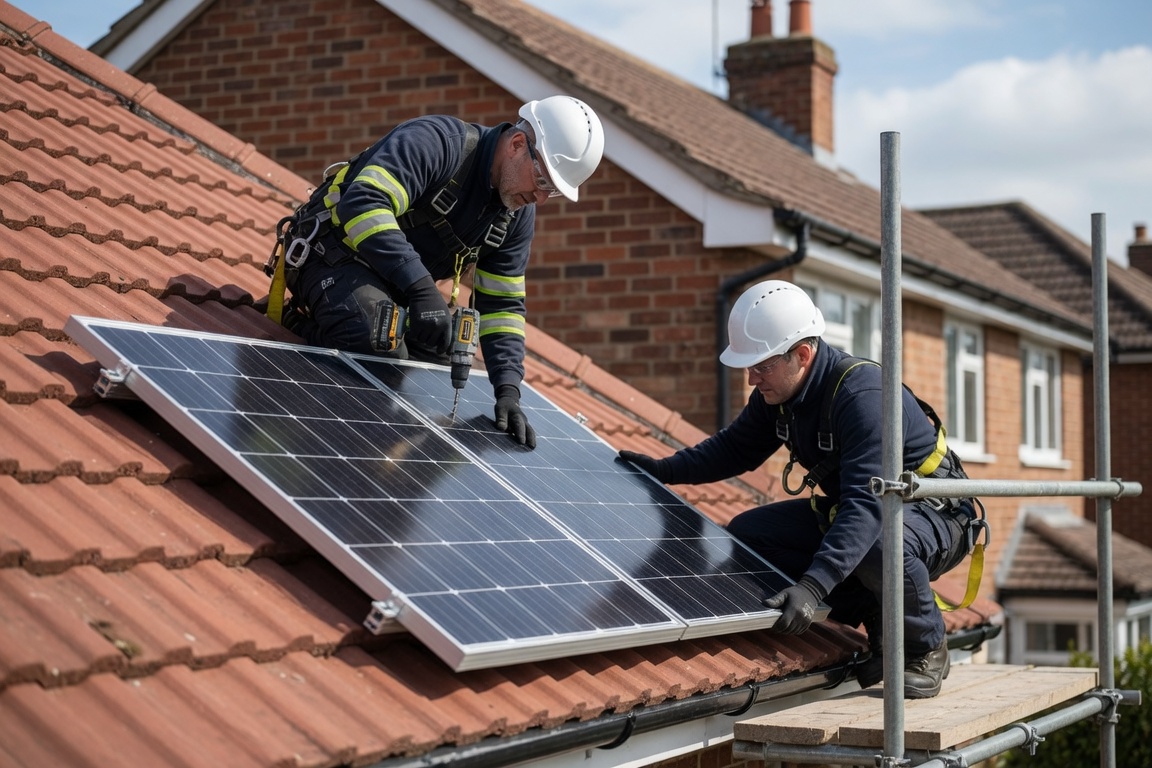
Solar Panel Installation
What to expect from the installation process — from first quote to first generation.
⚠️ What to watch out for
- ❌ Installers who pressure you to sign same-day
- ❌ Companies not registered with MCS
- ❌ Unusually cheap quotes with unknown panel brands
- ❌ Installers who won't provide a written quote
- ❌ Inflated savings projections without supporting data
Ready to get quotes?
Compare up to 4 quotes from MCS-certified local installers — free, no obligation.
Get Free Quotes →Frequently Asked Questions
Get Free Solar Panel Quotes
Solar panels are one of the most popular home upgrades in the UK, generating free electricity from daylight throughout the year. On top of cutting your electricity bills, you can also earn money for any surplus you export back to the grid through the Smart Export Guarantee.
Fill in the form below to get up to four free, no-obligation quotes from local MCS-certified installers.
✅ Free · ✅ No obligation · ✅ MCS certified installers only